The bin round
Get on the back of the wagon
Oakhaven City Council refuse collection, from the Council Depot
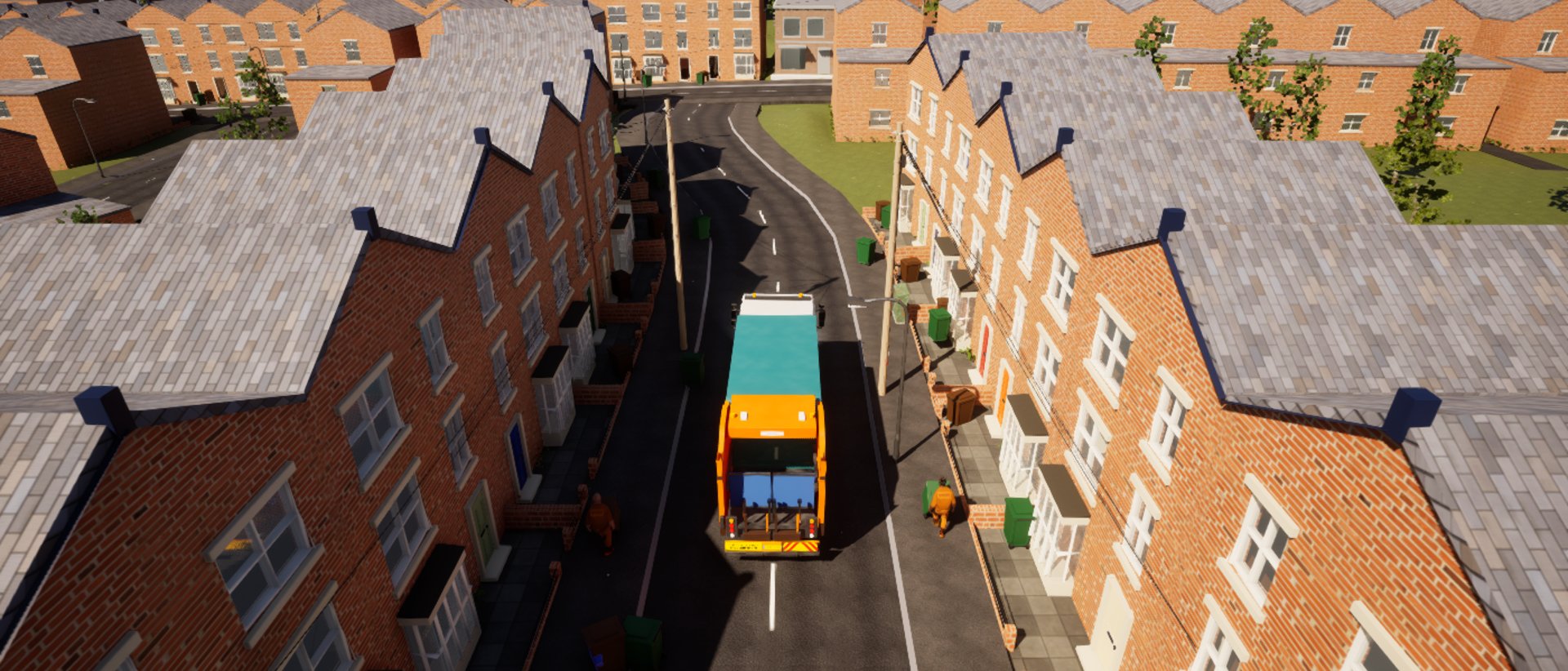
Denise has a vacancy on the council bins, and it takes anyone: Refuse Collection Loader, six in the morning till five, fixed and guaranteed. You pull on the orange, you meet the wagon at the depot, and you spend the day behind it, on the terraces, one wheelie bin at a time.
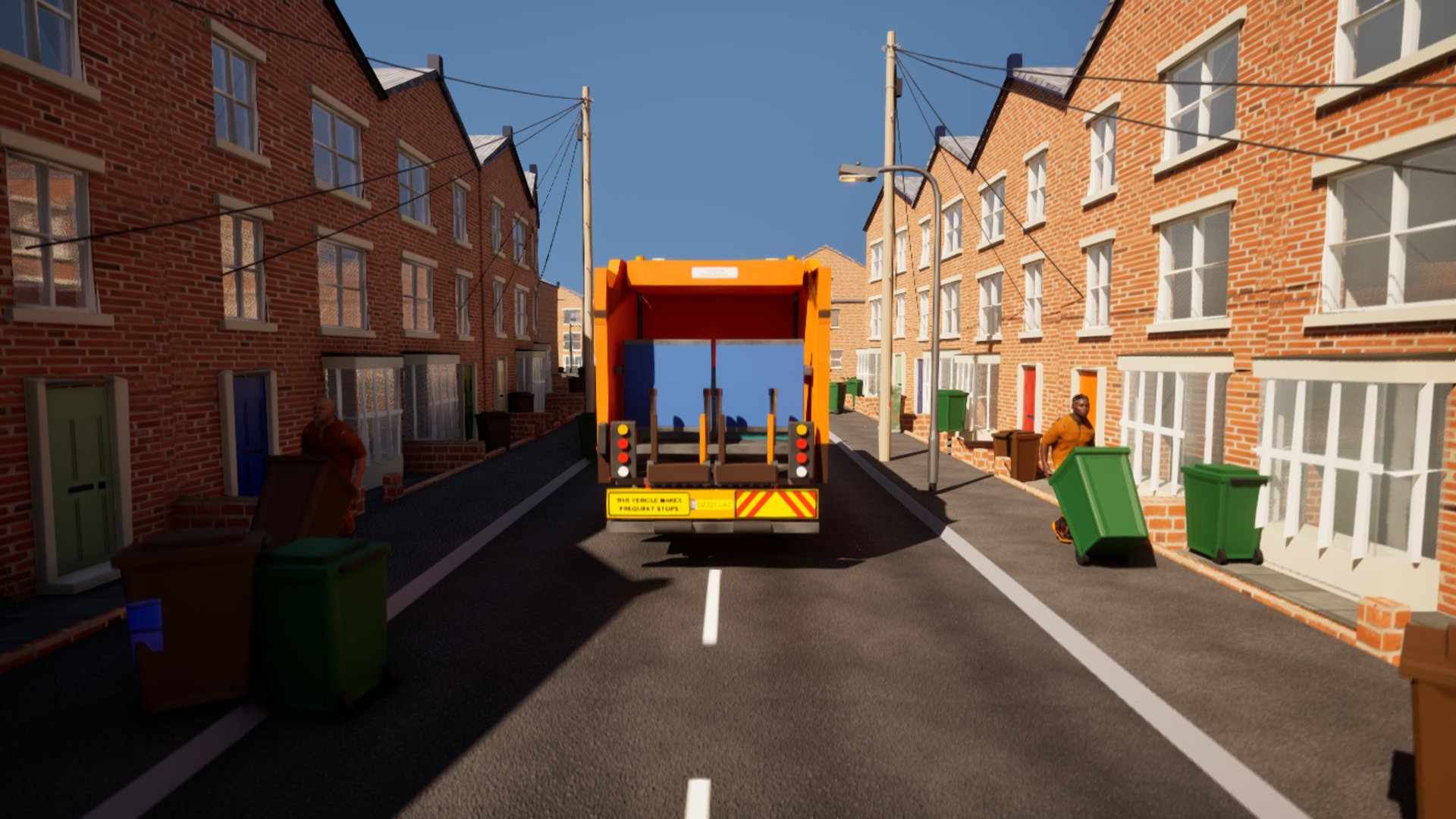
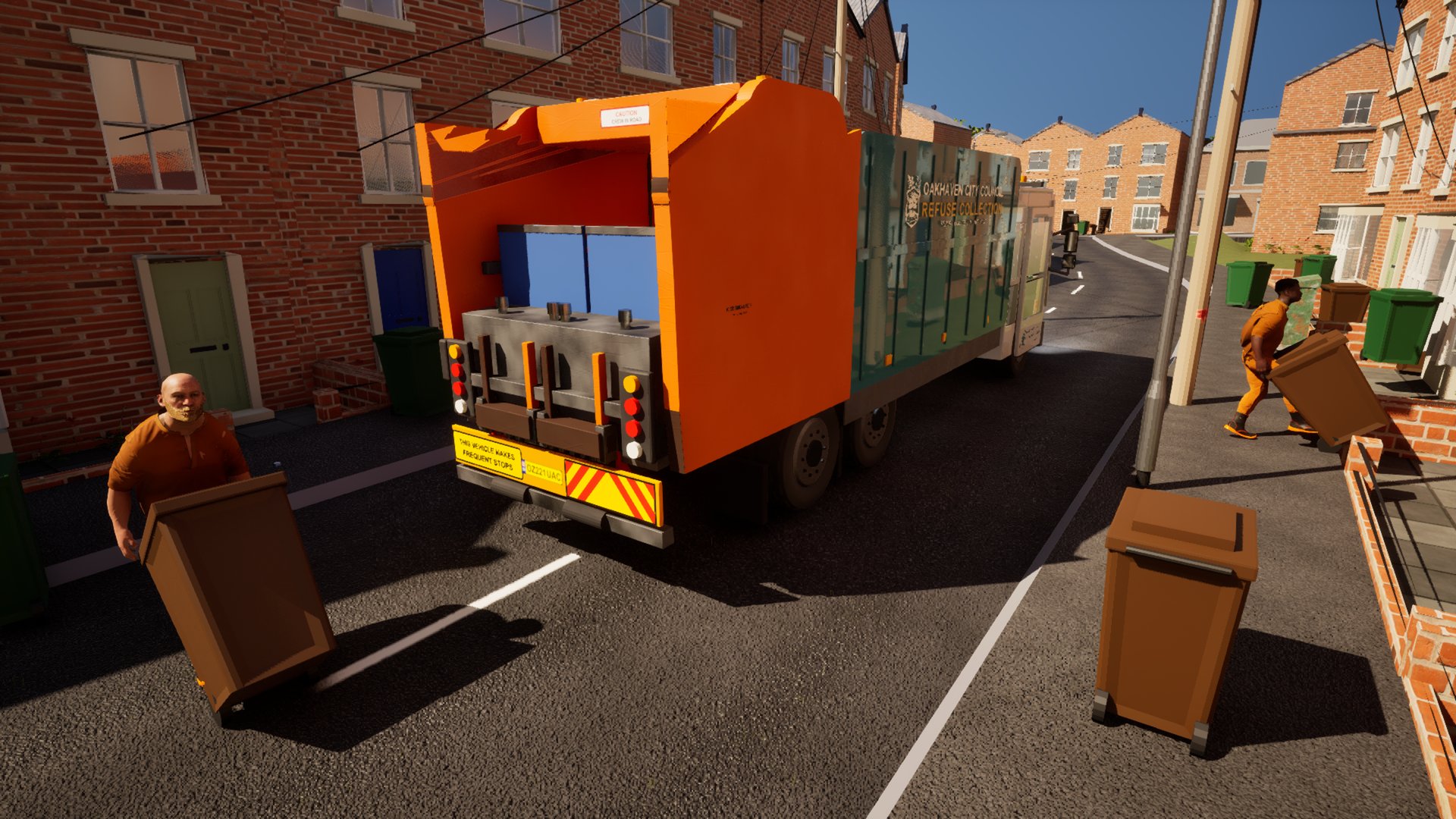
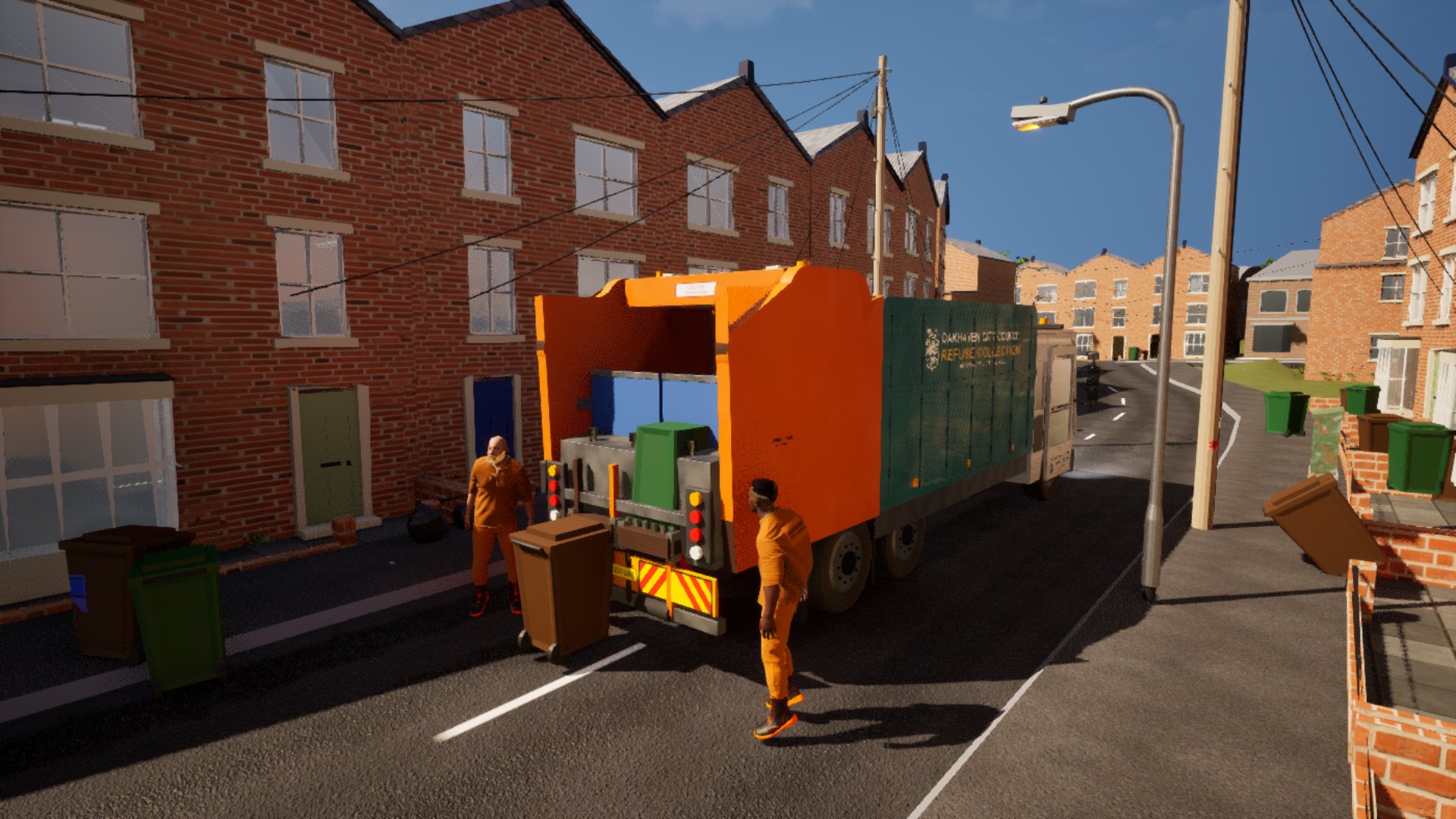
The wagon is Oakhaven City Council’s own. Teal body, white cab, orange tailgate, the council arms down both sides with REPORT A MISSED BIN under them, OZ221 UAC on the plate and THIS VEHICLE MAKES FREQUENT STOPS across the back. It does. It creeps along the street at walking pace, grime on the panels, amber markers glowing down its flanks after dark, and the crew have a name for the lift on the back: the back legs. Never the lift. Before long the traffic stuck behind it will have opinions too.
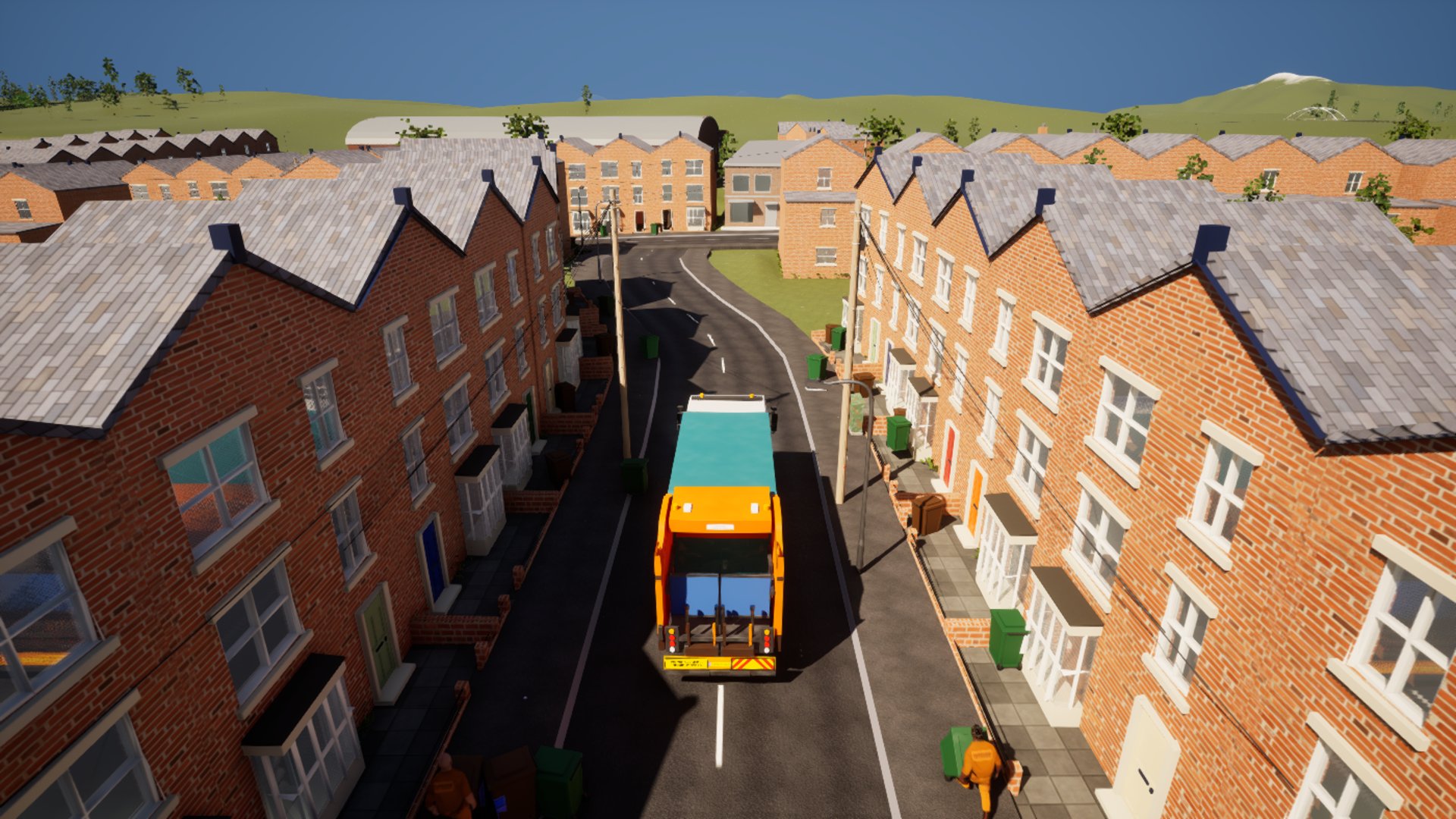
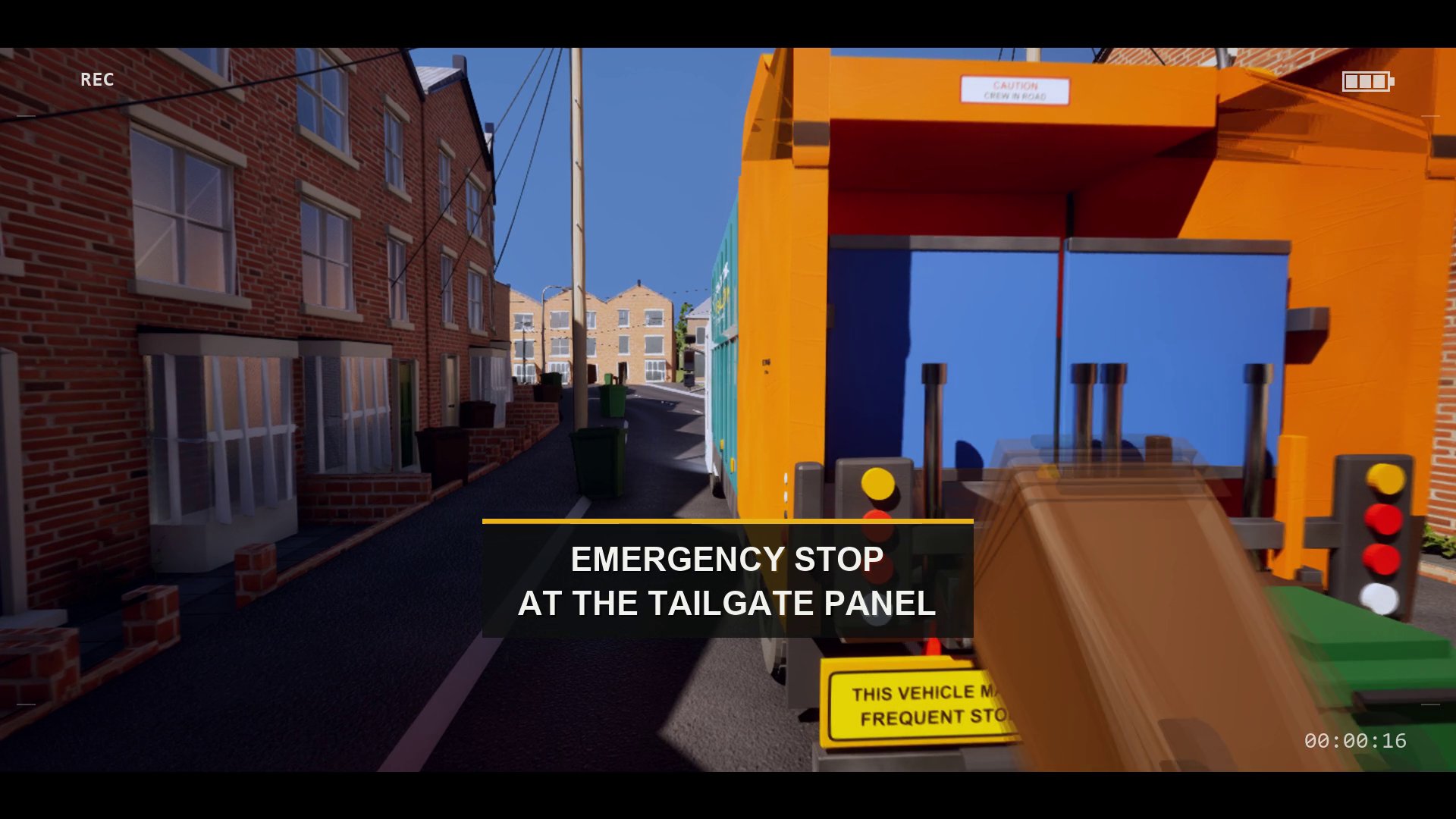
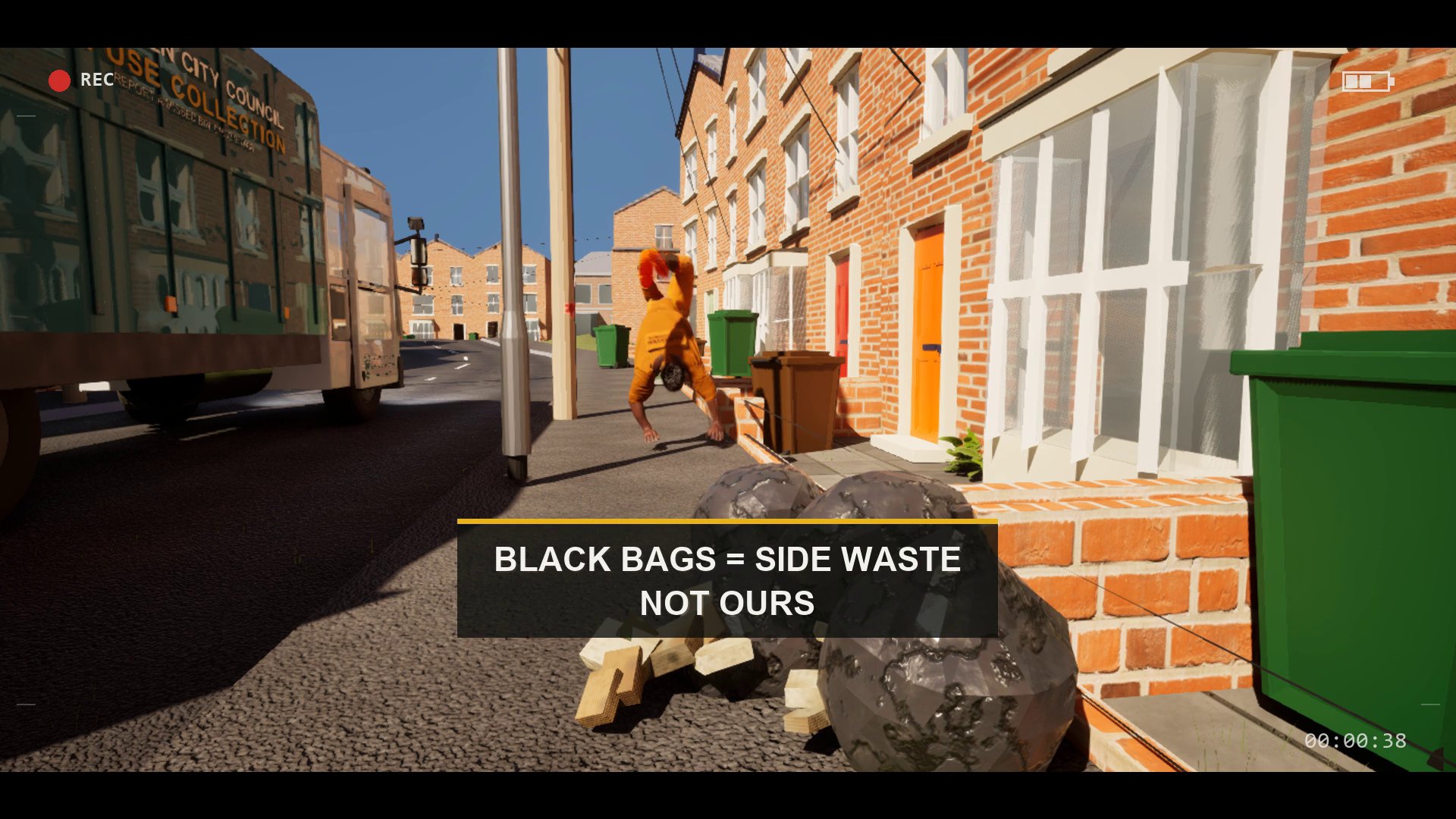
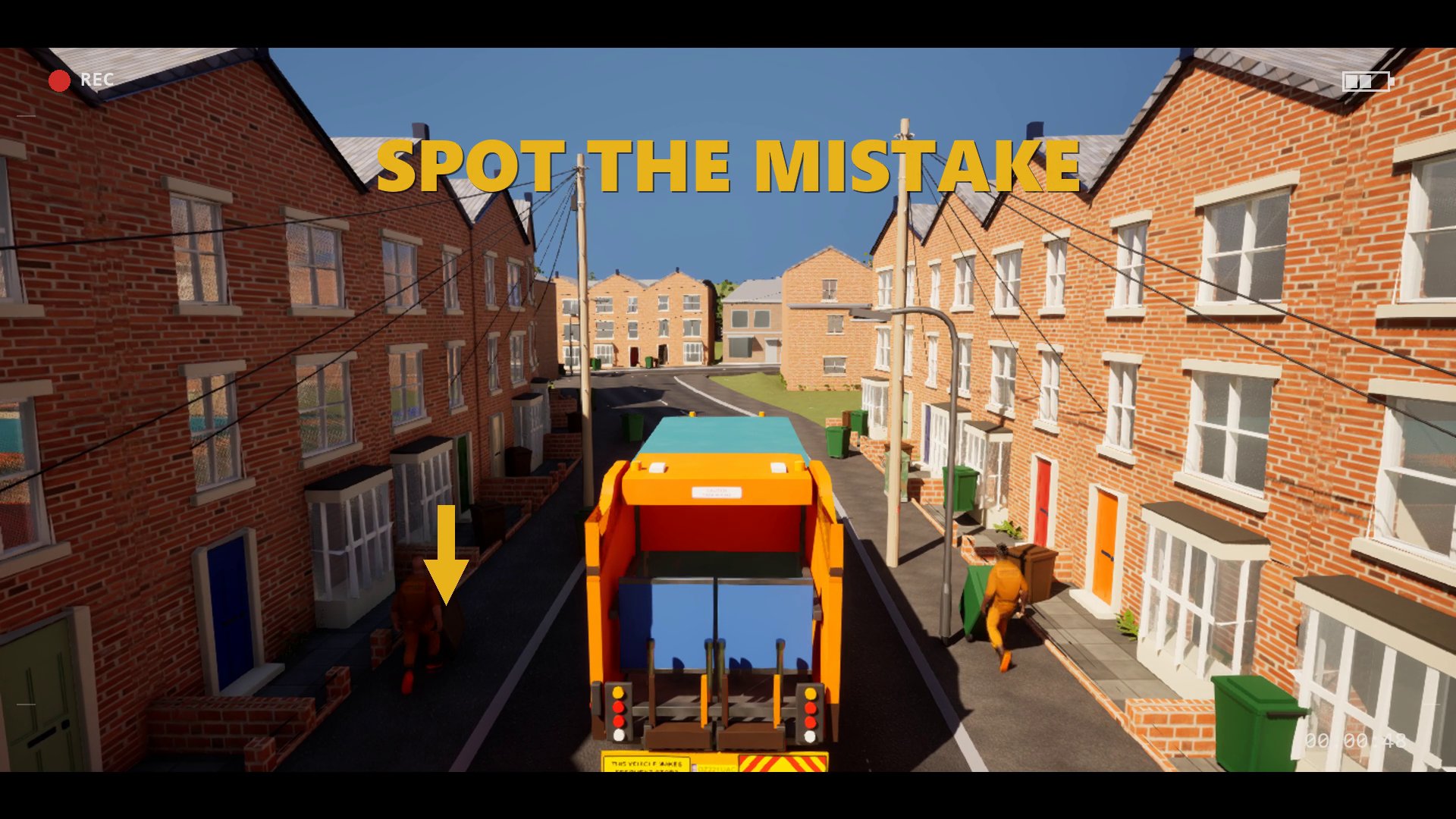
Before the first shift there’s the induction film: two modules, a couple of minutes, shot from a drone over the rooftops and read by a broad Nottingham voice that never once notices what it is saying. It covers kerbside bins and garden bins, assisted collections, black bags, which colour goes out which week, the back legs, the emergency stop, safety boots and the gifts policy. Keep an eye on the job title in the corner. It gets grander every time it comes back, from Waste Collection Operative to Frontline Environmental Services Professional, and the job stays exactly the same.
Your browser only reaches YouTube once you press play. Watch it on YouTube →
The work itself is proper graft. Pick a bin up off the kerb, walk it to the back legs and present it: one press hooks it on and starts the lift, up it goes, over it tips, and the wagon sets it back down for you to return to where it stood. The two combs run independently, so with a bit of rhythm you can have two bins in the air at once. A cycle takes about seven seconds, and the hopper holds eight before the packer takes over and the back legs lock out for eighteen. Use them to get your breath back.
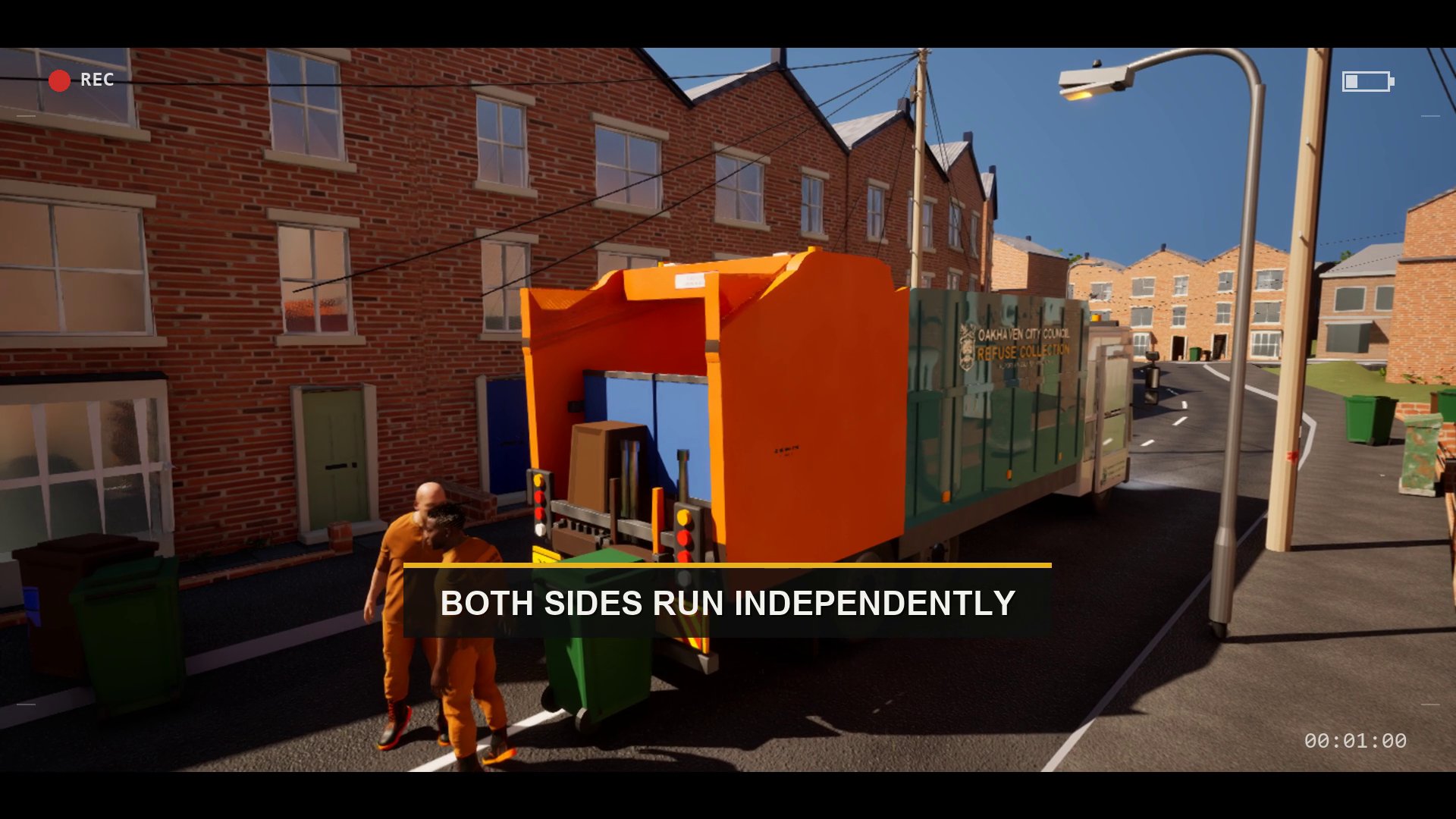
If anything goes wrong, the emergency stop is a big button on the tailgate panel. Hit it and the whole cycle freezes, bin still up in the air, until you’re ready to carry on.
The rounds cover 546 terraced houses and 1,010 wheelie bins, every one of them tagged to its own front door. Green is household waste and brown is recycling, and they swap week by week, so check the week before you grab. Take a brown bin on a green week and it counts as contamination, and contamination doesn’t pay. Black bags dumped beside the bin are side waste: they stay where they are.
There are seven rounds and you work one a day, each out from the Council Depot, through the streets, on to the incinerator and back again. The council pays £48 a round, plus 50p for every bin over fifty-five, so a quick pair of hands on the back legs takes home more than a slow one.

It starts at six, it finishes at five, and some days it smells like it. It’s also the most honest money in Oakhaven, and the first rung of a council ladder that will climb a long way from the back of a wagon. Or you could go back to what you know. It’s your second chance.
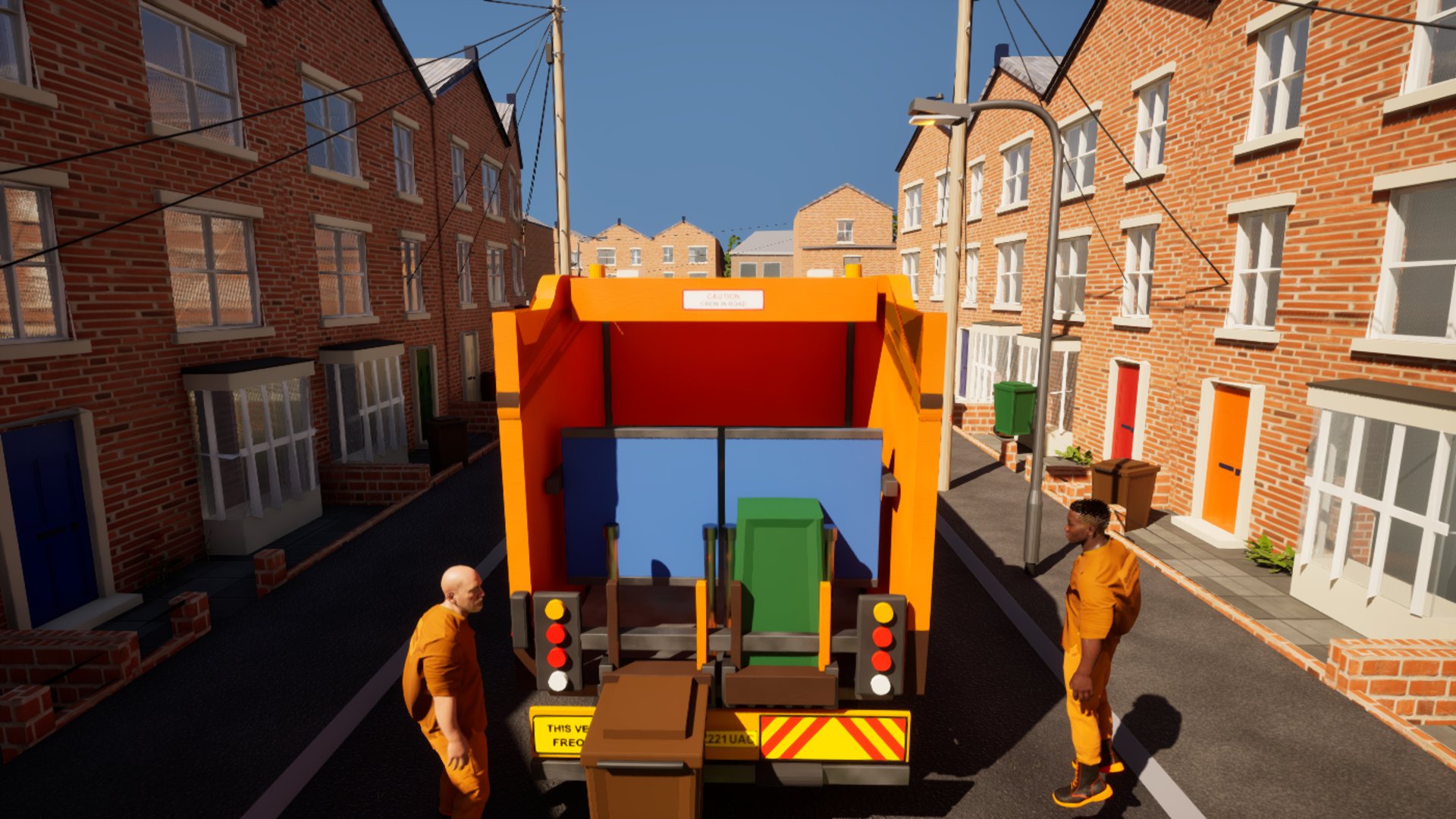
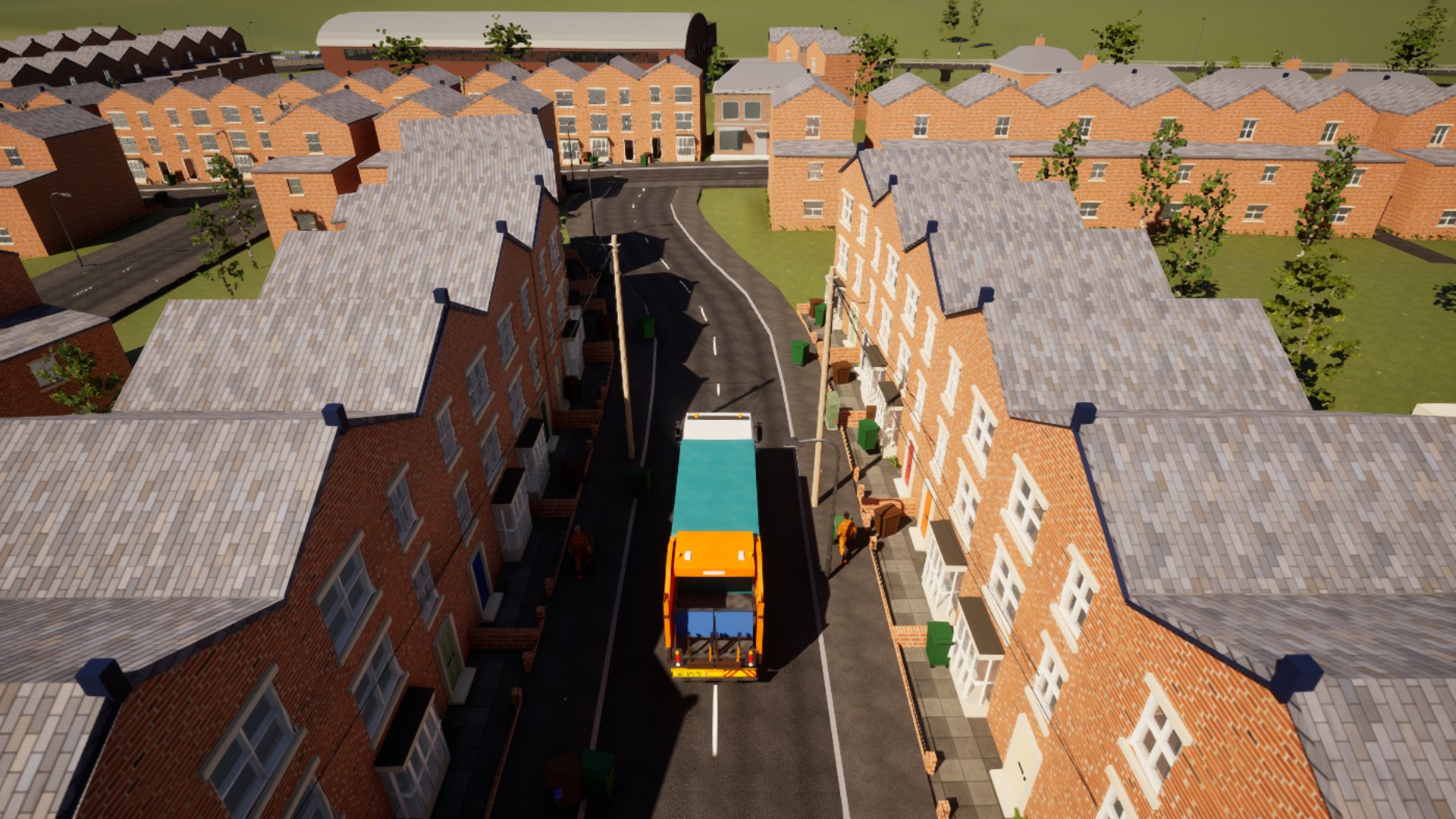
The induction film was made with guidance from my friend Durrell, a real bin man, credited as Refuse Operative Advisor. He spotted that the tipping action was running in reverse, and the wagon lifts the right way up because of him.
- Oakhaven City Council refuse collection
- 1,010 wheelie bins, 546 houses
- Seven rounds, one a day
- Green week, brown week
- Two combs on the back legs
- £48 a round, 50p a bin over 55
Elsewhere in Oakhaven
- The Sweatbox
- Last Tenner Bets
- Chish & Fips
- Bossman’s Corner Shop
- Bagshaws Butchers
- St Cuthbert’s
- Radworth Road Police Station
- The Slag & Slurry
- Bestholme Job Centre
- Radworth Golf Club
- Green Boss
- The Baulk Line
- Radworth Working Men’s Club
- The Council Depot
- The Oakhaven
- Below Radworth
- The Incinerator Plant
- The Temple of the Unsleeping Eye