Snooker club
The Baulk Line
Radworth
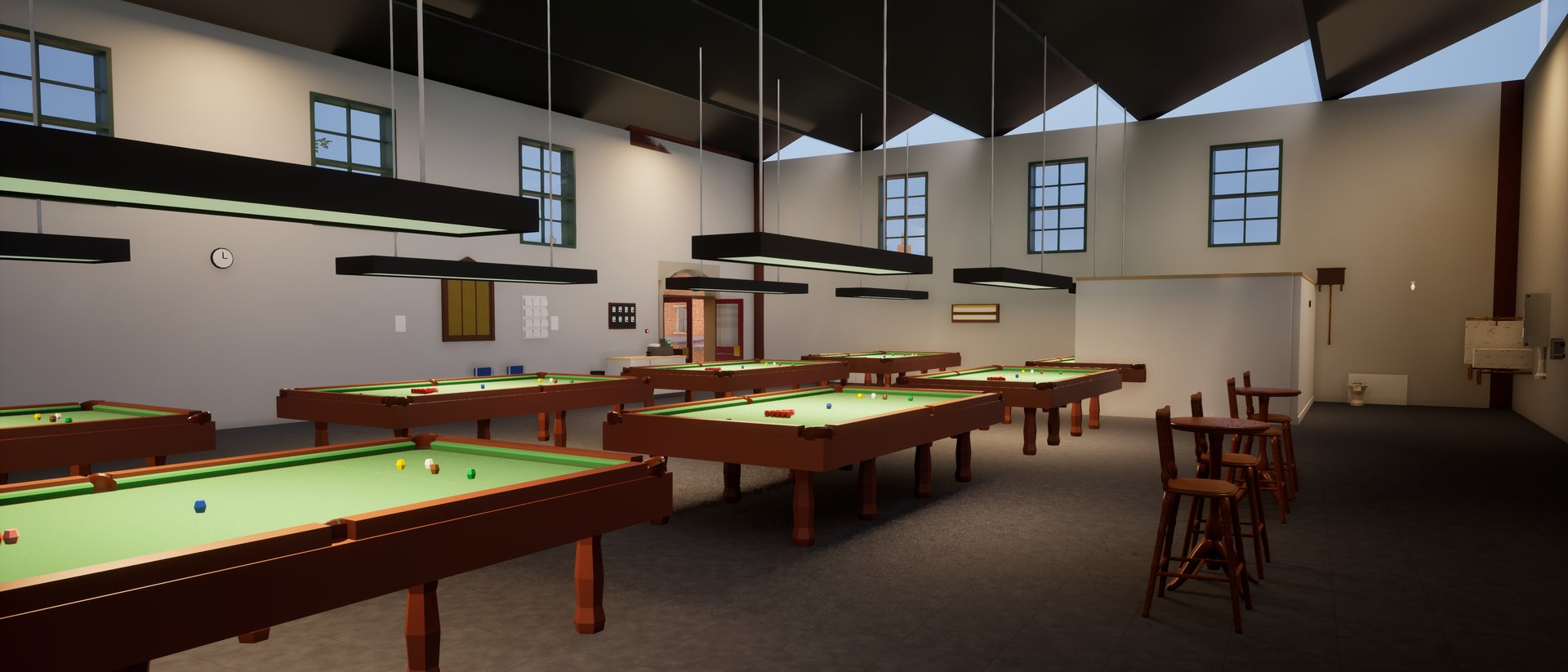
A 1904 north-light billiard hall, built when a room full of tables was a respectable way to spend an evening and lit from above so nobody has to play in their own shadow.
Eight tables under the pitched glass. The lighting is the whole point of the building and the reason it has outlasted most of what was around it.
They are full-size: twelve foot by six, a bed of 356.9 by 177.8 centimetres inside the cushion faces, balls two and one-eighth inches across. The baulk line is twenty-nine inches off the bottom cushion and the D is eleven and a half across, because that is what those things are.
The corner pockets take eighty-six millimetres. A ball is fifty-two and a half. That sixteen and three-quarter millimetres of daylight, split between two sides, is the entire game.
Barry is usually at one of the tables, and Barry plays for money. Pick up a cue and he will offer to make it interesting for a fiver. The other regular is Mervyn, who is tall, quiet and a member of something.
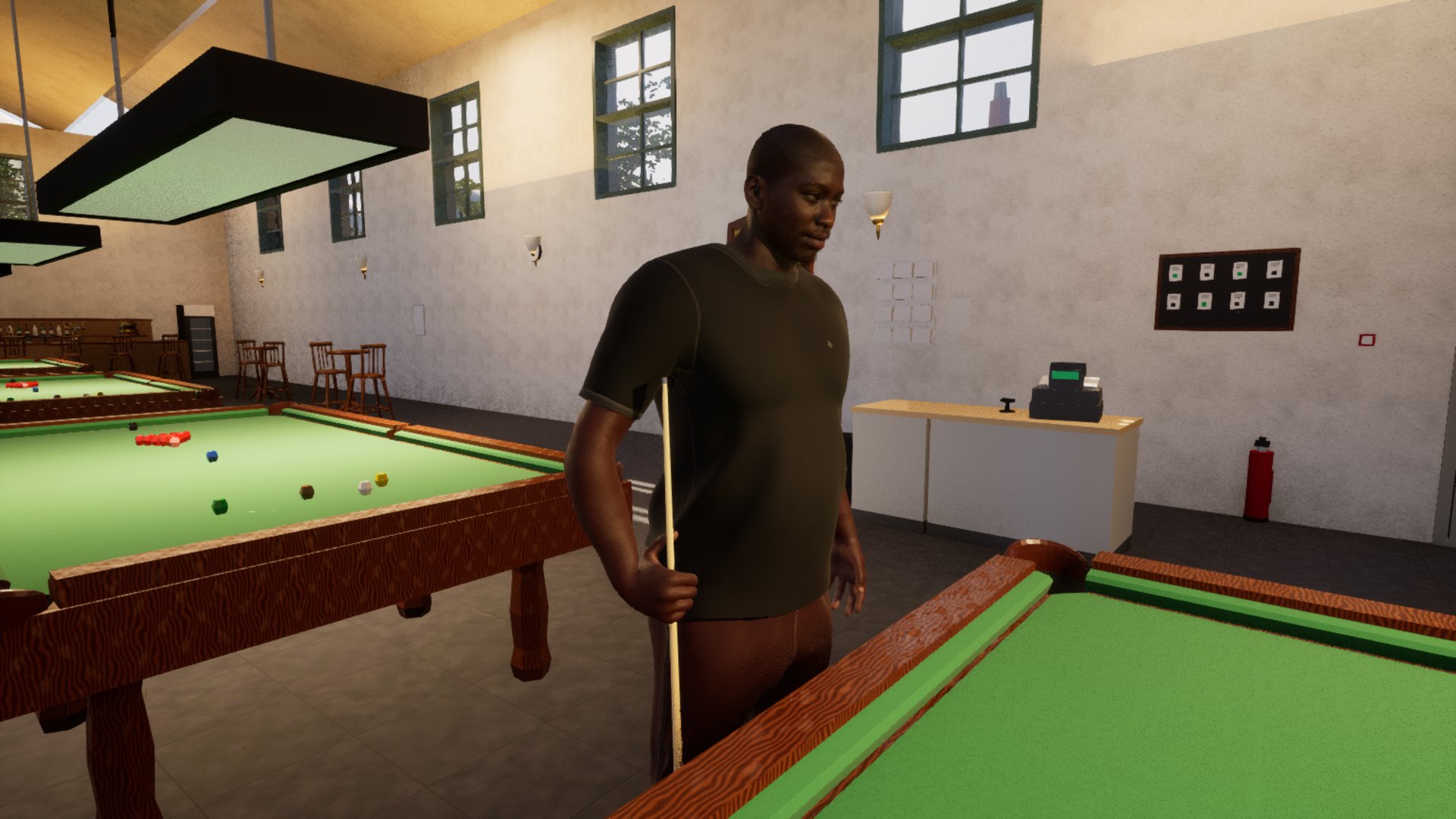
Barry, the snooker hustler. The mechanics are modelled on top players. He plays the same physics and rulebook you do, and that rulebook was checked against an independent oracle in 29,832 cases.
- Eight tables
- Built 1904
- North-light roof
- 12 ft × 6 ft
- 86 mm corner pockets
- Barry plays for a fiver
How we made it real
The table on this page is built to the rulebook. We measured every dimension the WPBSA actually specifies, modelled the balls with real sliding, rolling and spin, and put 298 claims about the rules of snooker through an adversarial review that came back with 34 of them wrong. There is a page about all of it.
Elsewhere in Oakhaven
- The Sweatbox
- Last Tenner Bets
- Chish & Fips
- Bossman’s Corner Shop
- Bagshaws Butchers
- St Cuthbert’s
- Radworth Road Police Station
- The Slag & Slurry
- Bestholme Job Centre
- Radworth Golf Club
- Green Boss
- Radworth Working Men’s Club
- The Council Depot
- The Oakhaven
- Below Radworth
- The Incinerator Plant
- The Temple of the Unsleeping Eye
- Cutshaw & Shutt
- Burger Boss
- Jerk Hut