The old workings
Below Radworth
Off the north ring road
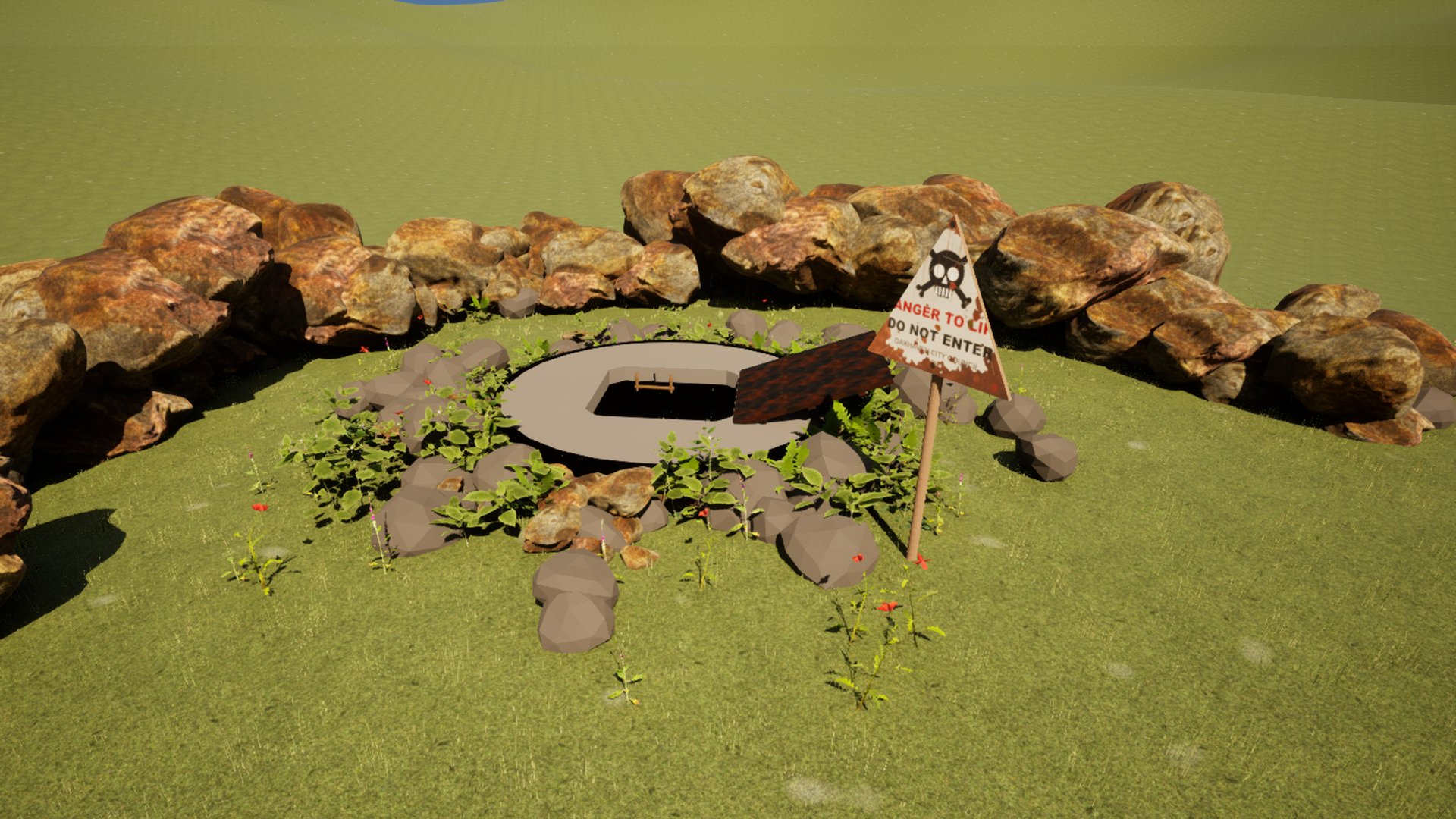
A mile out of town, eighty-odd metres back from the north ring road and six hundred metres from the nearest building, there is a capped well in the ground: a rusted iron well-head four metres across with a hatch in the middle and a lid on a side hinge. Beside it the council has put up a sign two and a half metres tall with a skull and crossbones on it: DANGER TO LIFE. DO NOT ENTER. The estate asked for a fence. It got the sign.
Under the lid a rope ladder goes down twenty metres, a rung at a time, and the last rung has been cut short to land you on the floor. Look back up from the bottom and the sky at the top of the shaft is the town’s sky, whatever the weather is doing up there, and your eyes take a while to adjust to what is down here.
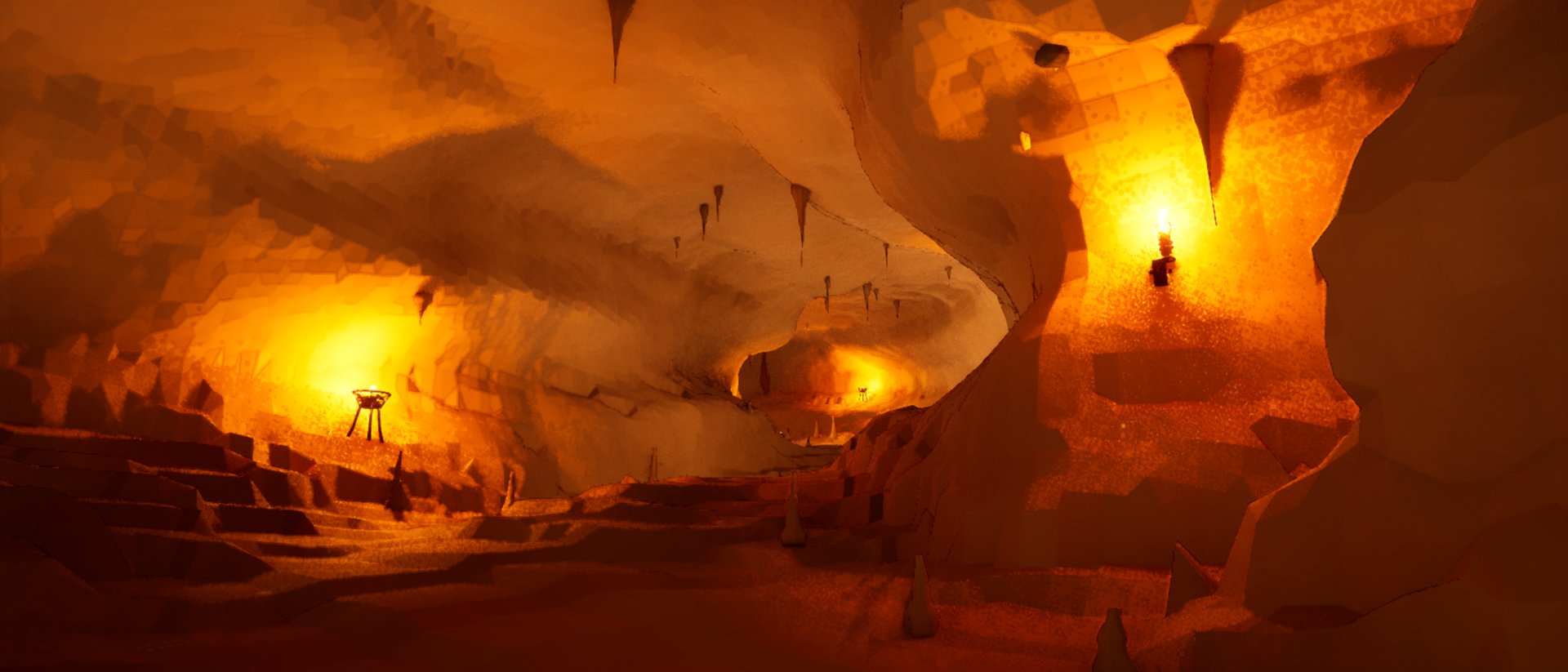
Below the cap the town stops and something a great deal older starts. The passages are cut into sandstone, the way the old caves under Midlands towns are: a main gallery running two hundred metres and falling twenty-seven as it goes, and off it a cavern thirty-odd metres across, built round a pillar of rock left standing off-centre, with a ledge running high along one wall.
Four side passages go off it: one that ends, one that loops back on itself, one you will have to squeeze through, and an old adit. Twenty-four rush torches burn in iron brackets along the walls and five fire baskets stand on tripods where the roof is high, and between them hang ninety-seven stalactites over eighty-nine stalagmites, the hanging ones trimmed back just far enough to let a person stand up.
At the far end of the main gallery the floor stops. There is a twenty-metre drop into a small chamber, and it gives you no warning. Whatever the workings were cut for, it was not the council.
The caves are cut to explore on foot, a rung at a time, with your own eyes adjusting to the dark. Somewhere down there is treasure modelled on ten real British hoard finds, from the Staffordshire Hoard to the Alfred Jewel, and the richer pieces lie deeper.
- One rope ladder, 20 m
- Twenty-four torches, five braziers
- A 200 m gallery
- A 20 m drop at the end
- 1.05 miles from your front door
Elsewhere in Oakhaven
- The Sweatbox
- Last Tenner Bets
- Chish & Fips
- Bossman’s Corner Shop
- Bagshaws Butchers
- St Cuthbert’s
- Radworth Road Police Station
- The Slag & Slurry
- Bestholme Job Centre
- Radworth Golf Club
- Green Boss
- The Baulk Line
- Radworth Working Men’s Club
- The Council Depot
- The Oakhaven
- The Incinerator Plant
- The Temple of the Unsleeping Eye
- Cutshaw & Shutt
- Burger Boss
- Jerk Hut