You’re out on licence. A whole town to roam, and a life to make of it.
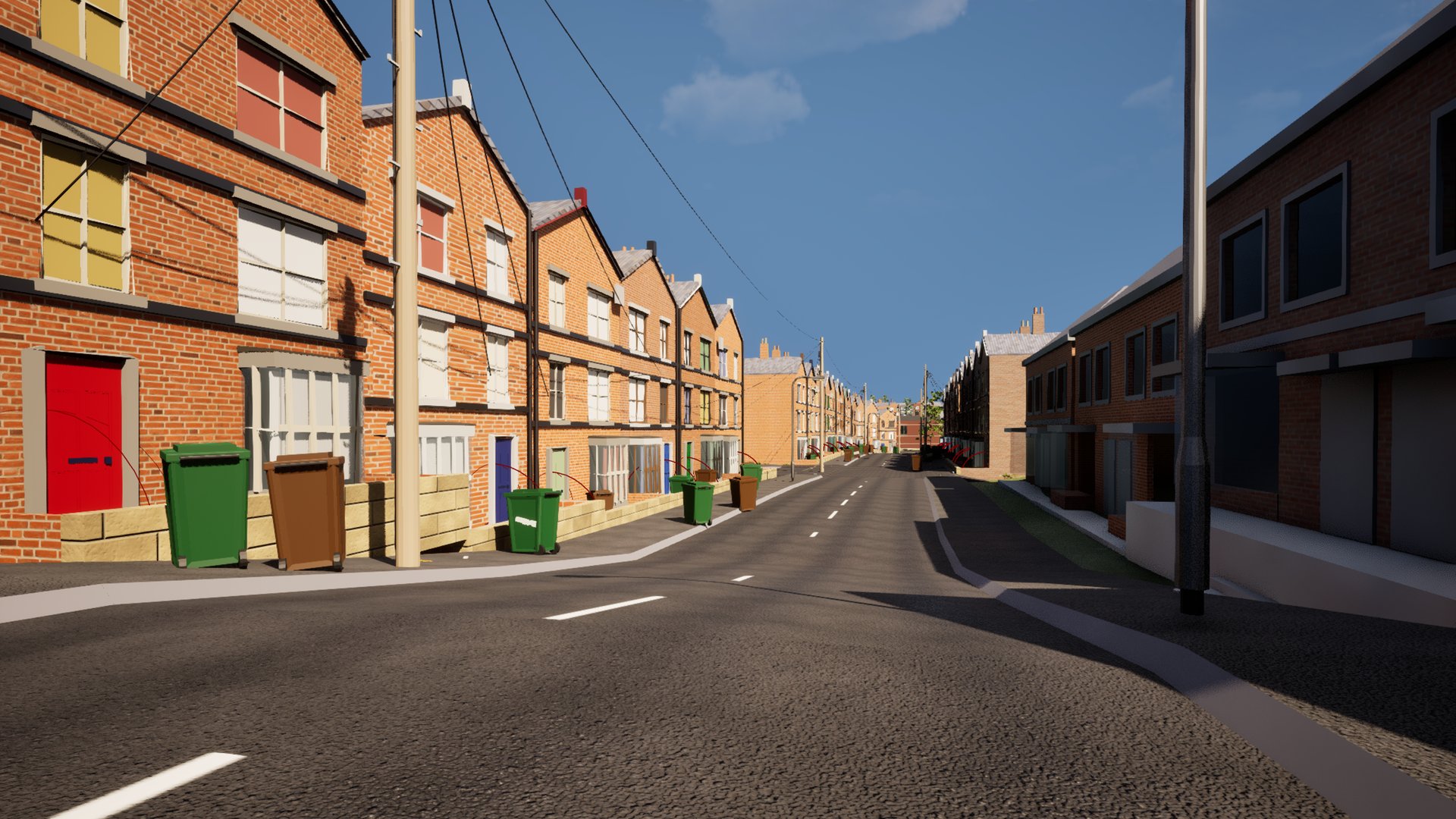
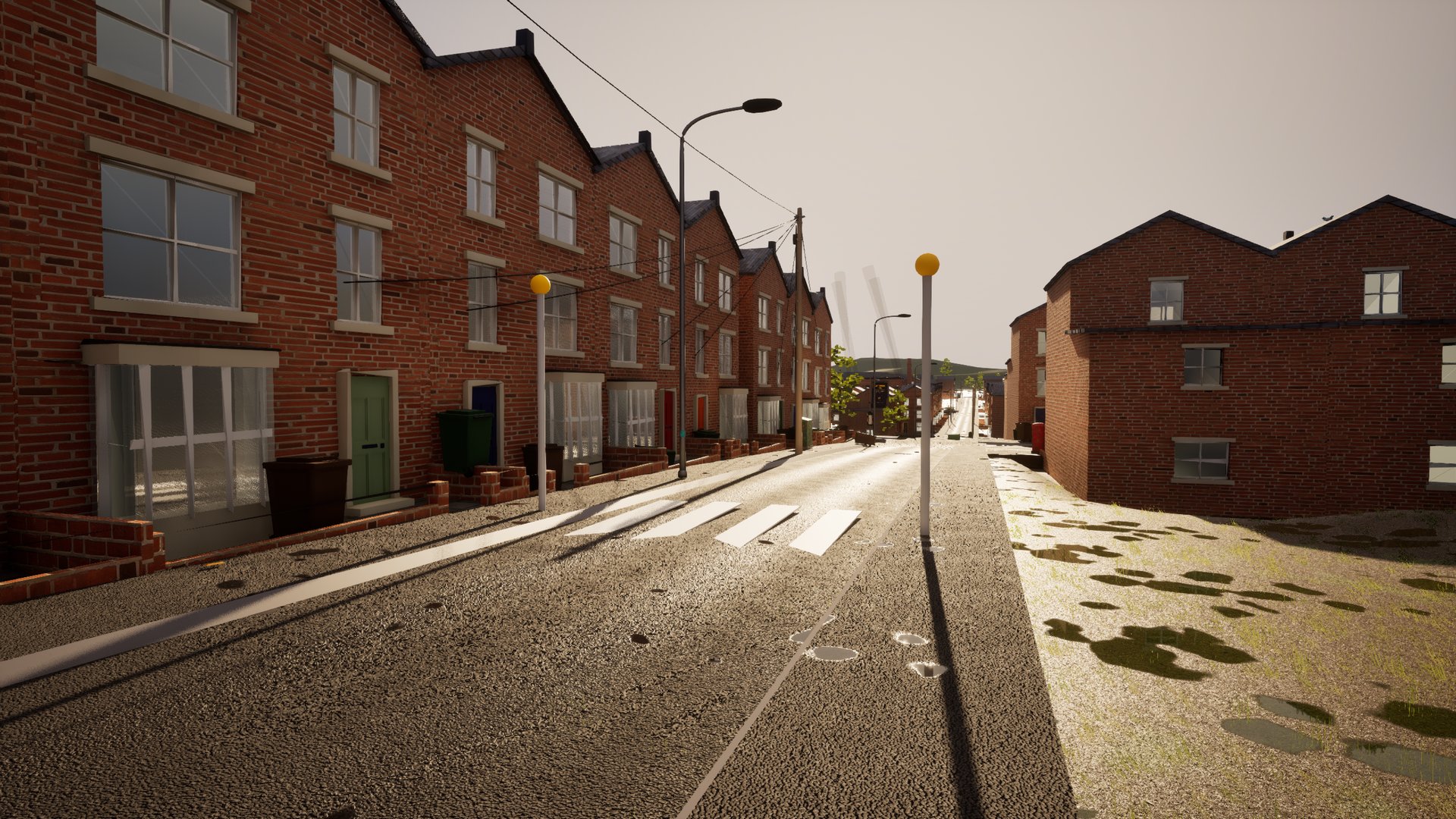
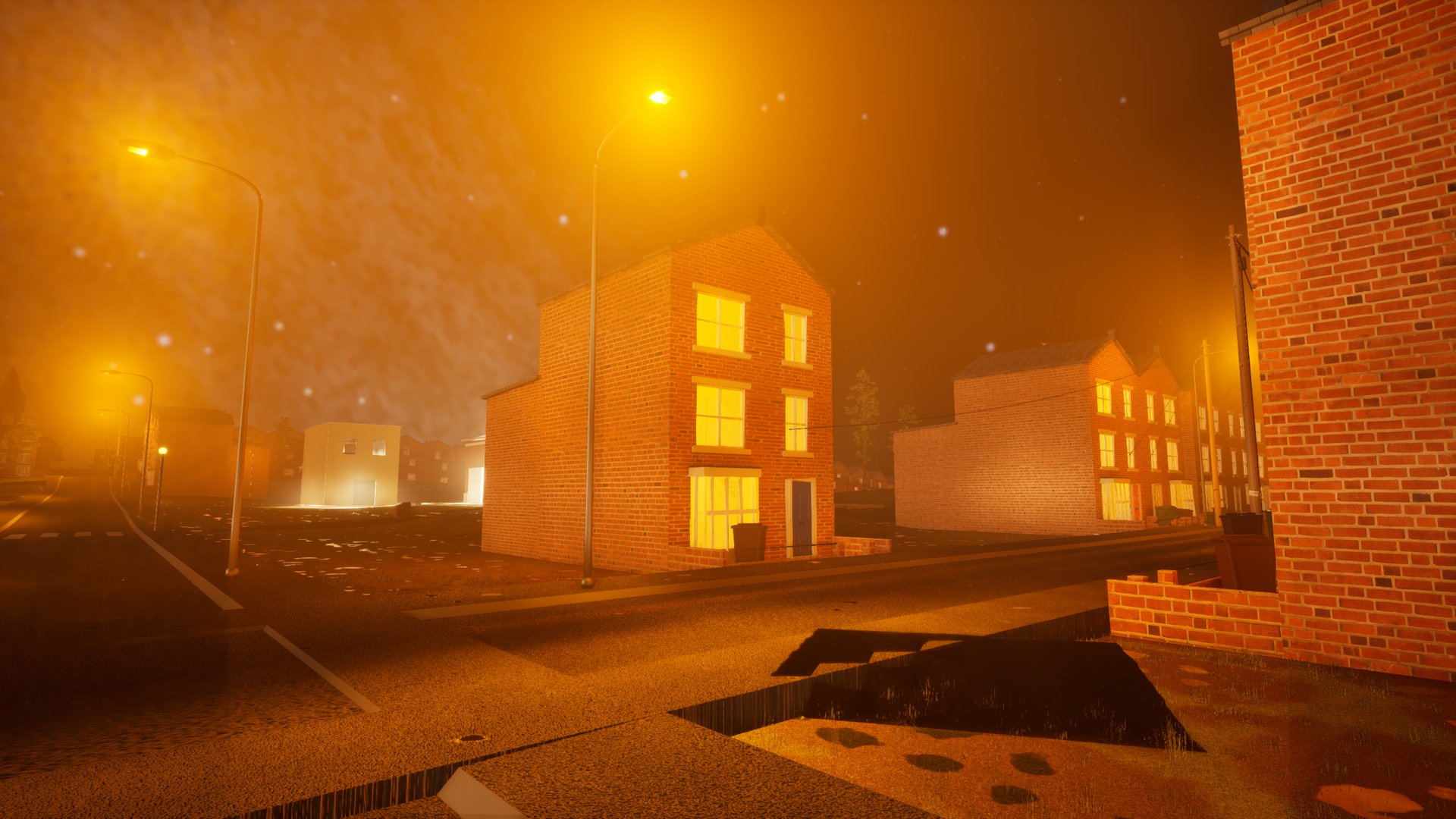
Second Chance is a first-person British open-world life sim. Two officers drive you across Oakhaven, put you out at 6 Radworth Road with an empty house and an empty pocket, and remind you of the one condition on your licence: you may not leave the area. Eight square kilometres of red-brick terraces, a ring road, a river and a council estate. What you make of it is entirely yours.
Everyone else is going to Vice City. You’re going to Radworth.
Made by one person, in the open, and you’re very welcome to come and watch it happen.
- 8.1 km²Of Oakhaven, walkable
- 546Terraced houses
- 1,010Wheelie bins
- 1Person building it
The people
Every resident of Oakhaven has a life of their own to get on with
At six in the morning Edward is already walking to the Slag & Slurry, because Edward always is. Denise is unlocking the job centre on Bestholme Road. Out past the ring road a wagon is starting its round. Twenty-five people, twenty-five front doors down twenty-eight streets, a hundred and fifty separate places to be across seventeen destinations — and every one of them on a life that was written before you turned up.
It is arranged entirely for its own convenience rather than yours. Each resident runs an hour-by-hour schedule — home, work, the shop, the chippy, the pub, the club, walking the dog — and walks it on the same pavements, kerbs and pelican crossings you do, in and out of a front door that is genuinely theirs. Follow one home and you will find their house.
And they carry on while you are looking the other way. Where somebody is gets worked out from the clock rather than from where you happen to be standing — so a woman four streets away, in a part of town the engine has quietly put to sleep, is exactly where the time of day says she is. Walk into the pub at nine and Edward has been on that stool since opening, because that is where the afternoon left him.
There is no tutorial, and there are no labels floating over anybody’s head. You find out who somebody is the way you would anywhere else, which is by talking to them. It is a town that was getting on perfectly well before you arrived and will carry on getting on whether you sort yourself out or otherwise.
What you do about any of it is the game. There is honest work going if you fancy it, and there are other ways to make the rent if you would rather. Most people will run both at once and hope the counting stays casual.
The devlog
Come and watch it get built
All of this gets shown as it’s made — what worked, what didn’t, and the bits that broke in genuinely interesting ways. Start anywhere in the playlist; it goes back to when Oakhaven was an empty grey box.
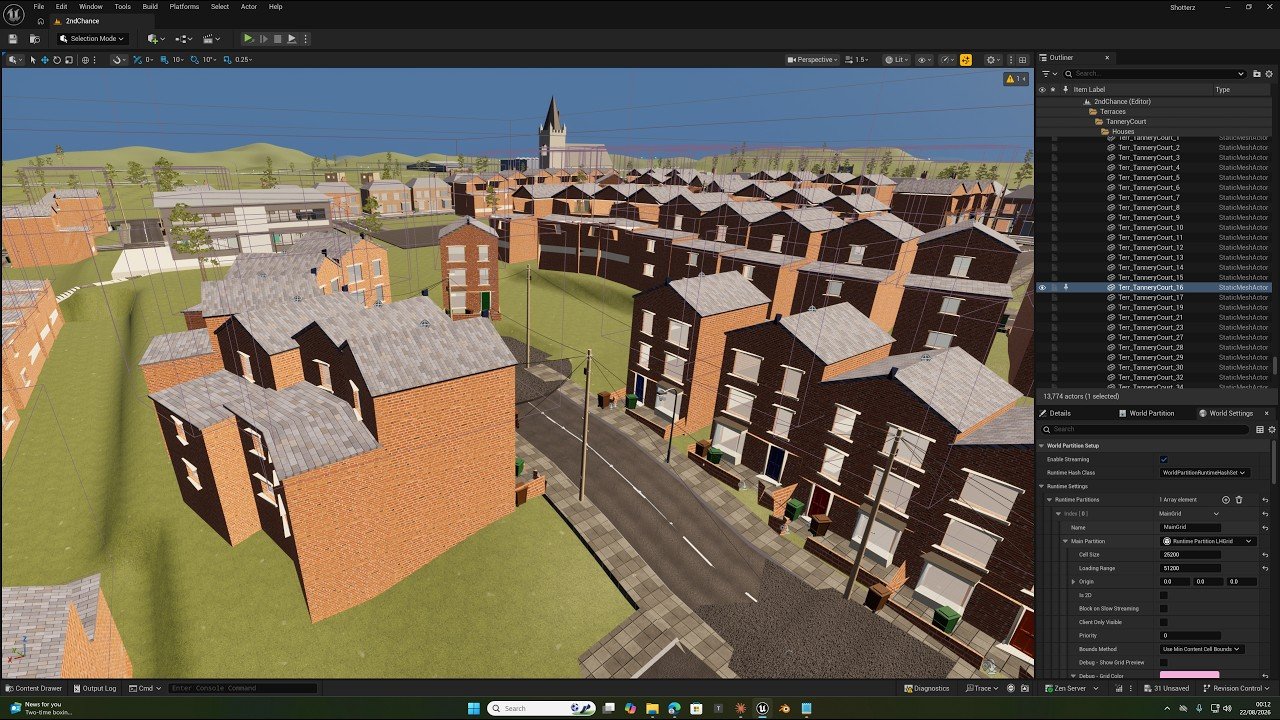
Your browser only reaches YouTube once you press play. Watch the full playlist → The channel →
Inside Radworth
What’s in the game today
Everything on this list is built and in the game right now, and I have described it in as much detail as I can get away with. Work that is still on its way is further down, on the roadmap, in its own column and clearly labelled.
-
You arrive in the back of a police car
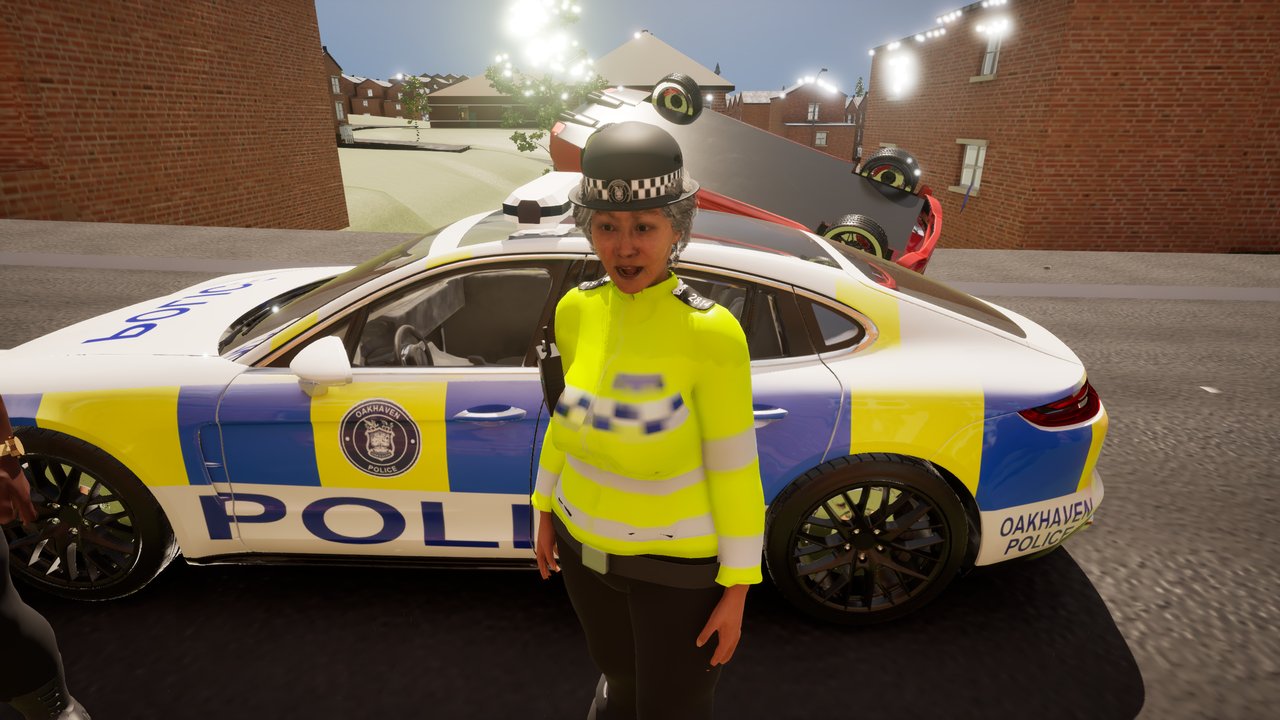
The game opens with a lift you did rather less than ask for. PC 3417 drives, PC 2814 rides shotgun, and the pair of them talk about you for the length of the estate. They pull up at 6 Radworth Road, put you out on the pavement, remind you of the terms and wish you luck in the tone people use when they mean the opposite. Then they drive off and the town is yours.
The inciting incident of this game is being told to behave, on a pavement, by a woman in a bowler hat.
-
They all actually live somewhere
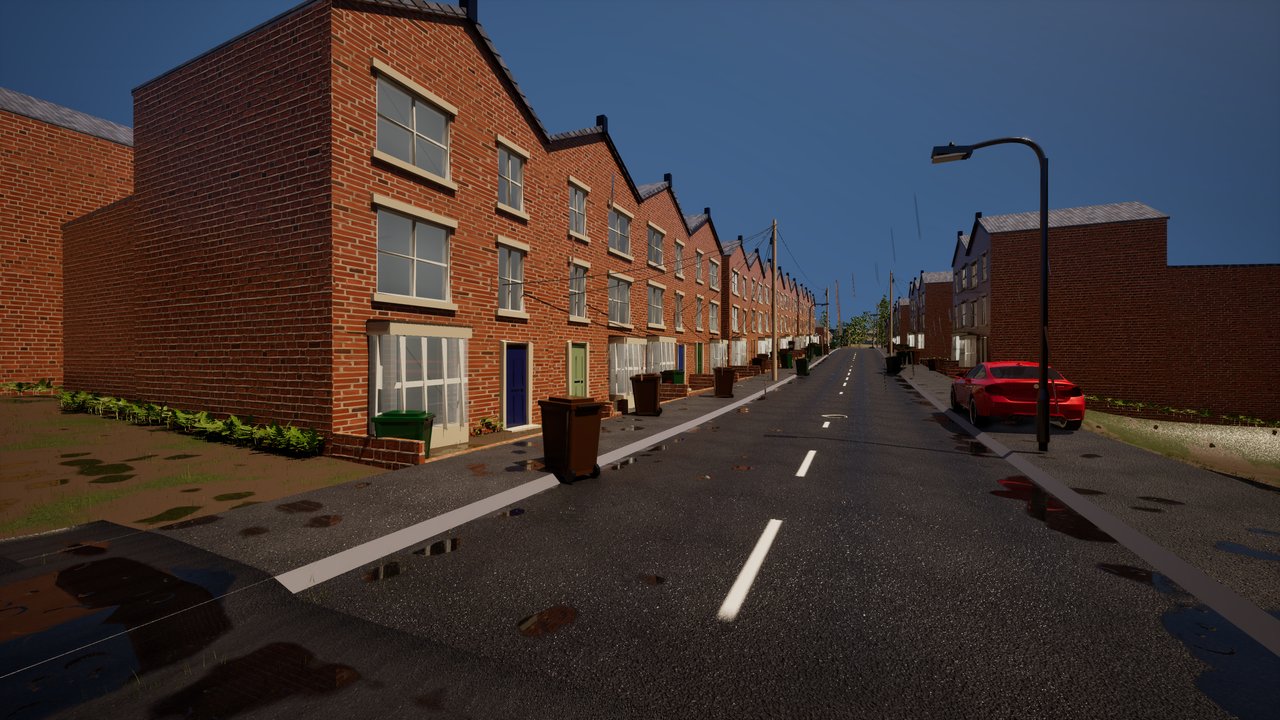
Twenty-five of them, with more moving in. Each has a name, a front door and a hundred and fifty places to be, and they walk the real road network — round the corner, over the bridge, past the chippy. Follow one home and you will find their house. It is genuinely their house. There are 546 of those houses and 1,010 wheelie bins to go with them, because somebody has to put them out.
-
Eight square kilometres of it
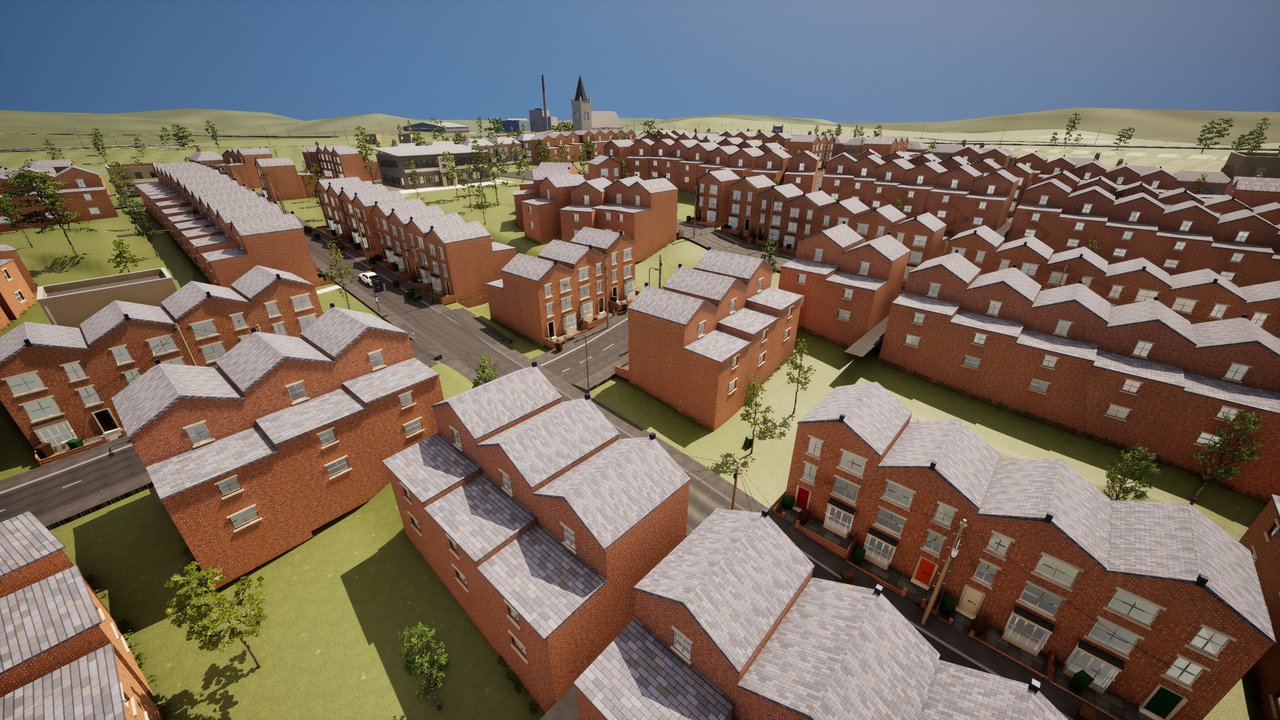
Oakhaven is not a corridor with houses painted on the walls. Five hundred and forty-six houses, a ring road, a river, a council estate, a golf course and an incinerator — all of it joined up, and all of it walkable from your own front door. The spire and the chimney on that skyline are both real places on the map.
-
Ten things on the board
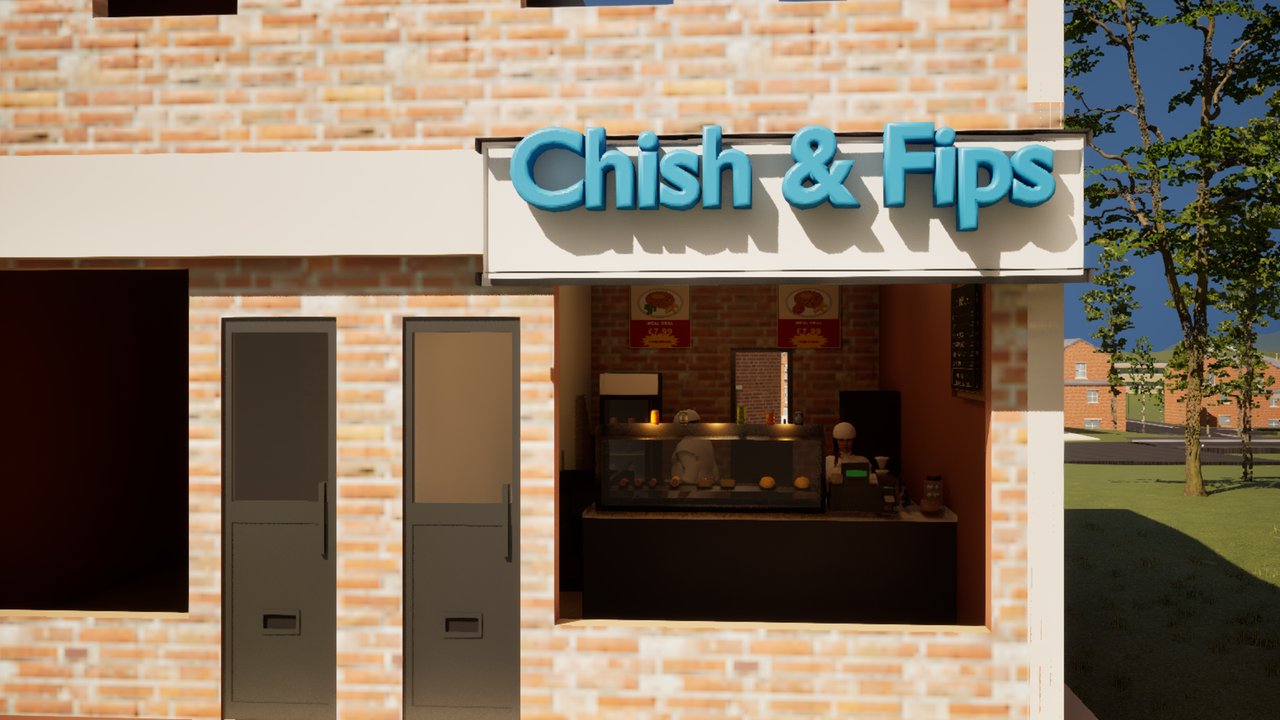
Chish & Fips does fish, chips, pies, battered sausage and mushy peas, and the fryer has been going long enough to have opinions. You queue, you order, you collect — and then, this being the Midlands and it being cold, you eat it on the walk home rather than waiting until you get there. What you do with the wrapper is between you and the bin, and the bins on this estate are watched more closely than you would think.
-
The Slag & Slurry
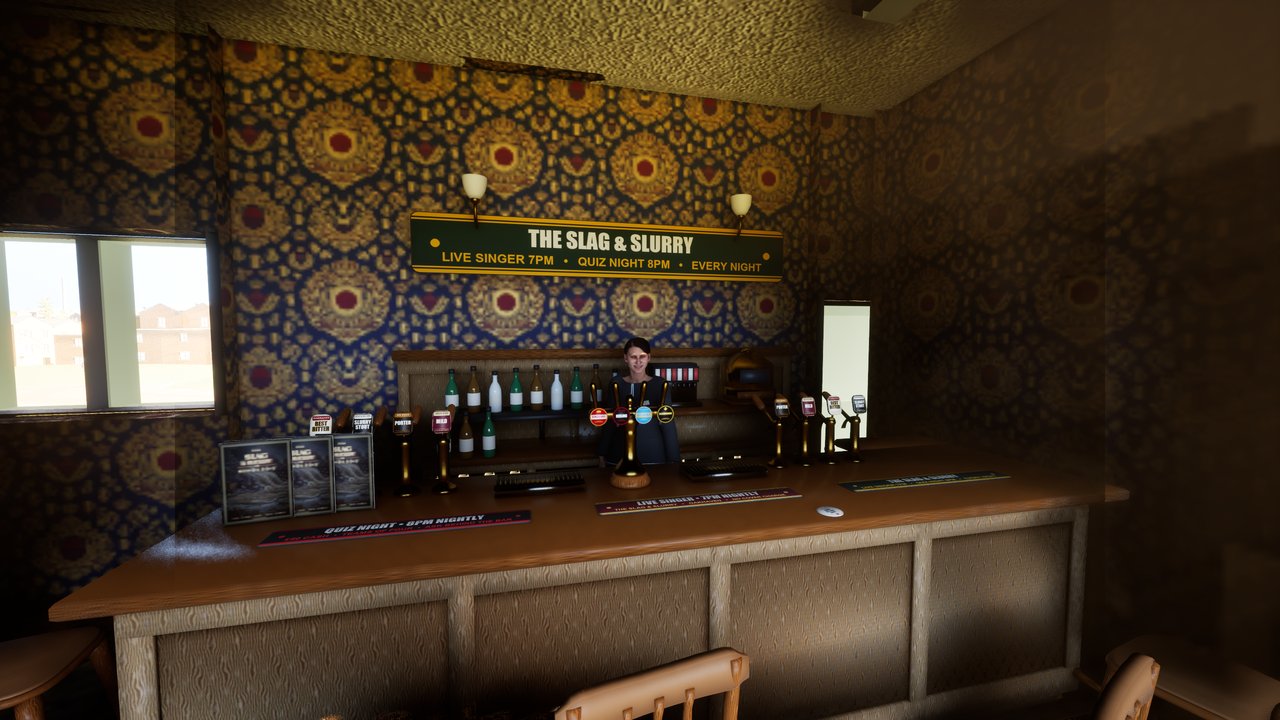
Charlotte’s behind the bar. Pick up the menu, page through it properly, choose one of twenty drinks, and she’ll fetch it, pour it, carry it over and take your money. Five hundred pounds went in. Four hundred and ninety-three fifteen came out.
-
Samantha’s on at eight
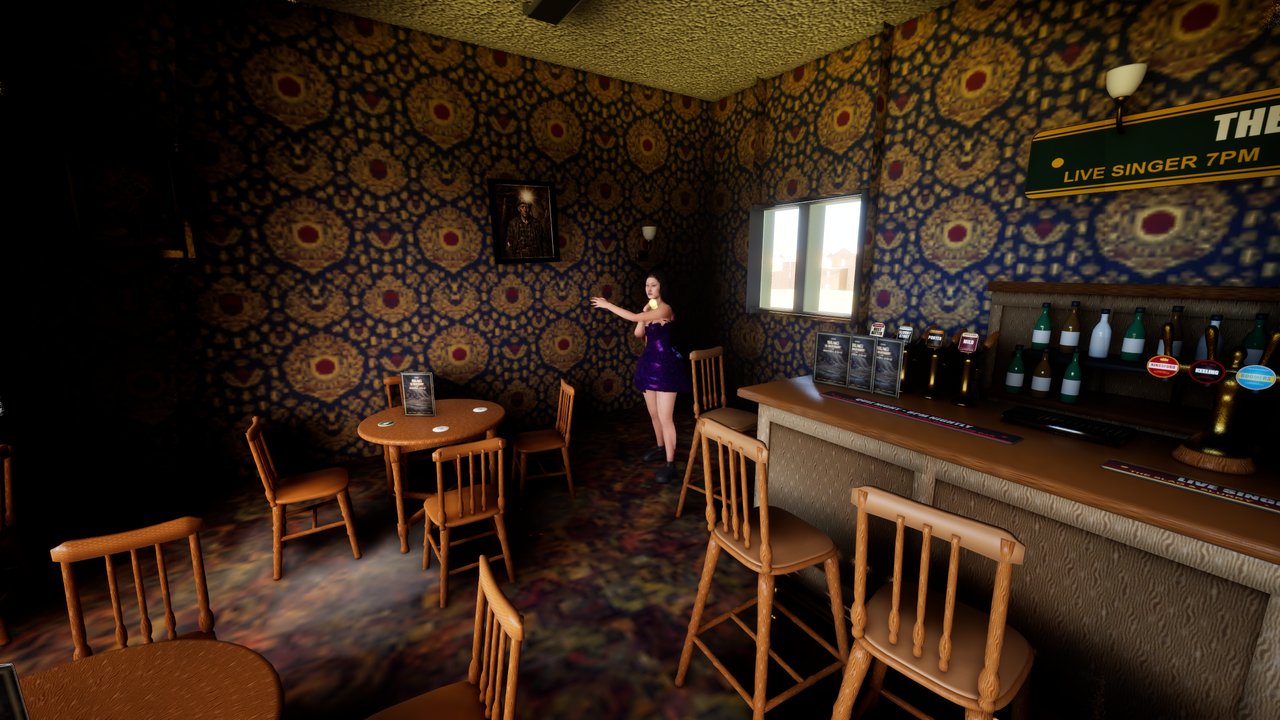
An evening set in the corner — Irish, folk, a bit of country. Edward has been on the same stool since opening and he will be on it when she packs up. The Slurry gets on with its evening at its own pace, and you are welcome to join in or stand at the bar and watch it happen.
-
Clock on: somebody has fly-tipped on the verge again
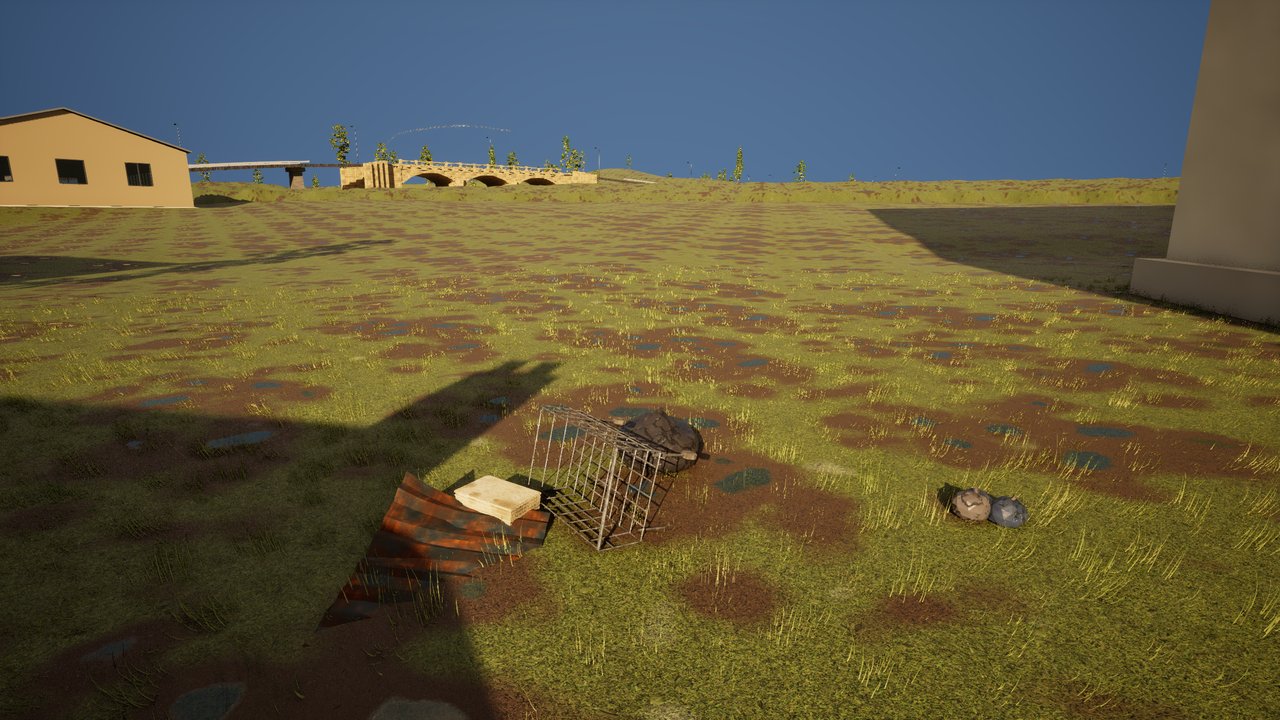
Your phone goes at six. Wozza picks you up in the liveried flatbed and you spend the morning hand-shifting other people’s rubbish off the verges — cab, load, cab, load — then drive it out to the incinerator, tip it and get paid. Eighteen spots around the edges of Oakhaven, forty items dumped across them: a sheet of corrugated iron, a wire cage trolley, rubble sacks, a mattress going soft in the rain. Each has a weight, a carry distance and somewhere you can get the flatbed in.
The council lorry that comes to collect it has FLY-TIPPING IS A CRIME, FIXED PENALTY £600 written across the tailboard. Honest work, and exactly as glamorous as it sounds.
-
Sign on: Bestholme Job Centre
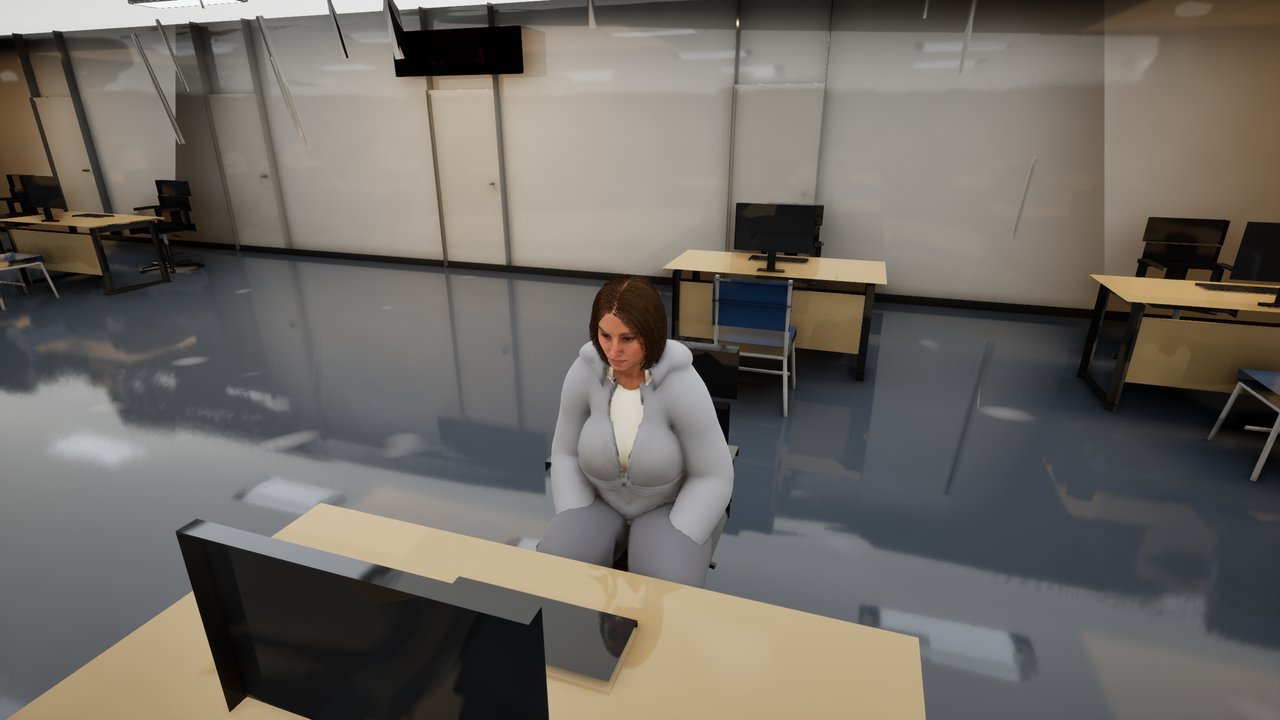
Denise has sixty-four voiced lines and every one of them is delivered by a woman who finished caring some years ago. Take a seat, get called through, get asked what exactly you’ve been doing with yourself since you got out. The strip lighting alone will make you want a job.
-
There’s a phone in your pocket
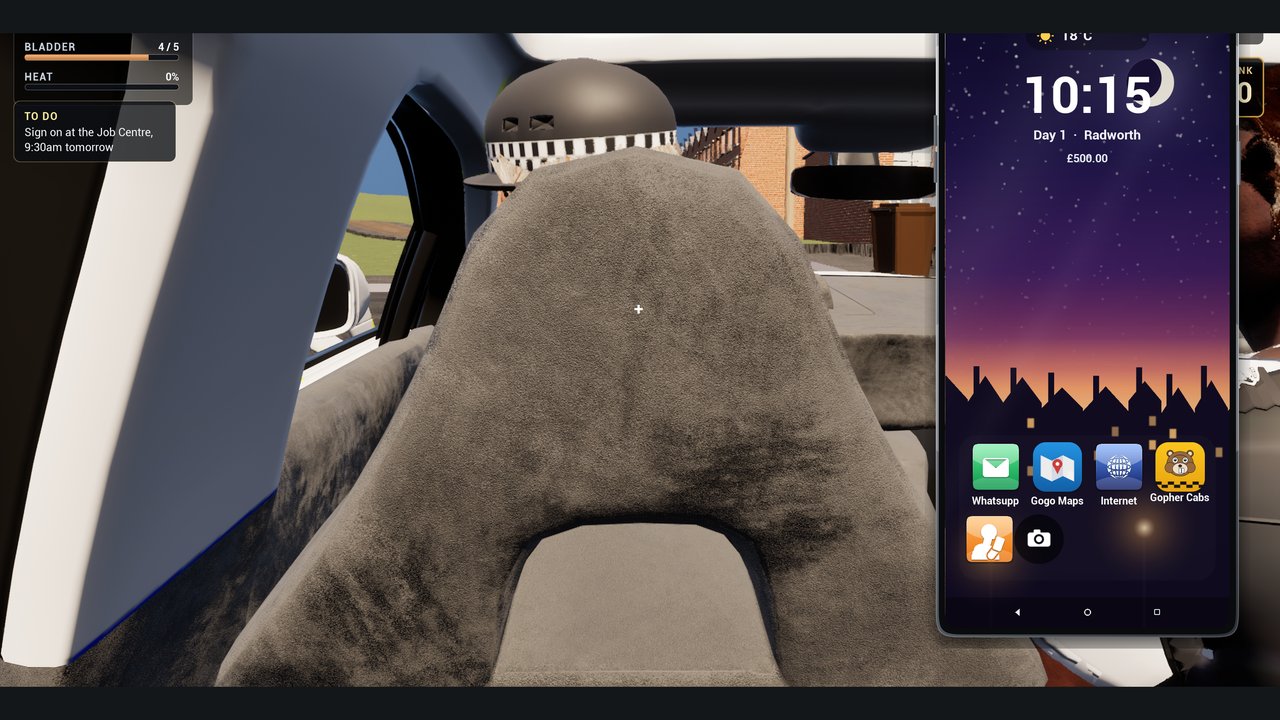
Tab brings up an Android-style handset with working turn-by-turn satnav. Set a destination, get in the car or on the delivery ebike, and follow it out through the ring road and over the bridges. It routes on the actual roads, not a straight line.
-
The car outside is yours
A maroon coupe at the kerb outside number 6, pitched to the camber, waiting where you left it. It’s an automatic and you steer it with the mouse, and it will take you anywhere the road network goes — round the estate, out onto the ring road, over the bridges, all the way to the incinerator. There’s a radio in the dash playing whatever Oakhaven is playing, and the satnav in your pocket talking over it.
Shot to comeThe coupe parked at the kerb outside 6 Radworth Road.
-
The sky over Radworth does what the sky does
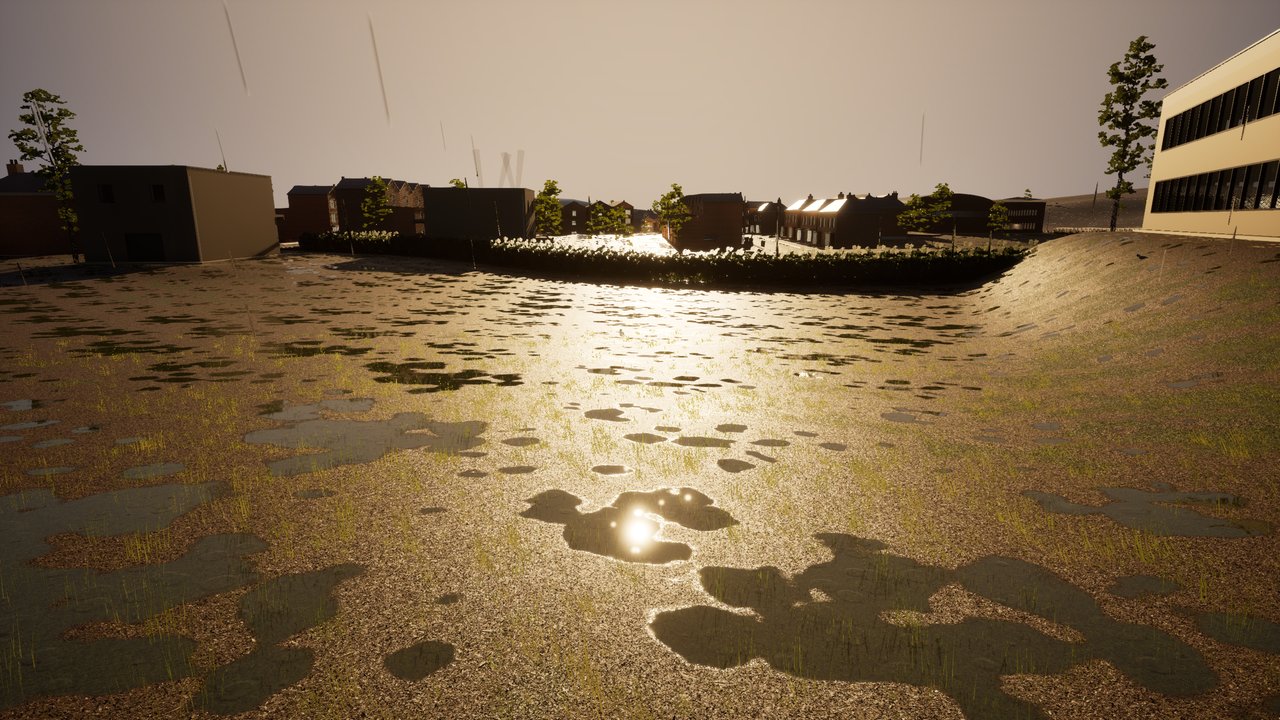
Cloud builds through the afternoon and breaks up towards evening — proper British cloud, the kind that can’t make its mind up. Then the rain comes in early and stays late. The brick goes dark, the gutters run, water stands in the ruts along the verge, and the road holds the streetlamps in it for an hour after it has stopped. The light goes flat and grey and the whole town goes with it. Then the sun drops under the cloud at six and every wet roof on the terrace catches it at once.
It’s the Midlands. Bring a coat.
-
The sky is not a texture
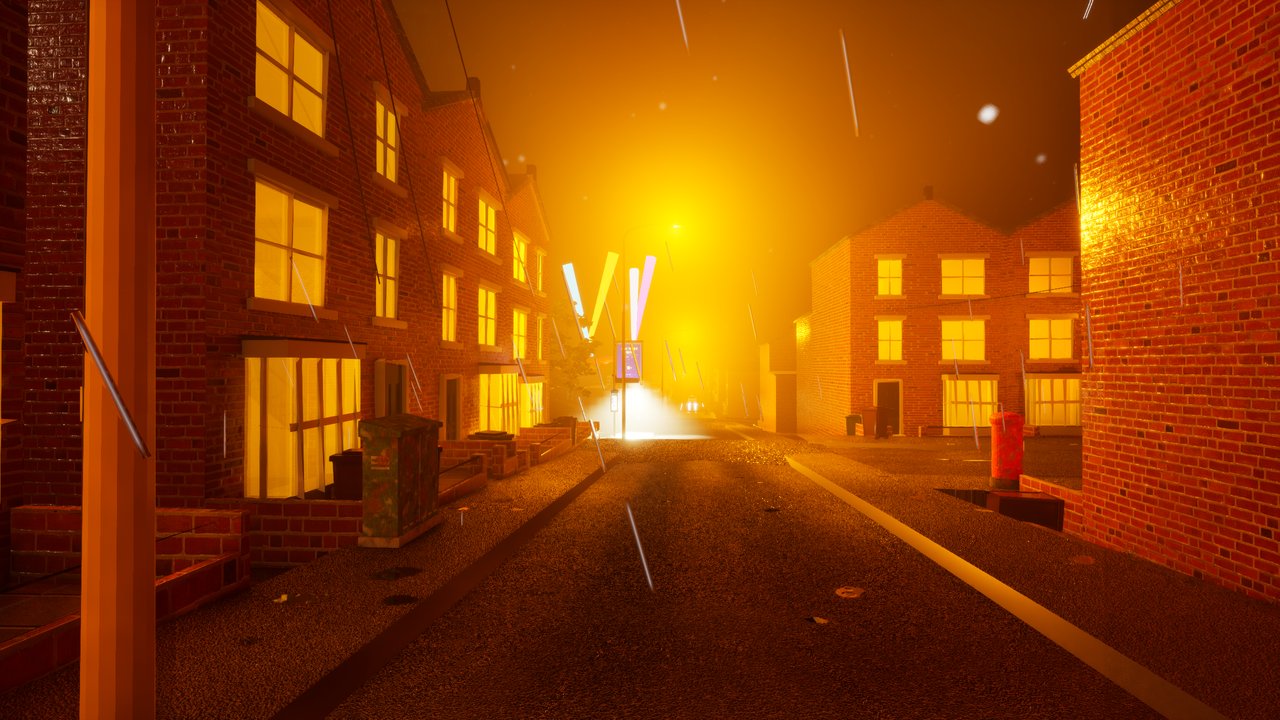
Every star over Radworth comes out of the Yale Bright Star Catalogue and sits where it should. Real constellations, Polaris where Polaris goes, the Milky Way across the middle of it, and the moon at its correct phase for a Midlands August. Look up.
-
Nineteen kinds of animal, all of them keeping their own hours
The hedgerows and verges have things living in them — nineteen species, each keeping its own hours, so the rabbits and the pheasants belong to the daylight and the foxes and the badgers come out when you’d rather they didn’t. Get close on foot and they bolt for cover long before you reach them.
They are not nearly so careful about a car. Catch one at any speed worth the name and that’s the end of it: the body goes down under the wheel, stays down, and is still lying there when you come back past. Whether anybody in town will give you money for it is the next thing being built.
Shot to comeA fox on a verge at dusk, caught in the headlamps.
-
There is a way down
A mile out past the north ring road, in the middle of nowhere in particular, there’s a capped well with a rope ladder going down it. Climb down and the town stops. Twelve stretches of worked passage, torches burning in brackets driven into the rock, braziers on the floor where the roof is high enough to take them, and drops in the dark that you would not walk off twice.
It has been down there a great deal longer than the terraces have. What it’s for is still being worked out — but the well is open, the ladder holds, and you can get back up again.

Also standing in Oakhaven
- The Sweatbox — a nightclub in a converted Victorian brick works
- Last Tenner Bets, and a full European roulette table
- Chish & Fips
- Bossman’s corner shop
- Bagshaws Butchers
- St Cuthbert’s
- The Temple of the Unsleeping Eye — an Egyptian Revival lodge, comprehensively the wrong size for the street it stands on
- The police station
- The incinerator plant
- Radworth Golf Club — eighteen holes on the rising ground
- The Baulk Line — a 1904 north-light snooker hall
- The Working Men’s Club
- Green Boss
- The council depot
- 31 amenity buildings
- A delivery ebike, if the car’s too much bother
- An undercover officer who walks the footways properly and clocks what you’re up to
- Jack, who touts for a game of rock paper scissors on a street corner, plays you for money, and then knocks off to the pub for a pint — his brain is a real prediction engine that learns your patterns as you play, and gets harder the longer you stay. There’s a whole page on how to beat him
The demo goes to the list first, before it goes anywhere else.
Get the demoYou may not leave the area.It’s a condition of your licence. Everyone who’s been out here a while will tell you it isn’t the only reason.
Free to every house
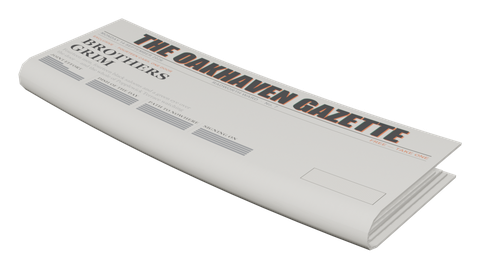
The Oakhaven Gazette
It lands on the mat at 6 Radworth Road every week, and in the game you pick it up off the doormat and read it standing in your own hall. It reports what has actually happened in Oakhaven — the golf club’s green fees, who got the bin contract, which pub is after a cleaner — and it never advertises anything you can’t go and do.
Devlog
Everything that broke, and why
I write up the work as it happens — what I was trying to do, what I used, the trap I fell into, and what the fix turned out to be. It is meant to be useful to anyone building something similar, so the headings are the symptoms rather than the diagnoses.
The roadmap
Where this is going
Dates are the one thing I will keep from you, and for a good reason: I am one person, and anybody handing you a date this early is having you on, or having themselves on. What I can do instead is be straight about the state of every single thing, and let you watch it move across these columns as it happens.
-
In the game now
- Oakhaven itself — 546 terraced houses down 28 named streets, a ring road, a river, a council estate and 1,010 wheelie bins
- The release drop-off at 6 Radworth Road, voiced, with two officers and a lecture
- Signing on at Bestholme Job Centre — Denise, the assessment, and the vacancies it puts you on
- The Slag & Slurry: Charlotte behind the bar, twenty drinks on a menu you page through, and the evening set
- Boss Man’s Corner Shop, stocked to the gantry, and the chip shop board
- A pub fruit machine you can actually lose money on
- The phone in your pocket, with turn-by-turn satnav that routes on the real roads
- A day that runs in real time, weather that means it, and a genuine star map
- Your car, and the whole road network to point it down
- The hedgerows, the wildlife, and what a bonnet does to it
- Below ground: the well, the ladder and the cave network
-
Being built
All of this is written and sitting in the game files. It is in this column rather than the one before it because it is waiting on me to play it properly, which is the honest reason and the only one that matters.
- The bin round — the wagon, the crew, the lift, and an induction film to sit through first
- The fly-tipping round, and the incinerator at the end of it
- Getting the whole street walking its routines to the minute
- The railway: two stations, a line between them, and a seat on the train
- Snooker for money at the Baulk Line
- A round at Radworth Golf Club
- The tables at Last Tenner Bets — roulette, the pushers and the scratchcards
- The Wheelwright Close car boot sale, and buying kit off the tables
- Selling what you scrape off the road to Bagshaws
- Scrubbing the graffiti back off the bins it went on
- A transistor radio in the house you can tune yourself
- The lodge on the hill, and the fourteen black saloons that park there of an evening
-
Planned
Agreed and intended, described here in the broad strokes on purpose. The specifics change while a thing is being designed, and I would rather tell you the shape of it than promise you a detail I later take back.
- The honest path, all the way up. The ambition is that it keeps going — off the programme, onto the bins, then running the round, and on into local politics from there
- The other direction, just as far. You pick a way to live and you can follow it a long way. Both halves of that get the same care
- A reason to knock at the lodge — somewhere to take the right sort of find, and a way into certain work later on
- Fighting — fists, whatever is to hand, and the good sense to walk away. It goes in once the everyday interactions are right, because that is the part everything else rests on
- Impatient drivers on the bin round, squeezing past a stopped wagon on a narrow terrace. This one comes from a real refuse loader, and it really happened
- Fitting out the rest of the town — the club, the snooker hall, the gym and the leisure centre — with real staff behind the counters
- Proper slate roofs, and more country lanes out past the ring road
- The toilet minigame in every toilet in Oakhaven, rather than only the pub
- A credits screen, which already owes a name or two
- An options screen for flashing effects, camera shake and motion
- A build you can play. That is what all of the above is for
This roadmap moves. When something shifts a column, the list hears about it first — that’s most of what the emails are. If there’s something you’d push up the order, say so; I do read it, and it has changed my mind before.
The demo
Come along for the ride
There isn’t a demo yet. When there is, this lot get it first — before itch, before Steam, before anywhere.
One email, roughly monthly, and only when there’s something actually worth your time. No countdowns. No “exciting news”. Reply to any of them and it comes straight to me — I read every one, because there’s only me to read them. And your address doesn’t go anywhere near anybody else, ever, for any money.
Who’s making this
It’s just me — and you’re very welcome
I’m James, and I’m one person building Second Chance in Unreal Engine 5 around a day job and a university degree, on a machine with an 8 GB graphics card. That last bit is a deliberate constraint: if it runs on mine, it runs on yours.
Oakhaven is invented, but it is invented out of a real place. The brick, the road markings, the bus stops, the chip shop, the way the light goes at four in the afternoon in November — all of it has been looked at properly and built on purpose, most of it off photographs taken round the corner from where I live. If you have lived somewhere like Radworth you will know within about ten seconds whether I have got it right.
Everything gets shown as it is built, warts and all, on the YouTube channel and in the devlog — broken animations, buildings hovering a foot off the ground, the lot. And if I have got a detail wrong, please tell me. Somebody saying “that’s not how the bins work round our way” is genuinely the most useful thing I get sent.
Questions
The obvious ones
What is Second Chance?
A first-person open-world life sim set in Oakhaven, a Midlands town I made up. There’s a neighbourhood called Radworth — 8.1 km² of Victorian terraces, a ring road, a river with bridges and a council estate — and twenty-five people who live in it. You come out of prison on a release programme, get put out at 6 Radworth Road with an empty house and an empty pocket, and work out what to do about that. Other games in this corner hand you a loop. This one hands you a town, and the loop happens inside it.
I love free roam in the big open-world games, but I could live without the shooting and the story missions. Is this for me?
Yes. That is more or less exactly who I am building it for, and it is the reason it looks the way it does.
The thing people say they love about a big open world is usually the world — driving about, stopping in somewhere, finding a bit of town they had walked past twenty times. The thing they get handed is a mission list. Second Chance keeps the first part. There is a premise — you are out on licence and you may not leave the area — and after that the town is simply open. Take a job or leave it. Sit in the pub. Drive to the coast road and look at the weather. Go down the well and see what is under the fields. The clock carries on either way.
On the rough stuff: there are no guns in this game, and the trouble you can get into is the kind you can talk your way out of, run away from, or go home and sleep off. The stake is your licence, your money and your reputation rather than a body count — which is a genuinely different game, and the one I find far more interesting to build. If you want the open world and the daft British detail, and you would rather keep the peace while you are in it, you are the person I have in mind.
So do I have to go straight, or not?
Entirely up to you, and you can change your mind whenever you like. There is legitimate work: signing on at Bestholme Job Centre is in the game today, Denise will put you in front of an assessment and the vacancies she can offer you depend on how you do at it. The bin round and the fly-tipping round are both written and waiting on me to play them properly. There are riskier ways to make the rent as well, and most people will try to run both at once and see how long the counting stays casual — which is the version I find most interesting.
Where all this is going is a career in either direction that keeps going a long way up. That is the plan rather than the present tense, and it sits on the roadmap above, in its own column, where I can be held to it.
Is this the British GTA?
That’s the question I asked in a video and it turned out to be the one everybody wanted to talk about, so here’s the straight answer: it is its own thing, and I’d be daft to claim otherwise. That is the most expensive game ever made and this is one bloke, one graphics card and eight square kilometres. Second Chance is an independent game with no affiliation to Rockstar Games whatsoever.
What it is is the British version those games have never fancied making. Skip the mansion, the speedboat, the crew and the montage. You get a council house with an echo in it, a licence you are on, a job centre appointment you have to keep, and a fry-up you can afford on Thursday and are thinking twice about on Friday. The fantasy here is getting through the week and staying out — and the comedy writes itself, because it is drawn from a real place, right down to the wheelie bins, the pub carpet and the streetlamps going half-dim at ten to save the council a few quid.
If the big one is the American dream at full volume, this is a Tuesday in the Midlands with the heating off, and a chip shop called Chish & Fips.
Are there guns?
No, and there is a reason beyond squeamishness: this is England. Firearms here mean armed response or somebody’s shotgun on a farm, and neither is a thing a man on licence carries about a council estate.
Trouble in Oakhaven is the British kind — somebody squaring up outside a pub at closing. Fighting is on the roadmap as an intention rather than a feature: fists, whatever is to hand, and the good sense to walk away. It goes in once the everyday interactions are right, because that is the part everything else rests on. Either way, failure here costs you money, embarrassment or your licence, which is a far more interesting thing to lose than a life.
I’m photosensitive. Is it safe for me?
I can’t promise you it is, because it is yet to be tested for that by anyone qualified, and I would rather say so than imply otherwise. What I can tell you is what has been done: the whole town was measured for z-fighting — the flicker you get when two surfaces argue about which one is in front — and every building found guilty of it has been rebuilt. The terraces, the pub, all twenty-nine amenity buildings and five standalone kits are done; the sweep across the smaller kits is still going. An options screen for flashing effects, camera shake and motion is on the roadmap and isn’t built yet. If you watch a devlog video and something reads wrong, tell me the timestamp — that’s how the terraces got caught.
When’s it out?
No date. I’m one person and anybody who gives you a date this early is lying to you or to themselves. Join the list and you’ll know the day I do.
What’ll it cost?
Not decided yet. What I can promise now: one price, paid once. It arrives finished, it stays finished, and the only money that changes hands is the money you paid for it — no subscription, no season pass, and a shop you cannot buy anything from with real money, because there isn’t one.
What will I need to run it?
I don’t have verified minimum specs yet, and anyone quoting exact numbers before optimisation is guessing. What I can tell you is what I build it on: a Windows PC with 8 GB of video memory. That ceiling is a deliberate constraint I’m holding the whole project to, precisely so it runs on normal machines. Windows PC at launch. Proper specs go up here as soon as they’re real.
Is there a demo?
Not yet. It’s the next big thing after the current work, and it goes to this list first.
What’s the age rating?
It’s made for adults. It’s got strong language, drinking, gambling, sexual references, drug references and a general atmosphere of people doing things that would get them a caution. There’s no PEGI number on it yet — a rating gets issued when a game goes on sale, and it’ll be on this page the day it does. Until then: treat it as 18+, and don’t put it in front of a fourteen-year-old.
What happens to my email address?
It sits in a database I control, encrypted — so even a stolen copy of that database is a list of ciphertext rather than a list of people. It’s used for exactly one thing: telling you about Second Chance. It isn’t sold, rented, swapped or handed to advertisers. Every email has a one-click unsubscribe that works immediately without asking you to log into anything, and it takes you off my list, not some marketing company’s. The privacy notice names me, names the one company that helps me send the mail, and says exactly how long everything is kept.
I’ve found a bug, or I want to tell you something.
Please do. The game itself will have a report button that sends me the details directly. Failing that, email me — the more specific the better. “It crashed” is a start; “it crashed when I got out of the truck at the incinerator” is a fix. I read all of it myself, because there’s only me.
Still here? Go on then — come and be one of the first.
Join the list