First Come, First Served
The line outside the Sweatbox
Late on Sunday night, in a test run of a Friday evening, eleven people from the town stood in a line outside the Sweatbox, in order, waiting for the doors. At seven they went in, front of the line first. Nobody pushed in. It had taken two rewrites and a morning to get there, and the first of the rewrites had never run at all.
It was Sunday, so the gym in the morning and his parents' in the afternoon, with the usual playtest video to show them. The work went on without him at the desk. The agent, Claude Code Opus 5.5, was by now several sessions, each with a thread - the club, the hotel, the gang, the ambulance - and one coordinating session handing out the single copy of the editor like the key to a pub toilet.
The club thread's problem was a woman called Christie. She is a regular at the Sweatbox, the town's nightclub, and on a Friday she goes and stands at the door before it opens, because that is what the game told her to do: be there for the doorman's ID check at seven. Early that morning, a test run had reached 18:59 with Christie still waiting politely at the door and five people already inside, dancing. James saw the still and said so. She's still queueing while other people are inside dancing.
A slot with nothing in it
The agent's first answer, at nine in the morning, was to have early arrivals queue outside behind Christie and be let in at seven, front first. It wrote the change, the change was built into the game's code, and the next test run showed the queue box outside the club empty from 18:54 to 19:04. Zero bodies. The town's clubbers were still walking straight past Dean and into the hall.
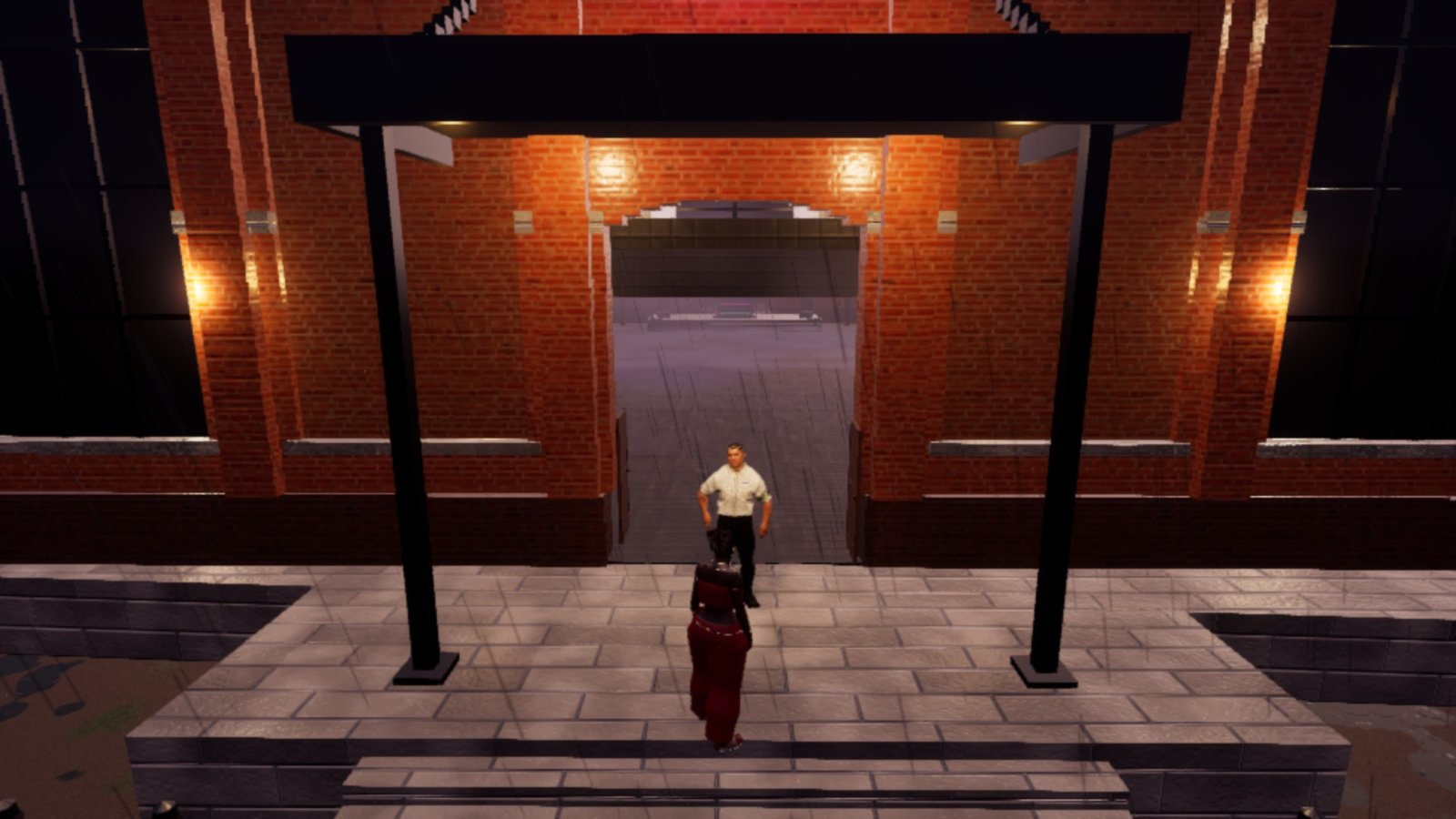
The agent's report at eleven said why. The queue hung off the code that picks a resident's next activity, and the clubbers never went through it. The town's schedule had its own older route to the club, which sent each of them to the club's entry point. The entry point was inside the hall. The new queue sat on a road nobody drove down.
The second rewrite went into the schedule itself. Anyone setting off for the club between six and seven gets a numbered place outside, first come, first served, and the game writes a line to its log every time somebody joins: who, which slot, where they are standing. When the doors open at seven, every slot writes a second line as its owner walks in.
That was the version that ran on Sunday night. Eleven clubbers queued in slots nought to ten between half six and seven. All eleven logged walking in when the doors opened. The count of bodies inside the hall before seven was zero. By eleven o'clock in the game there were 33 dancing, 37 people in the hall, and a barmaid behind the bar who had, since the morning, been given something to do there - James's word for the brief at four minutes past eleven had been drinking and dancing.
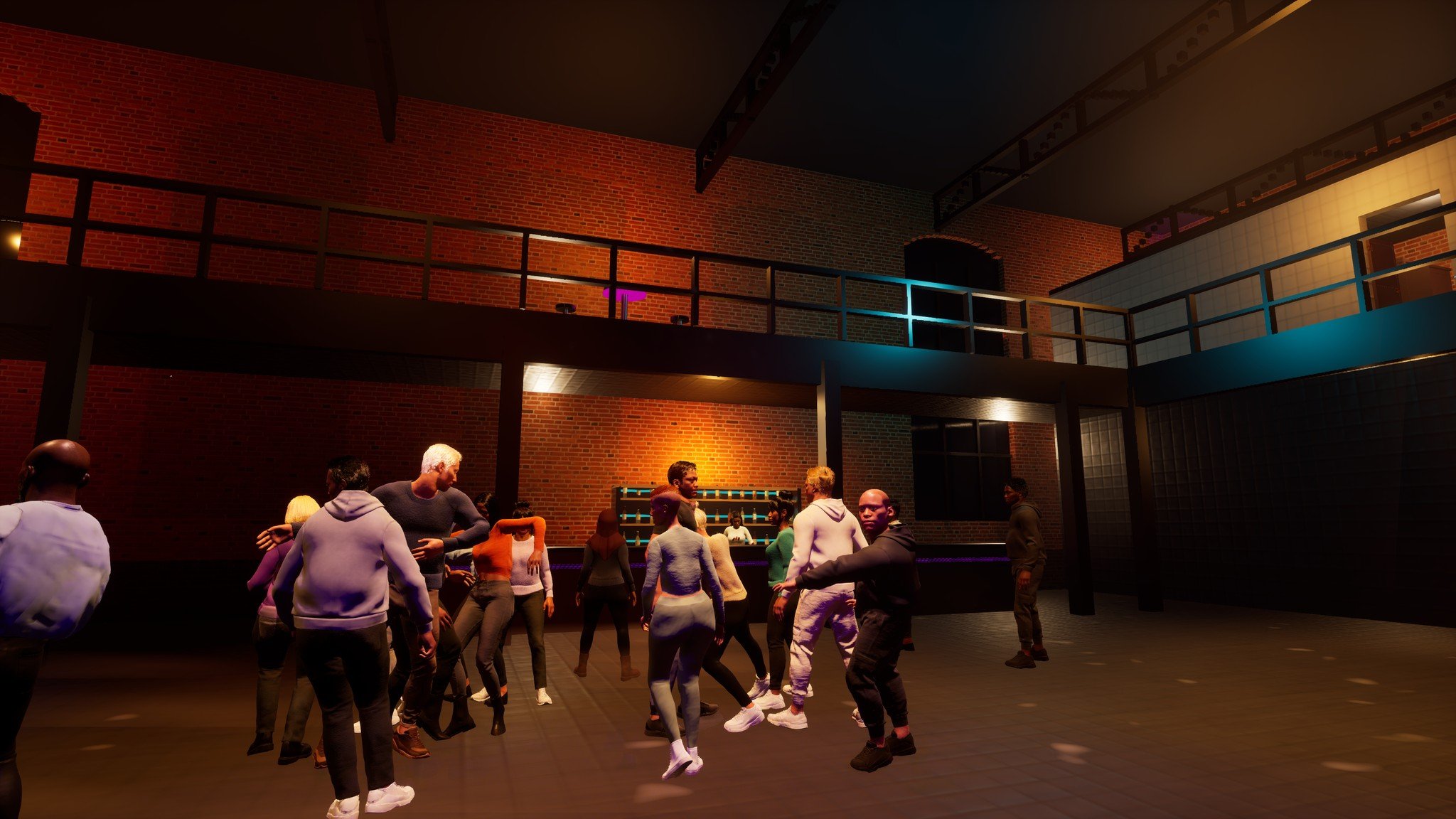
GTA VI will have nightclubs. It will not have a queue that a British person stands in and recognises, with the gap left between strangers and the one regular at the front who was there first. That is the point of building it here. A player from anywhere else might not notice. A player from round here will notice if it is wrong, and will not notice why it feels right.
Eighty candelas
The hotel was the other long thread. The Bumoral is a luxury hotel on a hill above the town, red sandstone, and on Saturday it had been placed and saved in the game. On Sunday it had a list of faults, and the first fix slot opened at quarter to two.
The kitchen in the basement was the visible one. At low scalability it looked bright enough. At Epic, the setting that draws the game the way it is meant to look, the floor went near-black.
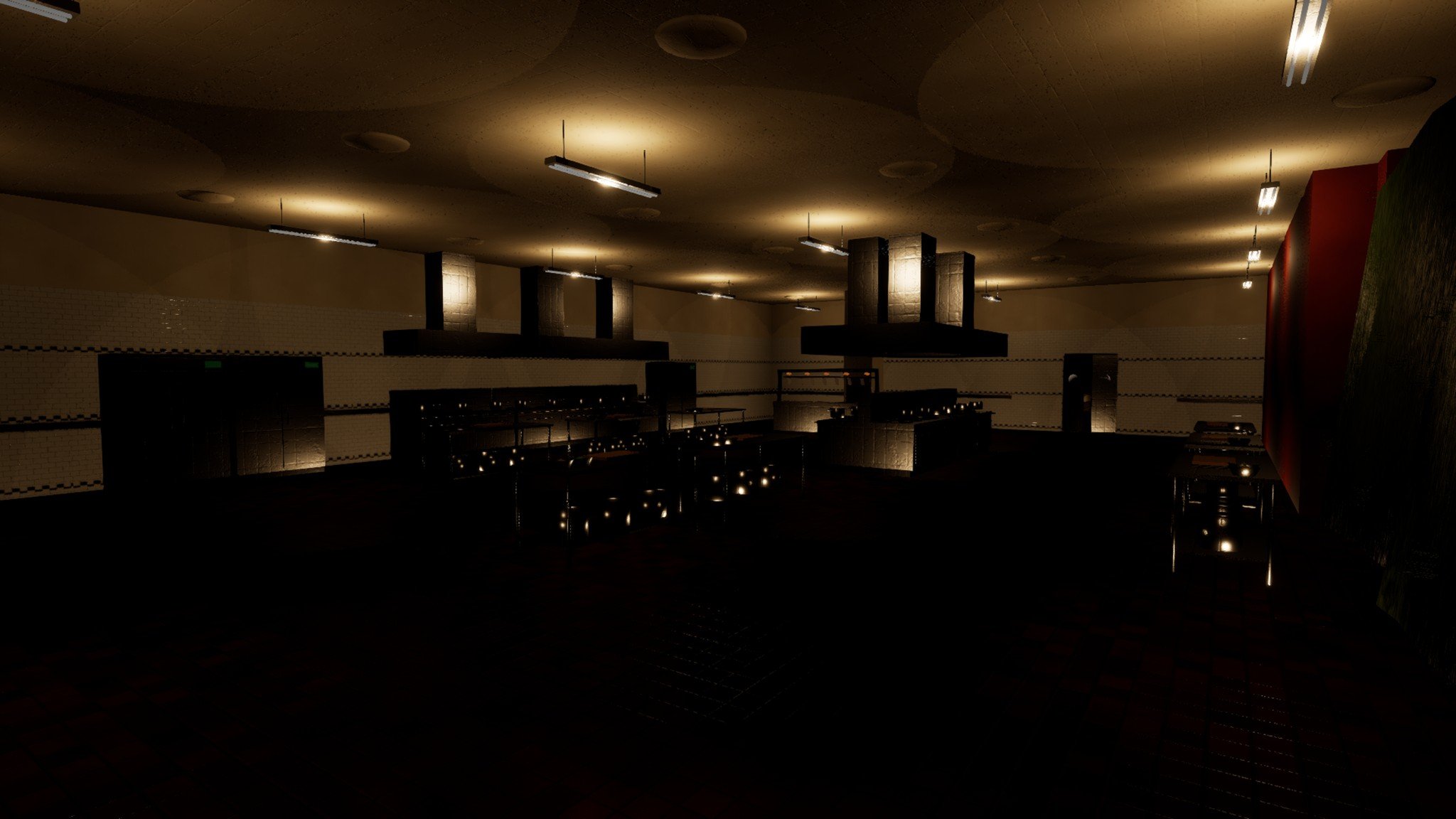
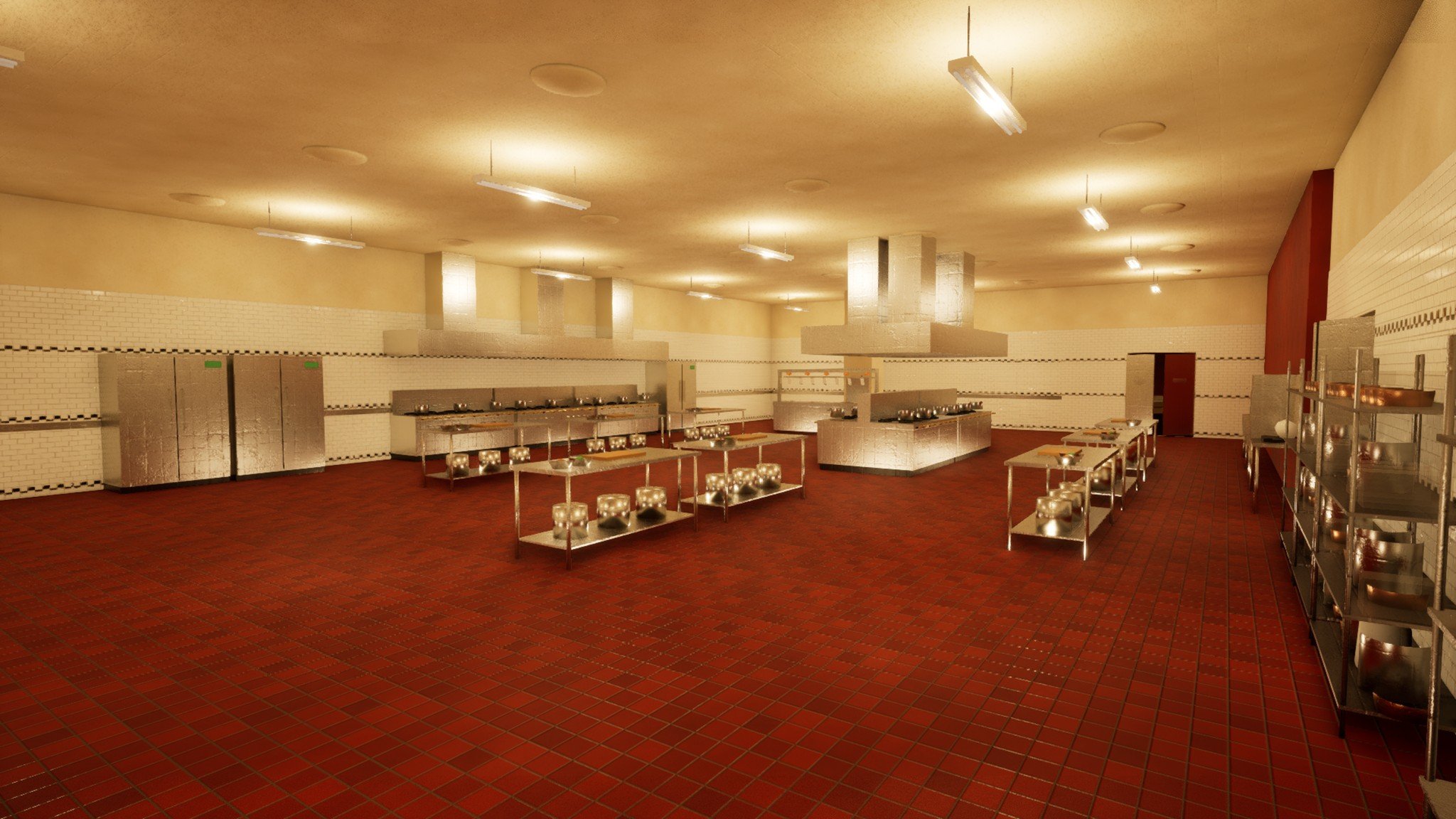
The afternoon slot added two post process volumes - boxes that let the hotel's interiors expose brighter than the sunny town outside. The kitchen stayed dark. A quarter of an hour after the slot closed, it had the plainer cause: the fifteen strip lights over the kitchen had been placed at 80 candelas each, which puts something like 30 to 50 lux on the floor. A real commercial kitchen is lit to ten times that. The camera can only expose for light that is there.
The evening slot, at quarter past eight, put the strips up to 300 candelas, and the agent checked rather than assumed that its interior volume was the one in charge.
Grass in the kitchen
The other basement fault was greener. Grass was showing through the floor in the kitchen and the staff rooms below it.
A basement on the landscape has to have the ground cut away beneath it, or the grass grows up through the tiles. The afternoon brief told the agent to cut one big rectangle under the whole hotel, nine metres down. The agent ran it dry first and did not do it. The building's stone skirt, the wall that carries it down into the hill, is not a rectangle. The brief's box would also have dug pits up to nine metres deep in the open strips of lawn beside the wings and in the open courtyard behind - holes in the grass outside, in daylight, where a player would walk straight into them. It cut the two blocks that actually enclose the basements instead, 2,724 points of terrain, and checked afterwards that none of them lay outside the walls.
The grass was still in the kitchen. The reason turned up in the plans: the kitchen, the boiler room and the staff common room had been drawn 1.8 metres longer than the building. Their back walls stood under the open courtyard, so the last strip of each room was under ground that could not be cut without opening a trench in the courtyard. In the evening the rooms were shortened to fit inside their own building and their contents shuffled forward - prep tables, calorifiers, a dartboard, a wingback chair.
At 20:38 James looked at the stills and said the wingback was facing the wall. It was. It got turned round in place, 180 degrees, and saved on its own.
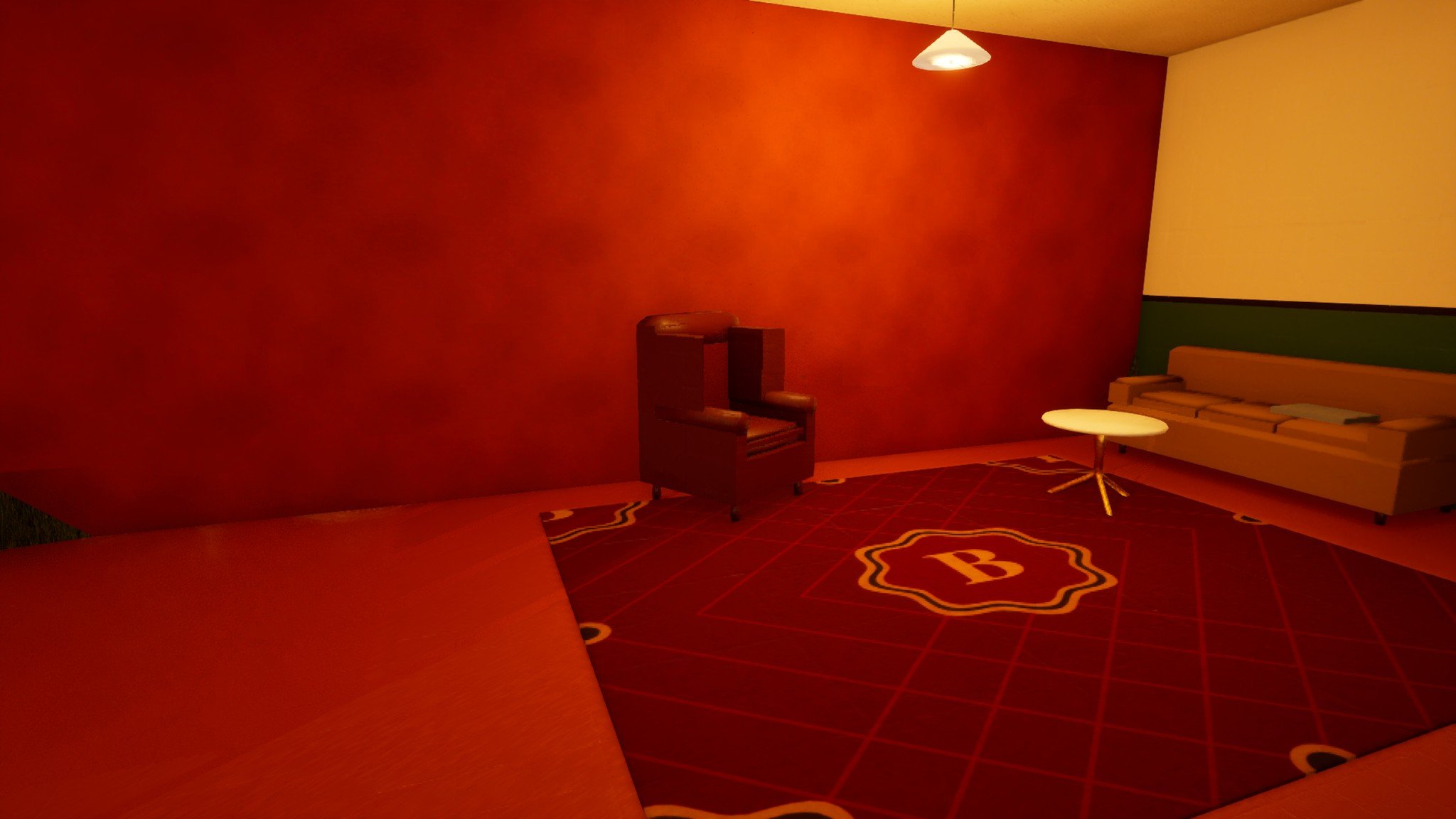
Some green stayed. Low pyramids of it in the staff rooms traced to the level's distant-view stand-in geometry, built before the basement existed and stale until rebuilt. And by the new back wall thin wedges of landscape still rise, because the terrain's one-metre grid runs at an angle to the building.
The spa came out finished: three ladders, new loungers, the north wall lined. The road sign took three goes. The first put a five-metre sandstone board across the pavement. The second stood it on the verge with its lettering facing up the drive, away from every car that would read it. Turned 180 degrees, it now faces the road.
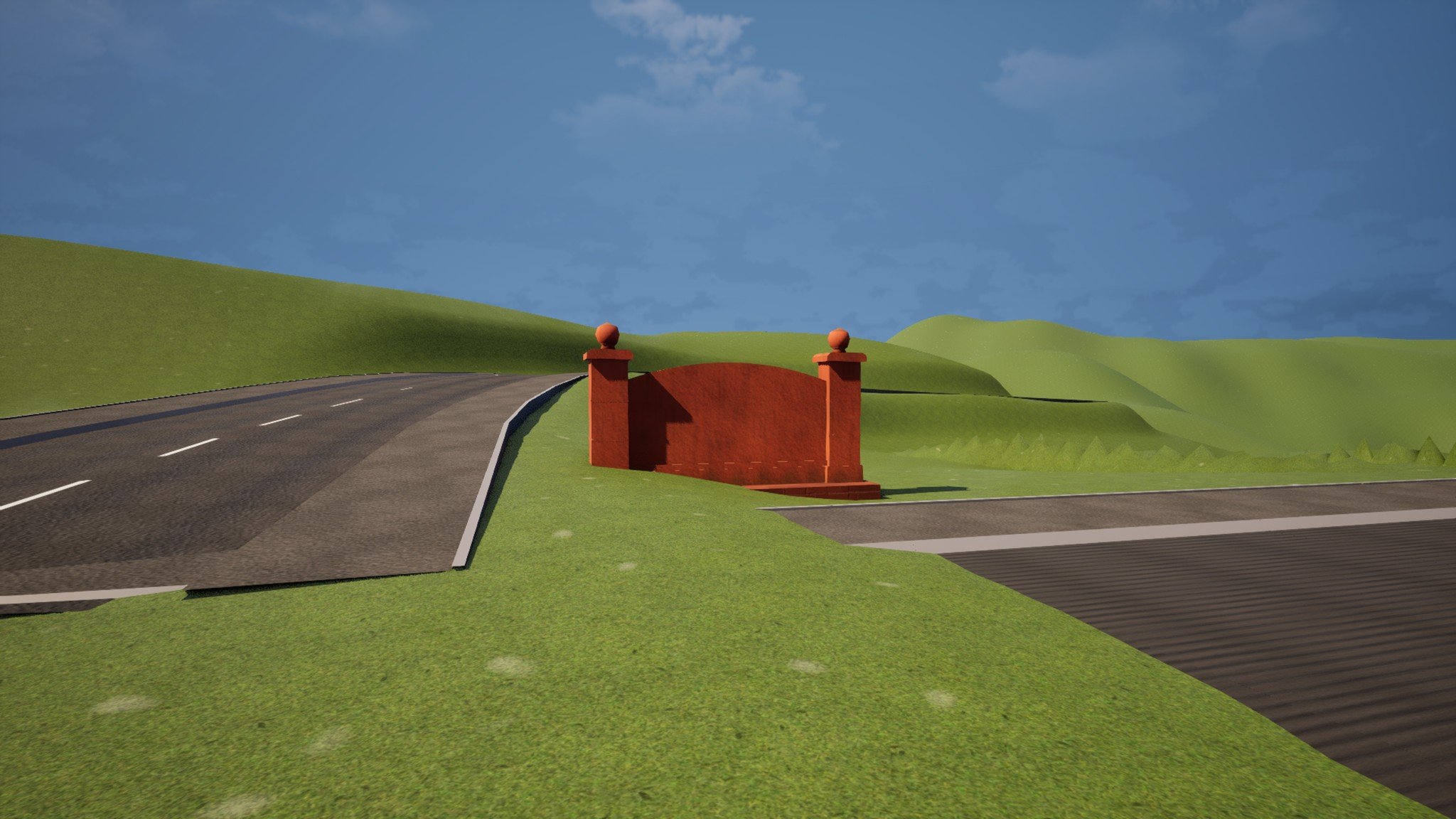
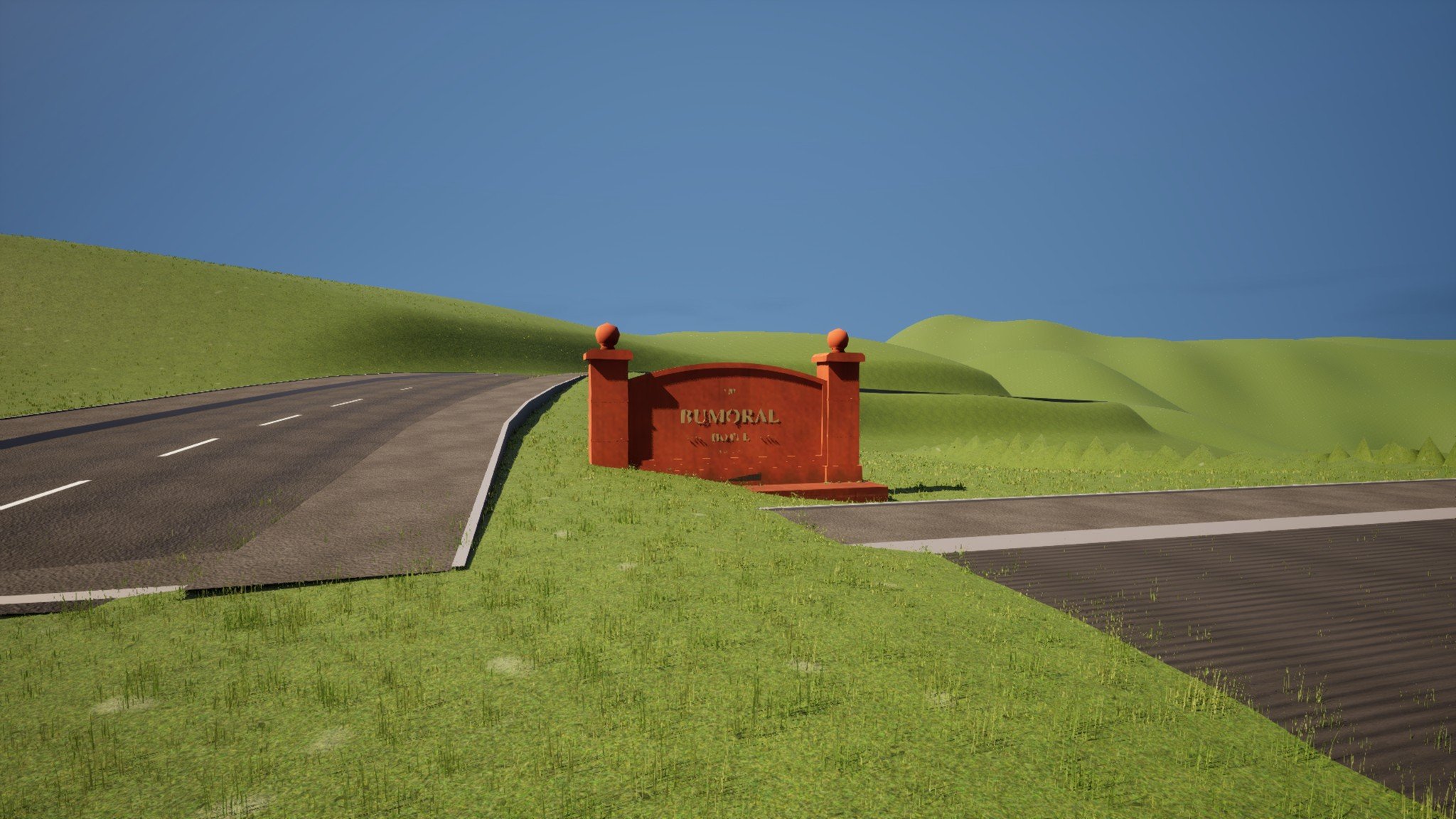
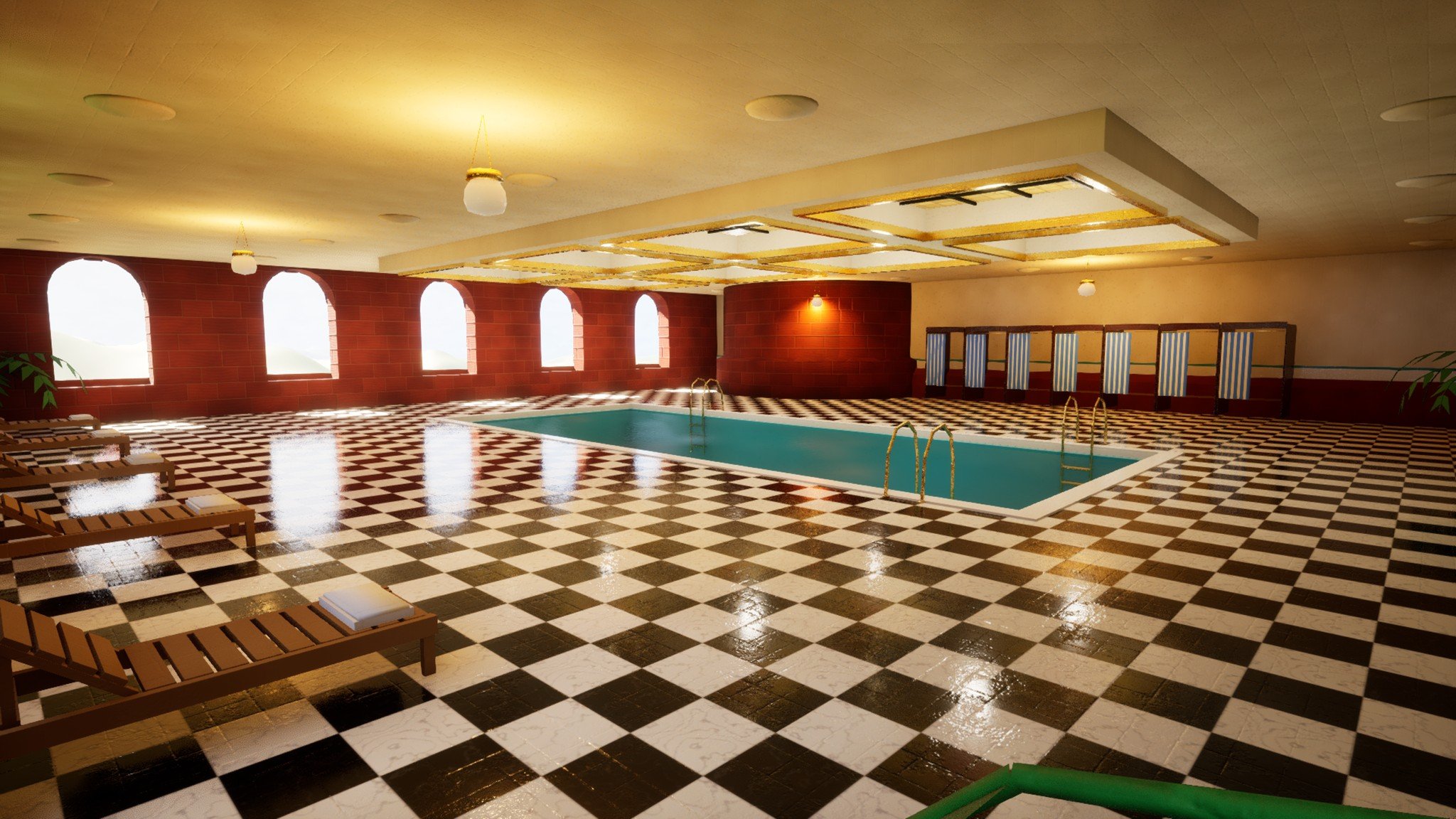
Rockstar have a lighting team. James had a Sunday, an agent and a script with 80 in it.
Twenty-one people with nothing to wear
A hotel needs staff and guests, and on Sunday the hotel cast thread built them: 21 adults, fourteen staff who live in and seven guests, plus a nine-year-old called Mason who goes through the separate children's route and will only ever be pictured clothed.
The bodies were built in three runs before half past one. The dressing went worse. The first attempt at twenty past five stopped on the first resident with a backup check that could not find the backup it had just made - the script joined a folder onto a path that was already complete. The owning thread fixed the line by quarter to six and the run started again at half six. Each body took the editor's memory up by two or three gigabytes, so the agent restarted it at about 31 GB of 64, three times, before the last one finished at eleven minutes past eight.
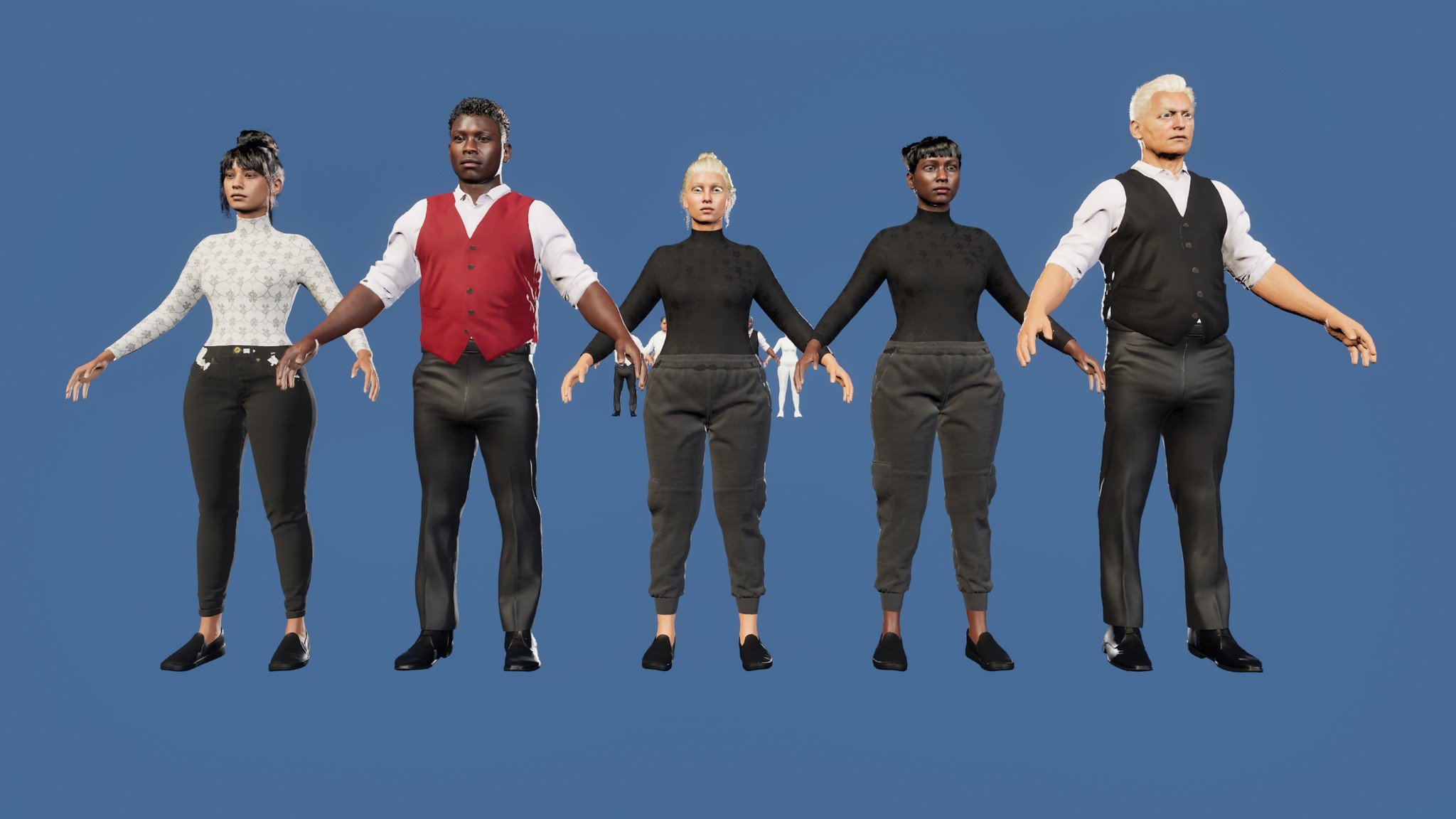
The problem was the wardrobe. The project owns a waistcoat, shirts, trousers and shoes, and no suit jackets, chef's whites, housekeeping dresses or gowns - and James ruled in October that clothes come from Fab, not Blender. So the barman is dressed exactly right and the receptionist, the chef and the security are in the nearest thing in the cupboard. A shopping list went to James with links and no purchases. Top of it is one suit that would dress two guards, three guests in dinner jackets and the Major in tweed.
At 23:12 he asked for a brochure shoot with the dressed cast - arrival at sunset, check-in, the pool, a cabaret night. That is written up as a shot list for the next slot. At 23:45 he asked for peacocks on the lawns and grey squirrels in the woods. That is a plan on paper and nothing more yet.
Four lads who walked the same
The gang thread spent the day on walks. The roadmen - the lads in black tracksuits who are out on the estate after eleven - had been given text-to-motion animations from NVIDIA Kimodo, an open model that turns a sentence into a skeleton animation. Each lad got a walk and an idle in words of his own: hands in the hoodie pouch, a hand up on the bag strap, arms crossed, one who blows into his hands because it is cold.
Kimodo produced four takes of each, and the agent laid them out as stick figures and measured them against each other. Some of the walks that should have been different were not. Take two of one lad and take two of another came out within one or two centimetres of each other, against four to thirteen for walks that were genuinely different. The model was seeding its randomness by take number, not by prompt, so the same take number of two different descriptions started from the same place and wandered to much the same walk.
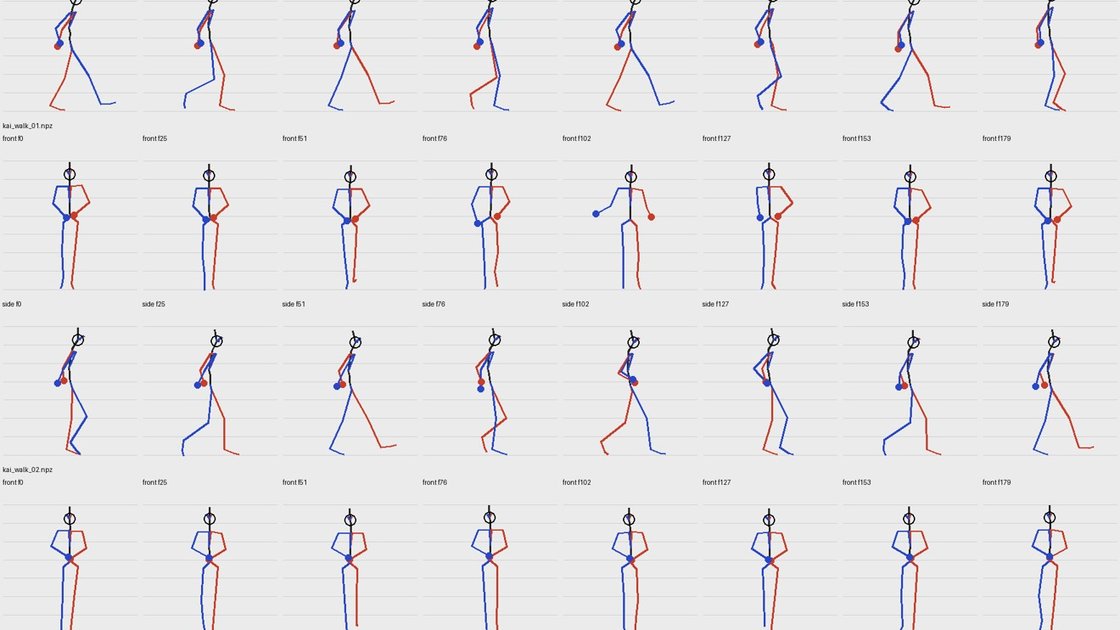
The agent picked the eight walks together instead of one at a time, so that every pair stood at least 5.1 cm apart. Nineteen clips are ready to import in the next slot. The next batch gets a different seed per lad.
Late on, at 22:47, James asked for a grow house in one of the lads' terraces, 23 Brickyard Close - tents, lights and a crop - and for the player to be able to break in and steal it, with the gang and the police both able to catch him. Two threads wrote the scripts for it offline before midnight. The editor runs are next.
Thirty-one centimetres under the road
The ambulance thread had the evening's last slot. Earlier in the day an ambulance had driven through the Sweatbox wall to reach a patient inside. By the evening retest that was gone: it found the stop point on the road, parked, did not clip the wall, went back to its bay, and both patients were admitted to beds.
Two things failed. No paramedics got out. And the driver of the crashed car was hidden, and 31 cm under the road.
The agent found both by the end of the night. The paramedics come from a pool the town borrows bodies from, and a borrow asked for with a negative number - which is how those roles are numbered - always came back empty. And the driver had nowhere to sit, because not one car mesh in the game has a seat socket. The patch for both is written and waiting for the build.
The umbrella was the last thing of the night. At 23:40 James looked at the grip thread's stills - fingers wrapped round the handle, the shaft upright through the fist - and said the umbrella holding looks great. That one is done.
The fault
NPCs walk straight into the nightclub and the queue code never runs in Unreal Engine 5.8
Early arrivals were meant to queue outside until doors at 19:00. The queue box outside the club counted 0 bodies from 18:54 to 19:04 while clubbers entered the hall. No error.
Cause: the queue hook sat in the subsystem that picks a resident's next activity. Clubbers never pass through it: the core schedule moves them by its own route straight to the venue's entry location, which is inside the hall.
The fix
Put the queue on the path the schedule actually takes, and log every join
The destination is chosen in the core schedule: a resident setting off between 18:00 and 19:00 (clock minus their jitter) is sent to a numbered queue slot, first come first served. Doors open at 19:00 and the line walks in.
The guard: a log line for every join (who, which slot, where) and every walk-in. Verified in PIE: 11 queued in slots 0-10, all 11 walked in at doors, 0 inside before 19:00. If the count of join lines is zero, the hook is on the wrong path again.
The fault
Basement kitchen reads near-black at Epic scalability but bright at Low in Unreal Engine 5.8
The same view was acceptable at scalability 0 and near-black at 3, after an interior post process volume had already been added with auto exposure clamped to EV100 2.5-6.5.
Cause: fifteen strip lights at 80 cd, about 30-50 lux on the floor. Exposure cannot invent light that is not there.
The fix
Light the room to a real level, then prove which volume wins
Strips raised to 300 cd (radius 1200), staff pendants 120, spa lanterns 150, laylights 120.
The guard: list every post process volume overlapping a test point with priority, bound and blend weight. Here the interior volume (bounded, priority 10) beat the global one (unbound, priority 0); a priority 50 volume had blend weight 0 and no effect. Check "Extend default luminance range" is on before reading EV100 values.
The fault
Grass grows through a basement floor under a building on the landscape
Grass showed in the kitchen and staff rooms, 13 m below ground.
Two causes. The rooms were drawn 1.8 m past the building's rear wall, under an open courtyard that cannot be cut. And a single rectangular cut under the whole footprint would have dug pits up to 9 m deep in open lawn beside the wings, because the stone skirt is not a rectangle.
The fix
Fit the rooms inside the walls, and cut only what the skirt encloses
Rear walls moved inside the exterior wall. The cut was split into the two blocks the skirt actually encloses, edges on the wall centrelines, with an offline check that 0 cut points lie outside them.
Still open: thin wedges within centimetres of a wall where the 1 m landscape grid runs at an angle, and stale HLOD geometry drawn as green mounds until it is rebuilt.
The fault
Text-to-motion takes from different prompts come out near-identical
Kimodo takes 02 and 03 of different characters' walks matched to within 0.8-2 cm of each other, against 4-13 cm for genuinely different walks.
Cause: the random seed followed the take number, not the prompt.
The fix
Choose the set jointly, and vary the seed
The eight walks were picked together so every pair is at least 5.1 cm apart; idles at least 6.7 cm. The next batch uses a different seed per character.
The fault
Ambulance arrives but no paramedics appear, and the crashed driver is hidden 31 cm under the road
Found in the evening retest; the road route, parking and return to the bay all passed.
Causes: borrowing a body with a negative id always returned nothing, and no car mesh has a seat socket to put a driver in.
The kit
| Tool | Why this one |
|---|---|
| Unreal Engine 5.8 | the game, and the only place the dark kitchen and the empty queue were visible |
| Several Claude Code sessions with one coordinator | one editor, one thread in it at a time, every other thread working offline |
| NVIDIA Kimodo | walks and idles written as sentences, four takes each |
| Log lines per queue join | the only check that tells a queue that ran from one that was never reached |
Plain English
| Term | What it means |
|---|---|
| PIE | "Play In Editor" - pressing play inside the editor to test the game without building it first. Fast, and it behaves subtly differently from the real build. |
| post process volume | A box in the level that changes how the final image looks inside it - exposure, colour, contrast. |
| exposure | How bright the virtual camera treats the scene, like a real camera's aperture and shutter. A higher EV100 number darkens the picture. This project pins it per building so a room does not slowly brighten while you stand in it. |
| scalability | The engine's quality dials - shadows, textures, effects, anti-aliasing - each of which can be set independently. Turning one up can cost far more than turning the rest up together. |
| candela | A unit of how bright a light looks from one direction. A candle is about one; a lightning strike is millions. |
| landscape carve | Reshaping the game's ground along a road or under a building, lowering it (a cut) or raising it (a fill). Written straight into the terrain, so it needs a snapshot to undo. |
| HLOD | The same idea applied to whole groups of buildings at once, so a distant part of town is drawn as one cheap lump. |
| MetaHuman | Epic's system for realistic human characters - face, body, hair and clothing, ready to animate. Every named person in the game is one. |
| Fab | Epic's marketplace for ready-made game assets - models, materials, characters, clothing. Buying a garment and refitting it is how almost everyone in this game got dressed. |
| Kimodo | An open model from NVIDIA that turns a written description of a movement - 'walks with his hands in his hoodie pouch' - into a skeleton animation, which can then be put on a character. |
| random seed | The starting number a generator uses for its randomness. Same seed, same 'random' result - so two different requests that share a seed can come out looking alike. |
| socket | A named attachment point on a model - a hand for holding a bag, a roof for a light. |
Things we still need to fix tomorrow:
- Dean's ID check for the town's clubbers, one at a time, and the line facing the door.
- The hotel brochure shoot with the dressed cast.
- A suit, gowns and a housekeeping dress for the hotel cast, on James's say-so.
- Rebuild the stale HLOD under the hotel; a visibility mask for the last wedges of landscape by the walls.
- Build and retest the ambulance patch: paramedics out, driver in his seat.
- Import the nineteen gang clips; the next Kimodo batch with a seed per lad.
- Fit out 23 Brickyard Close, then the break-in run.