Council
The Council Depot
On the incinerator road, off Harewood Avenue
The Oakhaven City Council Depot: a shed eighty metres by sixty with five roller-door bays along the front, a two-storey brick office beside it, and the whole lot on a plot a hundred and ten metres by ninety. The shed floor sits three and a half metres above the road, so the office door opens onto a railed terrace and a dog-leg stair of thirty steps down to the grass.
Both of the council’s rounds run out of here. The bin wagon parks up on the depot road, and the fly-tip flatbed starts and finishes every shift in the yard. Inside the shed there is a classroom with rows of chairs facing a telly on the wall (somebody has left the remote on a chair), a staff canteen with lockers, an urn and four mugs lined up on the counter beside the teabags and a pint of milk, and the Gents and the Ladies down a corridor.
The fly-tip job comes through Denise at the job centre, and you need a decent score on her assessment before she will offer it: Fly-Tipping Clearance Assistant, environmental services. Take it and she tells you where to go. Same depot, half nine. It’s the flatbed, not the van, the green one with the arms on the door. Ask for Wozza. He’ll give you a grabber and a tally sheet. Don’t lose the tally sheet.
At half past nine an alarm goes off: it’s time for work. Go, and Wozza picks you up in the flatbed, right-hand drive, with the city arms over REFUSE COLLECTION on the cab doors and FLY-TIPPING IS A CRIME, FIXED PENALTY £600 across the tailboard. Leave it past eleven and the depot turns you away for the day.
Wozza is Warren Doyle, twenty-six, and he has a hundred and twenty things to say over the course of a shift. He starts you out as Sunshine. Whether you ever get promoted to youth depends a good deal on how you talk back to him. He is not ashamed of the job; what offends him is rubbish where it shouldn’t be, and being talked down to.

Every shift is three sites out of eighteen: quiet lanes and verges, a few spots you would rather not linger, and the ginnels and gable ends of the estate itself. Mattresses, sofas, old tellies, washing machines, tyres, toilet pans: forty-nine kinds of other people’s rubbish, carried to the flatbed one at a time, the heavy ones slower than the light, and the bed holds thirty-six. Every site has a clock on it. It counts to forty seconds, then it turns red and carries on counting.
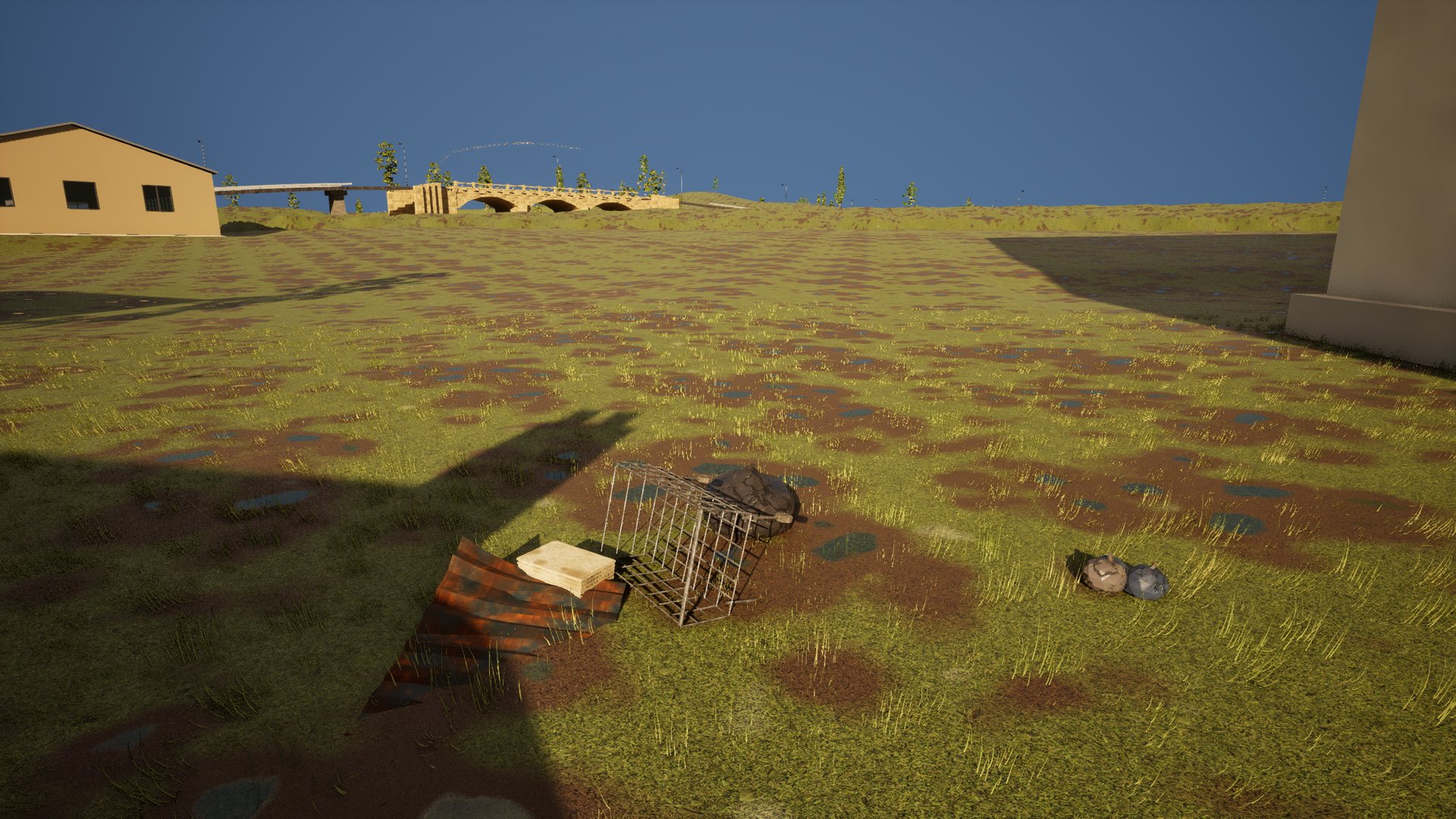
Two pounds twenty-five an item, eight pounds a site, twenty-five pounds on top for a clean sweep, and then it’s the incinerator, back to the depot, and home to your own front door.
The fly-tipping round is a job simulator shift from the alarm to the pay: a ride-along with Wozza, three sites against the clock, and money by the item. The bin round runs out of this depot too, on the back of the council wagon.
- £2.25 an item
- £8 a site
- £25 for a clean sweep
- Alarm at 09:30
- Three sites a day, out of 18
- Five-bay shed, 80 × 60 m
Elsewhere in Oakhaven
- The Sweatbox
- Last Tenner Bets
- Chish & Fips
- Bossman’s Corner Shop
- Bagshaws Butchers
- St Cuthbert’s
- Radworth Road Police Station
- The Slag & Slurry
- Bestholme Job Centre
- Radworth Golf Club
- Green Boss
- The Baulk Line
- Radworth Working Men’s Club
- The Oakhaven
- Below Radworth
- The Incinerator Plant
- The Temple of the Unsleeping Eye
- Cutshaw & Shutt
- Burger Boss
- Jerk Hut