Research notes · British folklore
Bog hags, black dogs and the Wild Hunt
Oakhaven is a made-up Midlands town, and towns like it have always told stories about what waits past the last streetlight. So we went and read them: the hag in the Leicester hills, the green-toothed thing under the duckweed, the dog on the lane, the lights on the marsh and the hunt in the sky.
Some of it is finding its way into the dark country round Oakhaven. More on that another time.
How we checked it
Folklore gets retold, and the retellings drift. We went back to the oldest source we could find for every claim on this page, mostly Victorian county collections and the journal Folk-Lore, now free online. Where a famous detail turns out to be much younger than the legend, we say so. Black Shuck's silent paws are from 1901, not 1577. Black Annis's grinding teeth are from 1970. The Rollright Stones never moved only when you looked away.
Tiddy Mun and the Carrs
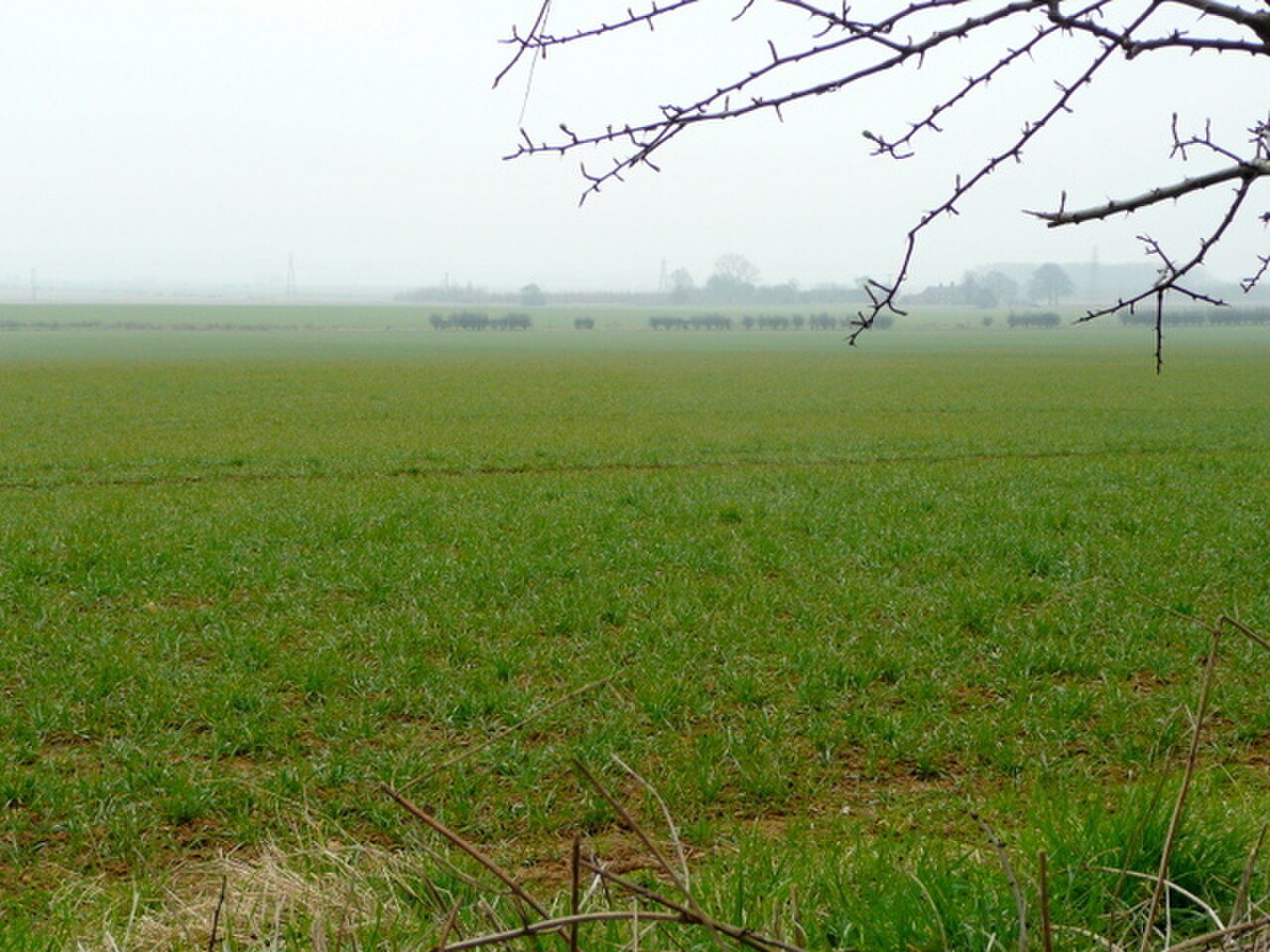
In 1891 the folklorist M. C. Balfour published Legends of the Cars in the journal Folk-Lore. She had collected them in the low, wet country of the Ancholme valley round Brigg, in historic Lincolnshire, before and while the Carrs were drained.
Her strangest figure is Tiddy Mun: no bigger than a three-year-old child, but an old, old man to look at, with long tangled white hair, a matted white beard and a grey gown. He came out only in the evenings, when the mists rose, which is why he was so hard to see. His laugh was the cry of the peewit, the lapwing.
Tiddy Mun held the water. When a flood needed to go down, the villagers went out at the new moon, at twilight, poured buckets of water into a dyke and called to him, and the water fell. When the Carrs were drained, Balfour's tellers put the bad years that followed down to his anger.
One honest caveat. Tiddy Mun rests on Balfour alone. Ethel Rudkin's later Lincolnshire collecting (1955) records the "Tiddy People", a race of tiny imps, which is a different belief and does not back hers up.
The Buried Moon
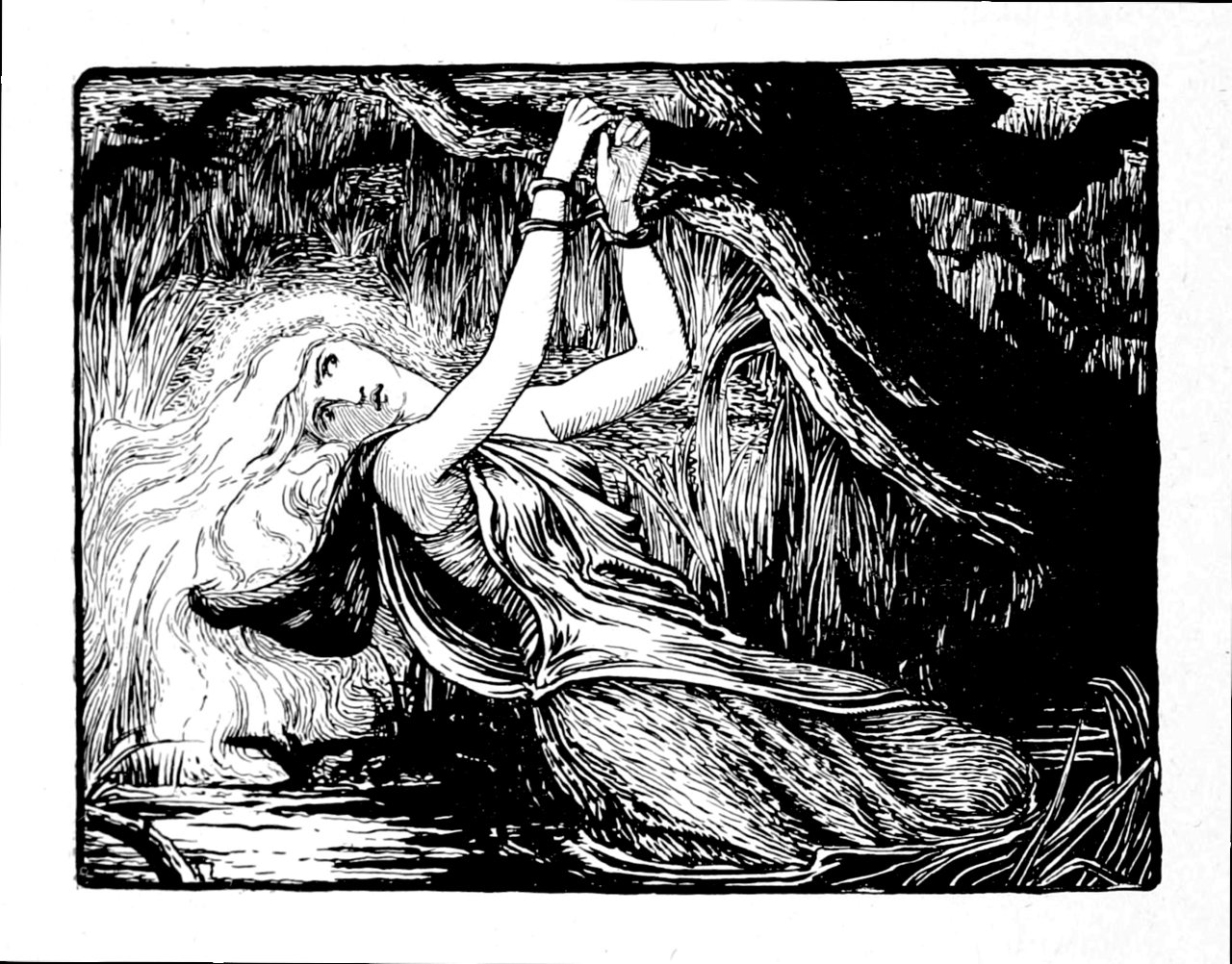
Balfour's best-known Carrs story reached a wide audience when Joseph Jacobs retold it in More English Fairy Tales. The Moon hears that the bogs are full of evil Things that only come out when she is gone, so she comes down wrapped in a black cloak to see for herself. A snag twines itself round her wrists and holds her.
While she is caught, she hears "something calling in the distance, calling, calling, and then dying away with a sob". It is a man lost in the bogs, and the Things are closing on him. The Bogles bury her under a great stone, and the nights stay dark until the villagers find her and roll it away.
Jacobs' own note adds that the tale came from a little girl named Bratton, and that Balfour thought the girl's imagination had much to do with the details. Folklore is often like this: older belief, retold by one person, on one evening.
Black dogs
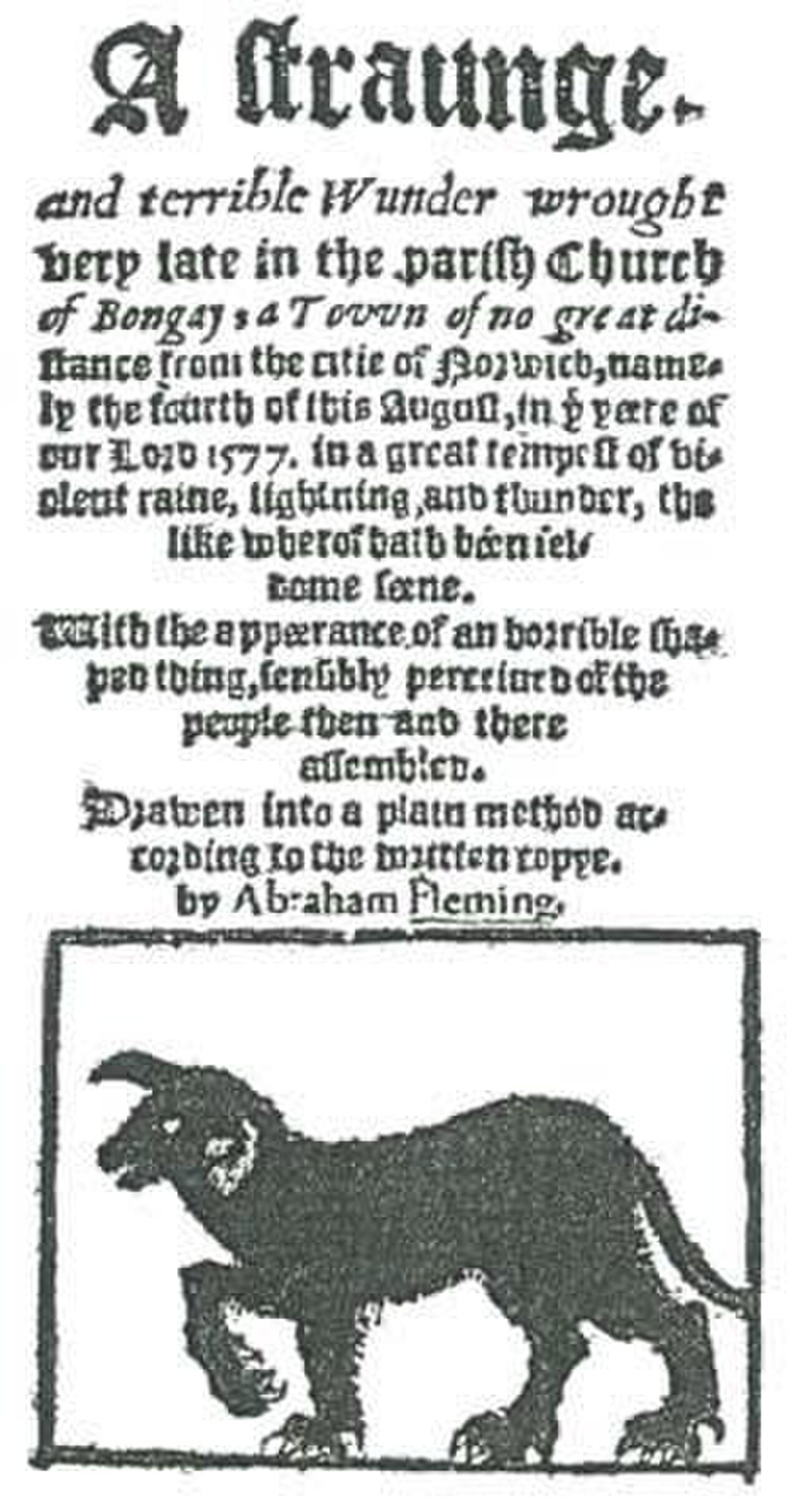
On 4 August 1577 a thunderstorm broke over the churches of Bungay and Blythburgh in Suffolk. Abraham Fleming's pamphlet, A Straunge and terrible Wunder, says a black dog ran through the congregation, killing as it went. Church records confirm the storm. They say nothing about a dog.
Much of what people now "know" about Black Shuck is younger. His silent footfalls, single eye in the middle of his head and the warning that meeting him means death before the year is out all come from W. A. Dutt, writing in 1901.
The Midlands has its own dogs. In Lincolnshire, Ethel Rudkin's 1938 paper The Black Dog gathered accounts from across the county, and she wrote that she had seen it herself. Hers is often "a kindly beast", even a protector of people walking alone. The name Hairy Jack, though, belongs to the darker strand: Gutch and Peacock's County Folk-Lore (1908) puts one in Grayingham parish and says others of the same breed prowl lonely plantations and waste places to attack anyone passing.
Further north, William Henderson's Notes on the Folk-Lore of the Northern Counties (1879) has the Barguest above the Oxwells spring near Leeds, whose paw left "a wound which would never heal", and the Padfoot: a man who kicked one was dragged through hedge and ditch to his own home. In Wales, Wirt Sikes (1880) writes of the Gwyllgi, the dog of darkness, that "to look on it is deemed dangerous".
Charlotte Burne's Shropshire Folk-Lore (1883) noticed where these animal ghosts tend to appear: generally where a murder was committed, a criminal gibbeted, a suicide buried. Burying suicides at crossroads only ended with an Act of 1823.
Will-o'-the-wisp and the hob's lantern
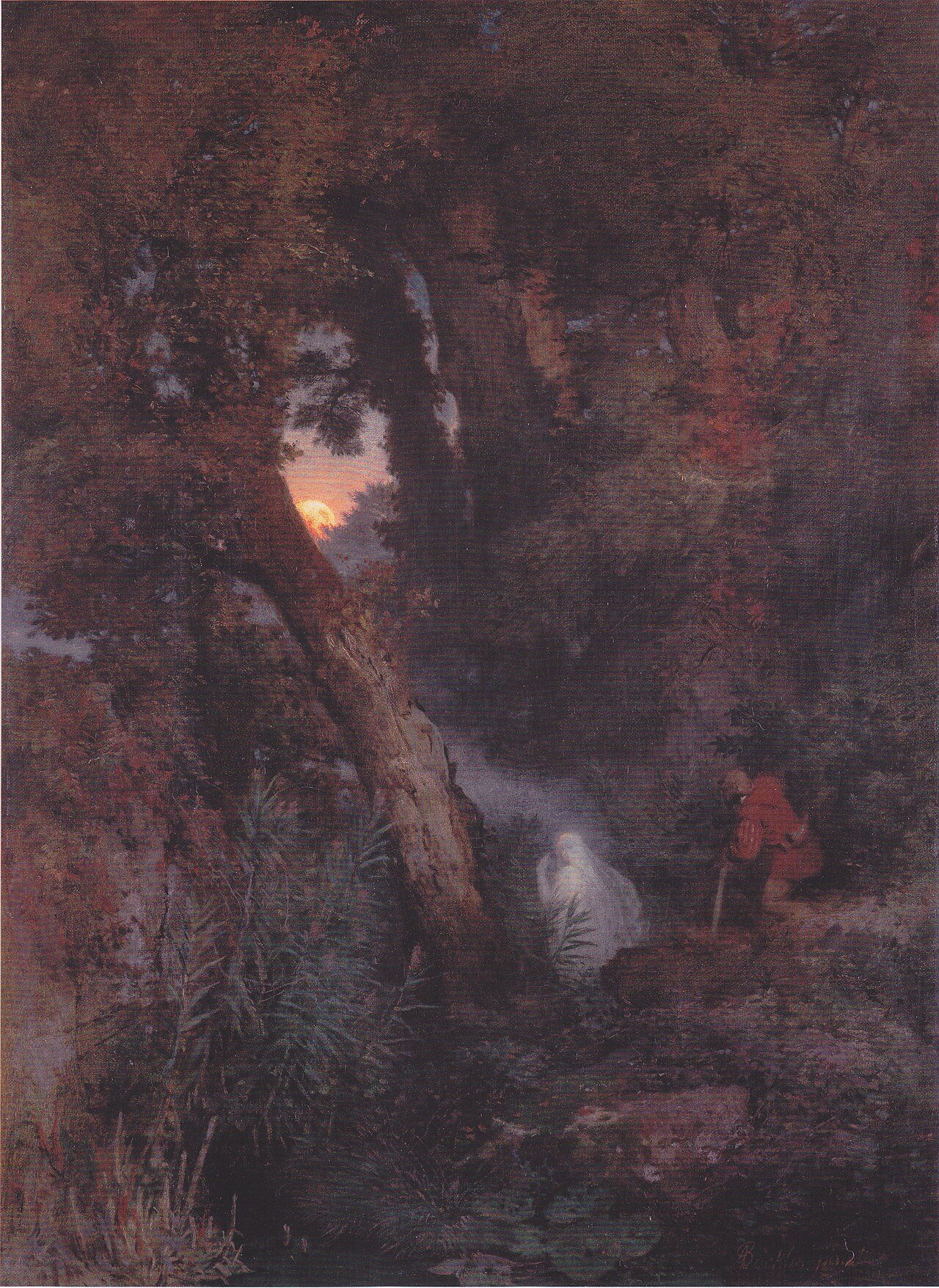
Every county had a name for the light over the marsh. Elizabeth Mary Wright's Rustic Speech and Folk-Lore (1913) lists Hobbledy's-lantern in Warwickshire and Worcestershire, Pinket in Worcestershire, Jenny-burnt-tail in Northamptonshire and Peggy-lantern in Lincolnshire.
Charlotte Burne printed a Shropshire tale of Will the Smith, given a coal of hell-fire, who "goes wandering up and down the moors and mosses with his light, wherever he can find a bit of boggy ground that he can 'tice folks to lose their way in". She printed it with reserve: it came from a newspaper column, and she could not say how far it was a real local tradition.
In East Anglia the Lantern Men were drawn by whistling. The way to survive one was to lie face down and keep still.
Science has tried for a long time. A Lancashire collection of 1867 called the lights "carburetted hydrogen, spontaneously ignited". The usual modern proposal is phosphine and methane from rotting matter igniting by themselves, but nobody has shown it happening in the field, and laboratory attempts have produced faint greenish glows rather than the drifting flames people describe.
Jenny Greenteeth and the water hags
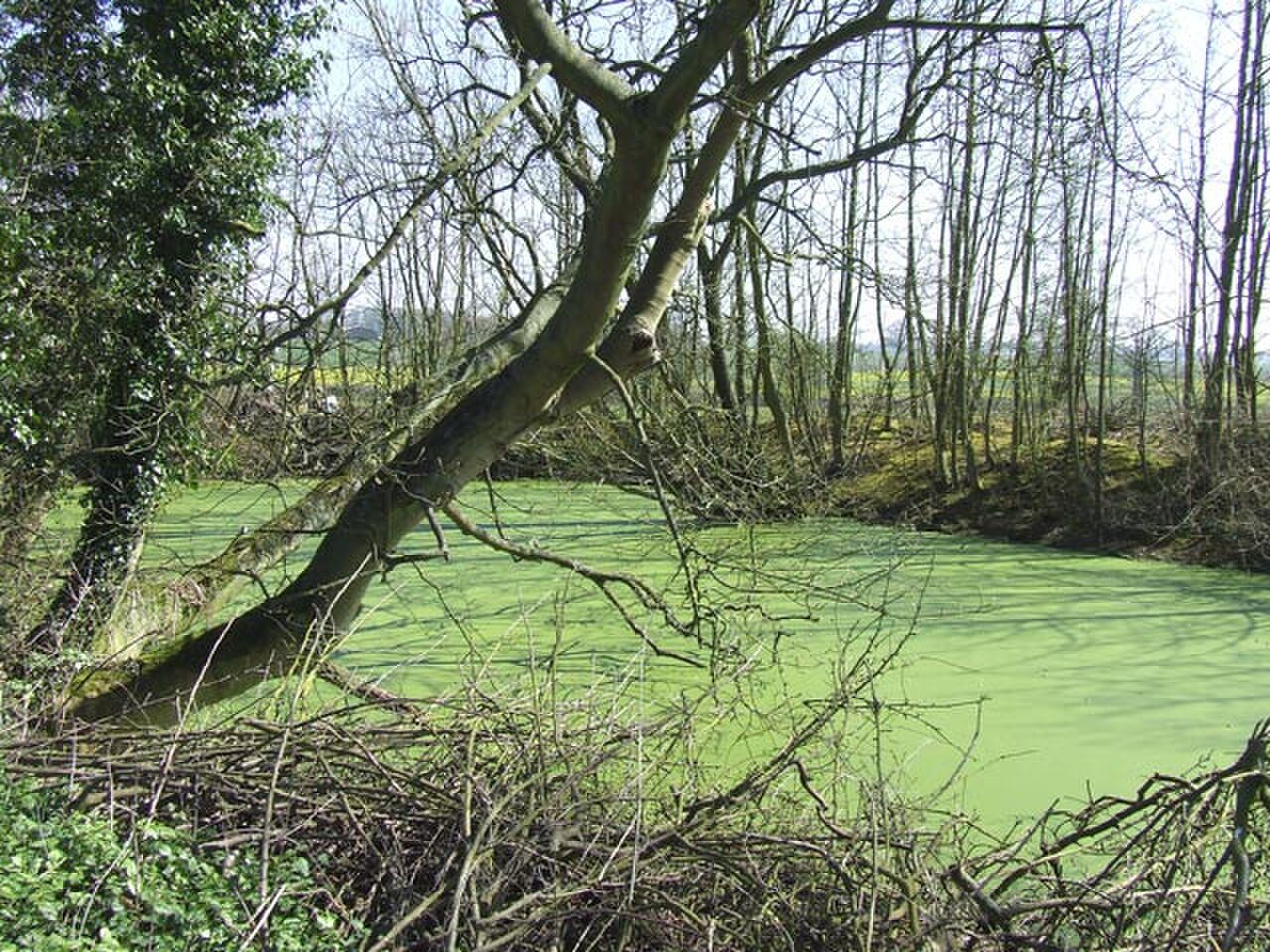
Wright's 1913 survey treats Grindylow, Jenny Green-teeth and Nelly Long-arms as names for one water-demon, recorded across Yorkshire, Lancashire, Cheshire, Derbyshire and Shropshire. She lives at the bottom of deep pits, ponds and wells, and when children come too near the edge she stretches out her long, sinewy arms and drags them under. "Her presence is indicated by a green scum on the surface of the water."
Around Liverpool and south-west Lancashire the duckweed itself was called jenny greenteeth, as the folklorist Roy Vickery showed in 1983. There are Midlands sightings too: Burne records children at Ellesmere in Shropshire being warned about her.
On the Tees she is Peg Powler, and the foam on the river is Peg Powler's suds. In Shropshire, at Child's Ercall, a voice from a field pit promised two labourers gold and drew them in up to their chins before it gave a "skroike", a scream, and dived.
Some of the fear was useful. Black Mere on Morridge, in the Staffordshire moorlands, was said to be bottomless, and no cattle would drink from it and no bird fly over it. Robert Plot, in his Natural History of Staffordshire (1686), recorded all that and then called it false. His own horse drank there, and people he spoke to had seen geese on it. The pool has seen real drownings all the same.
Rawhead-and-Bloody-Bones
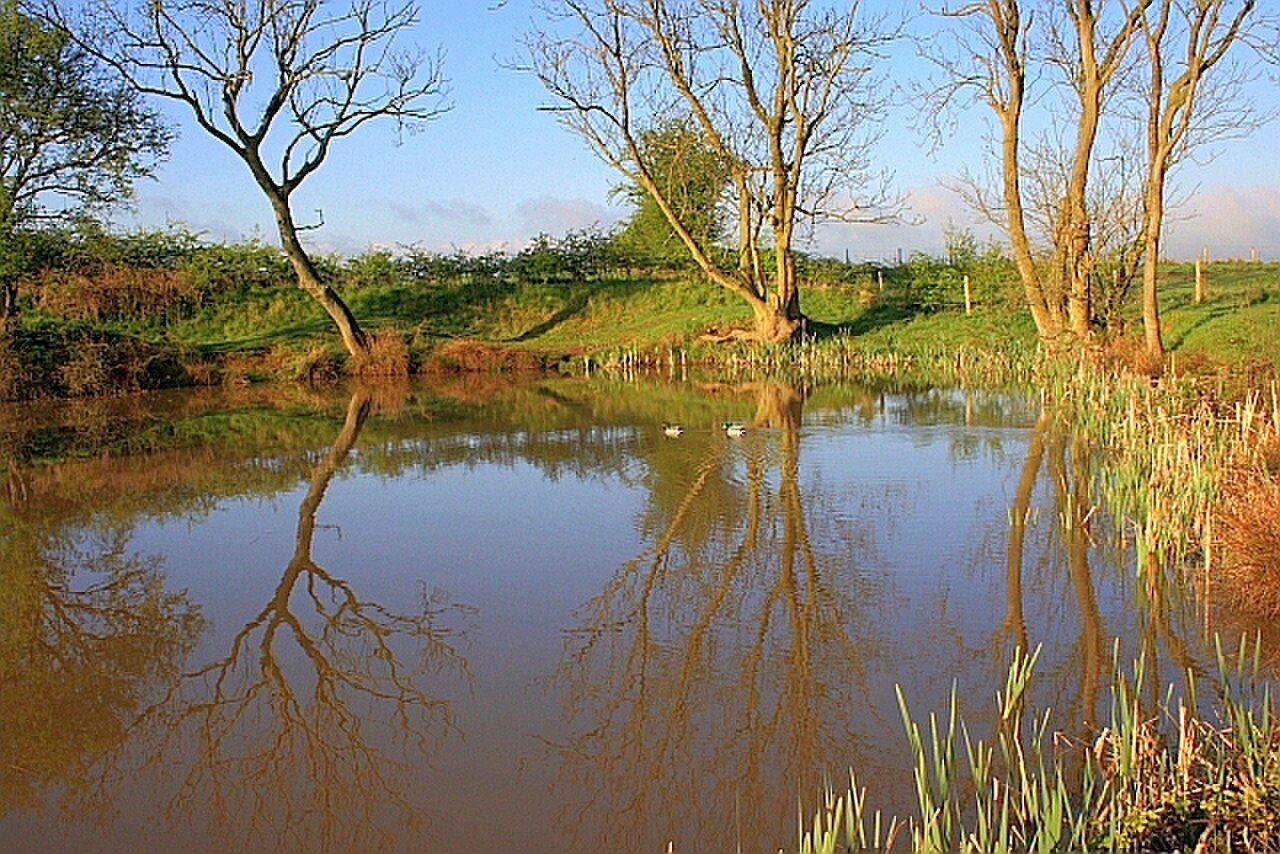
"Keep away from the marl-pit or Rawhead and Bloody-bones will have you." Wright quotes it as a warning to children. The name Rawhead turns up across Yorkshire, Lancashire, Lincolnshire, Warwickshire and East Anglia, and Bloodybone is recorded as early as about 1548.
He was a nursery bogey long before he was a pond demon. John Locke, writing on education in 1693, told parents not to frighten their children with him, and Samuel Johnson put him in his 1755 dictionary.
The version most people meet today, crouched in the dark cupboard under the stairs on a pile of bones, comes from Ruth Tongue in the twentieth century. Her collecting is widely doubted, so that image may be younger than it sounds.
Black Annis of the Dane Hills
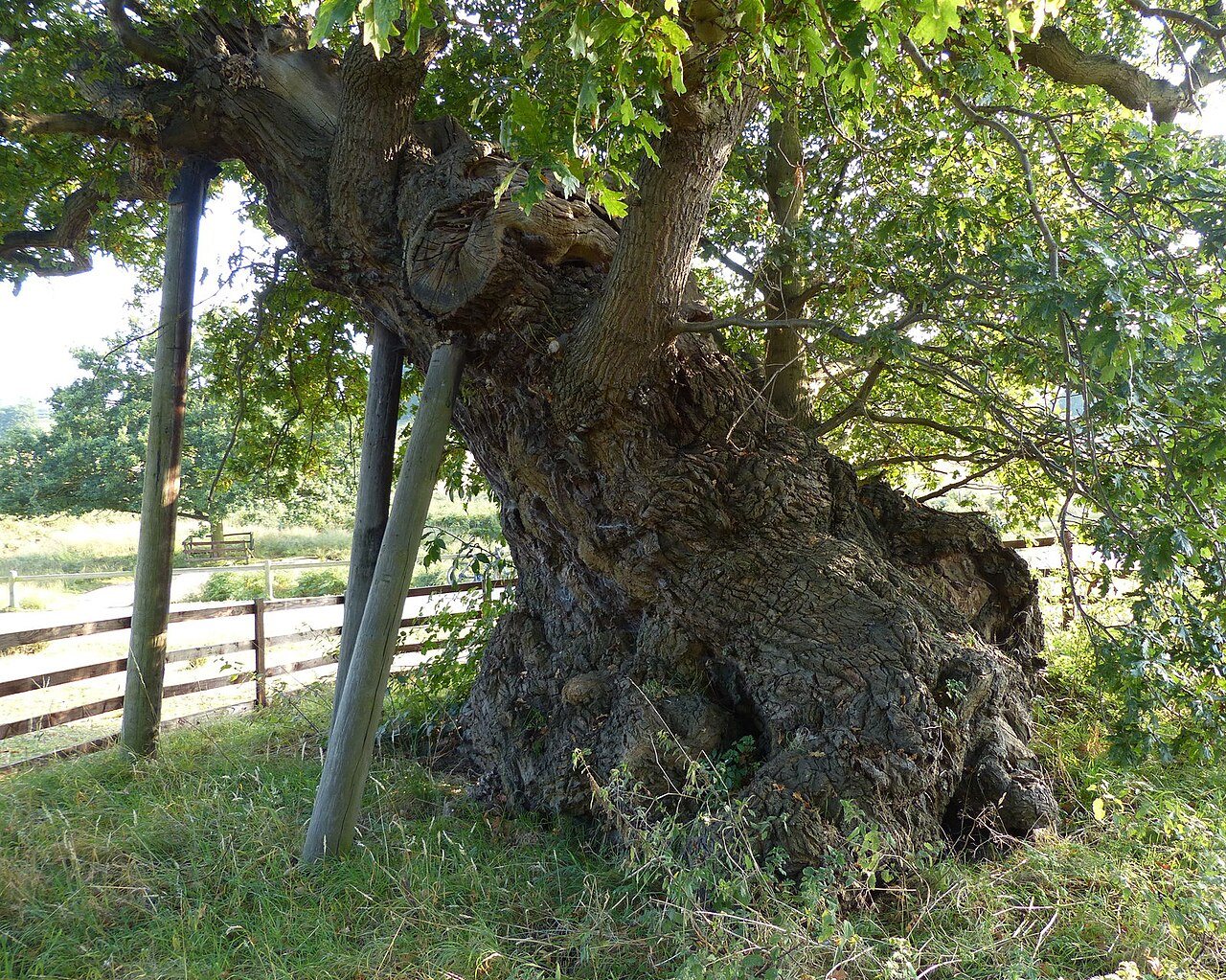
Leicester's own monster is a blue-faced hag who lived in a cave in the Dane Hills on the west side of the town. She is not a modern invention: title deeds of 13 and 14 May 1764 name a field as Black Anny's Bower Close.
An eighteenth-century Leicester poem by Heyrick, printed in Charles Billson's County Folk-Lore: Leicestershire and Rutland (1895), says her rooms were "Scooped with her claws beneath the flinty ground". Later tellings add an oak at the cave mouth, where she hid to spring on children and lambs, and a girdle of skins.
Two of her best details are late. That you could hear her grinding her teeth far enough off to bar the door, and that Leicestershire cottages were built with small windows so she could only get one arm inside, both come from Ruth Tongue in 1970, from a girl evacuated from Leicester during the war. They may be good stories rather than old ones.
The Rollright Stones
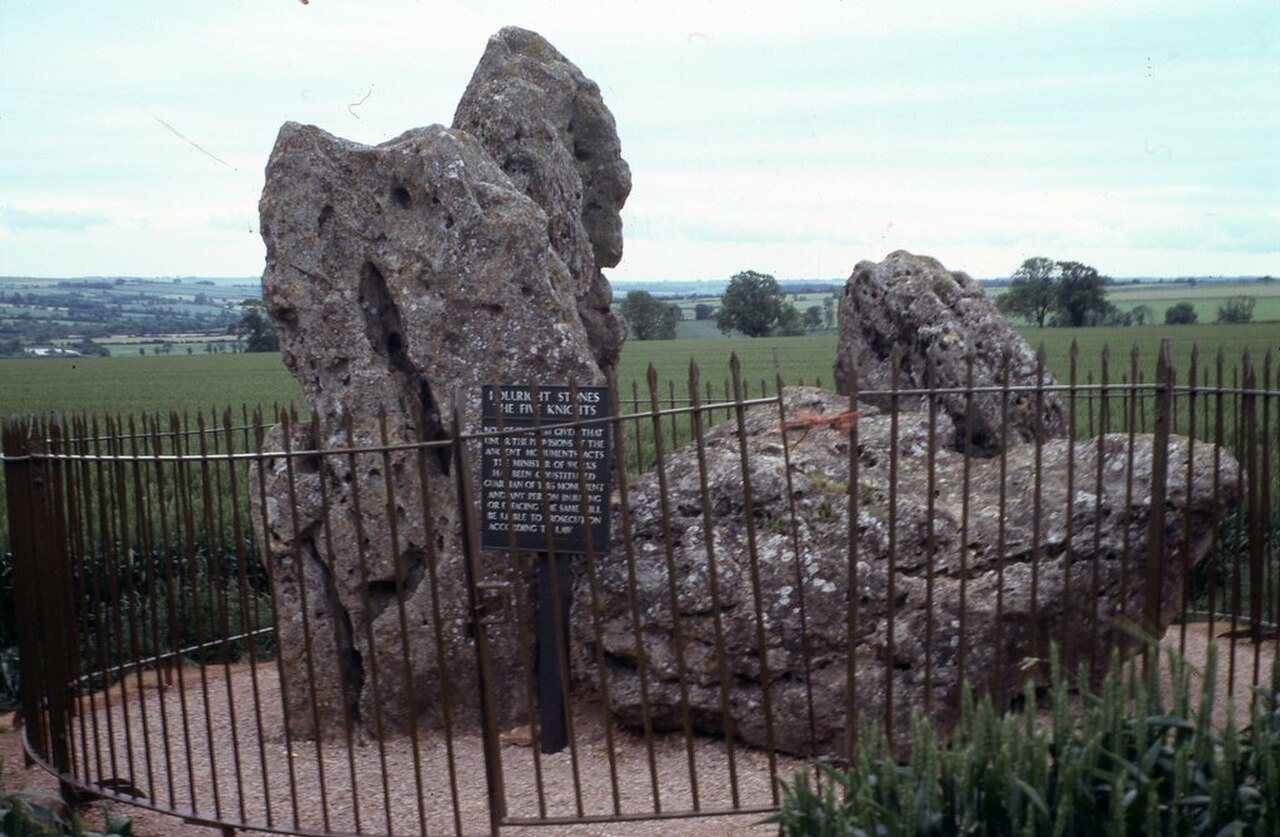
On the Warwickshire and Oxfordshire border near Long Compton stand the Rollright Stones: a circle called the King's Men, a lone King Stone and a group called the Whispering Knights. Arthur Evans collected their lore in Folk-Lore in 1895.
A witch turned a king and his army to stone. The stones cannot be counted: a baker who put a loaf on each one always came up one short. At midnight the King Stone and the Knights go down to the spring to drink. A capstone taken away to bridge a brook was found overturned every night until it was carried back.
One thing the lore does not say is that the stones move while you are not looking. They walk at midnight, and Evans records a sceptic who had passed them many a time at midnight and never seen them move. The idea of a figure that only moves between glances belongs to M. R. James's ghost story The Mezzotint (1904) and to the playground game Grandmother's Footsteps.
The border-walker
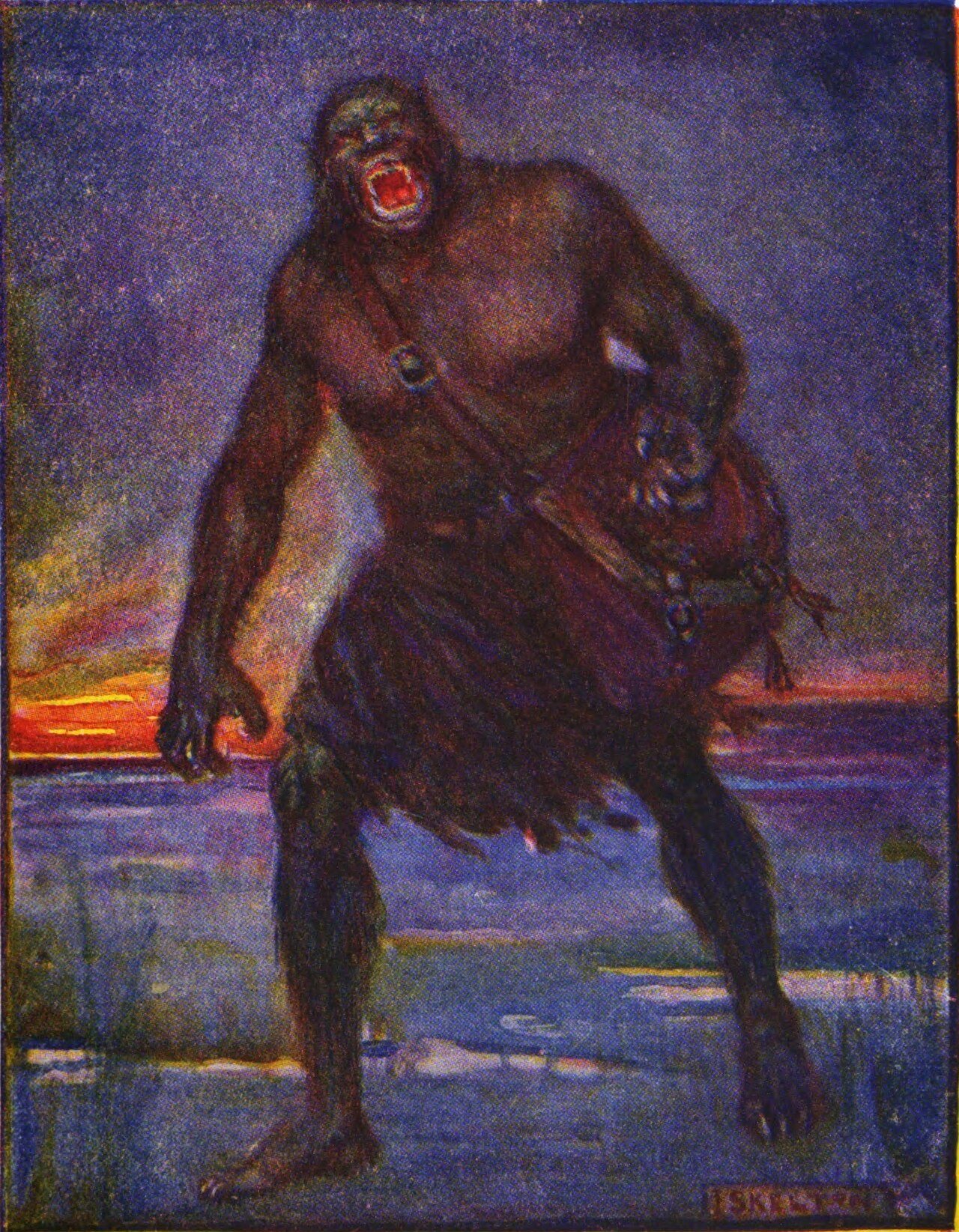
The oldest monster on this page is Grendel, from Beowulf, which survives in a manuscript written around 975 to 1025. The poem calls him a mearcstapa, a border-walker, "se þe moras heold, fen ond fæsten": the one who held the moors, the fen and the fastness. He comes "of more under misthleoþum", from the moor under the mist-slopes, and what drives him mad is the noise of the hall. His mother is the mere-wife, at the bottom of a lake.
The name survives in the landscape. A Staffordshire Anglo-Saxon charter records a Grendelsmere.
Mist makes giants of ordinary things. The Brocken spectre, a walker's own shadow thrown huge onto a bank of fog with a ring of light round its head, is a real optical effect, and it has been photographed on Peak District edges. In 1891 the mountaineer Norman Collie, alone in mist on Ben Macdui in Scotland, heard crunching footsteps behind him "as if someone was walking after me but taking steps three or four times the length of my own". He ran.
What the peat keeps
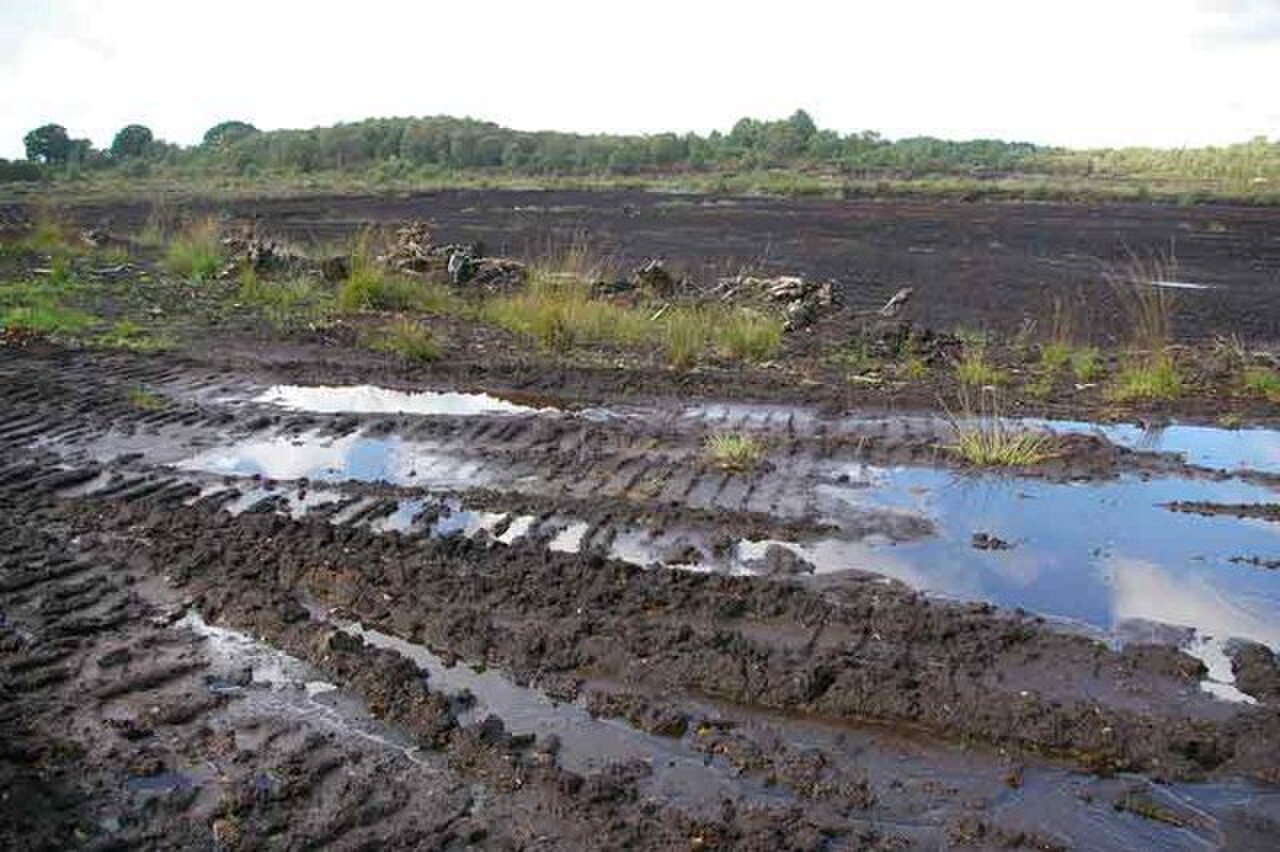
Stories of things rising out of the bog have a grim basis. Peat is acid and starved of oxygen, so it can keep skin and hair for thousands of years while the bones dissolve.
Peat cutters on the Fenn's, Whixall and Bettisfield Mosses, on the border of Shropshire and Wales, found bodies in about 1867, 1877 and 1889: two from the Iron Age or Roman period and one from the Early Bronze Age. At Lindow Moss in Cheshire, cutting in 1983 and 1984 uncovered Lindow Man, now in the British Museum. They were people, and we have chosen not to show them here.
The Seven Whistlers
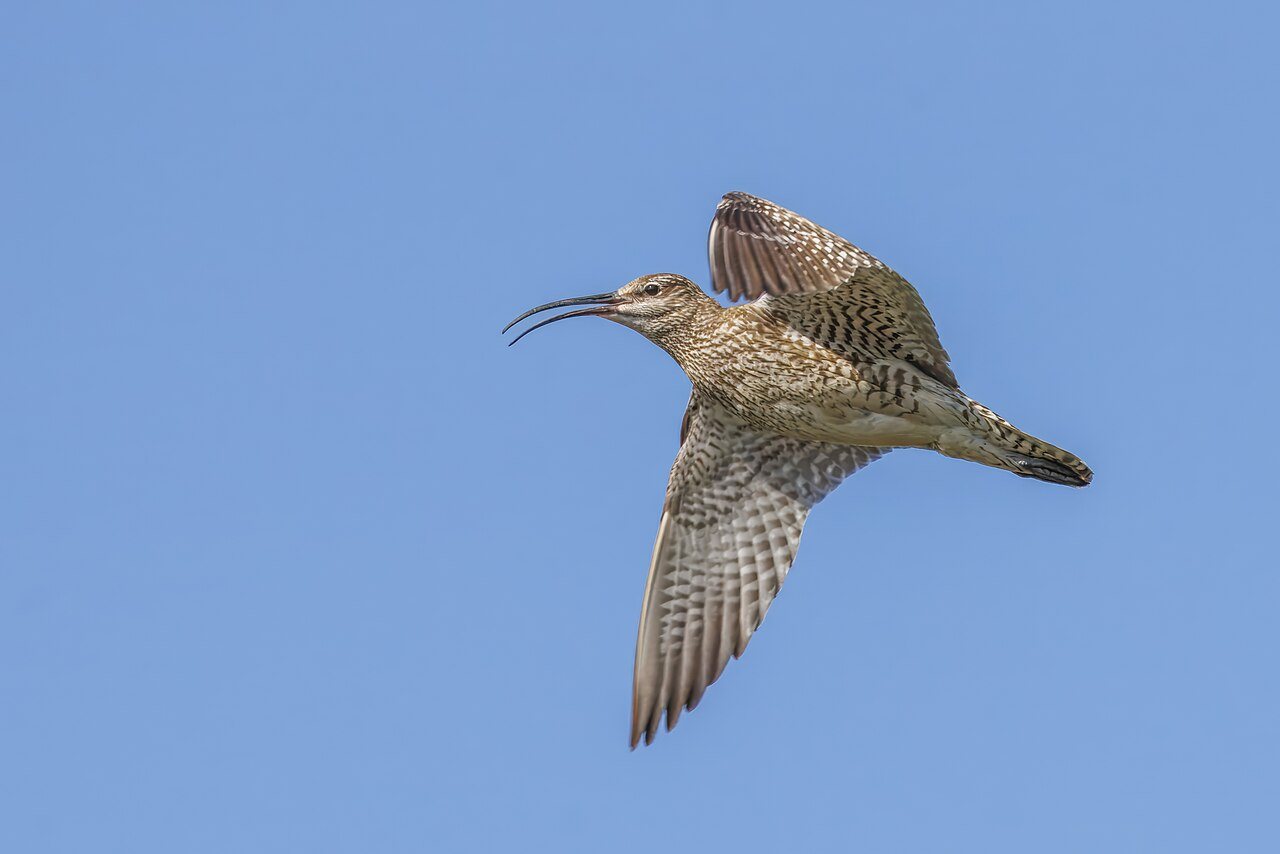
In the mining country of Leicestershire, Warwickshire and Worcestershire, the Seven Whistlers were a death omen: the souls of seven colliers, carried off for whistling on a Sunday, doomed to fly wherever death is coming. On 21 September 1874 miners at Bedworth in Warwickshire refused to go underground after hearing them.
The birds are real. The whimbrel's old name is the seven-whistler, for its call of five to seven rolling notes, and skeins of geese pass over at night calling. Miners in Cornwall, Robert Hunt wrote in 1865, would not allow whistling underground at all.
In Derbyshire's lead country, "T'owd Man" was the miners' name for the old miners who came before them, their workings and their waste. A small carving of one, with his pick and basket, is now in Wirksworth church.
The Wild Hunt
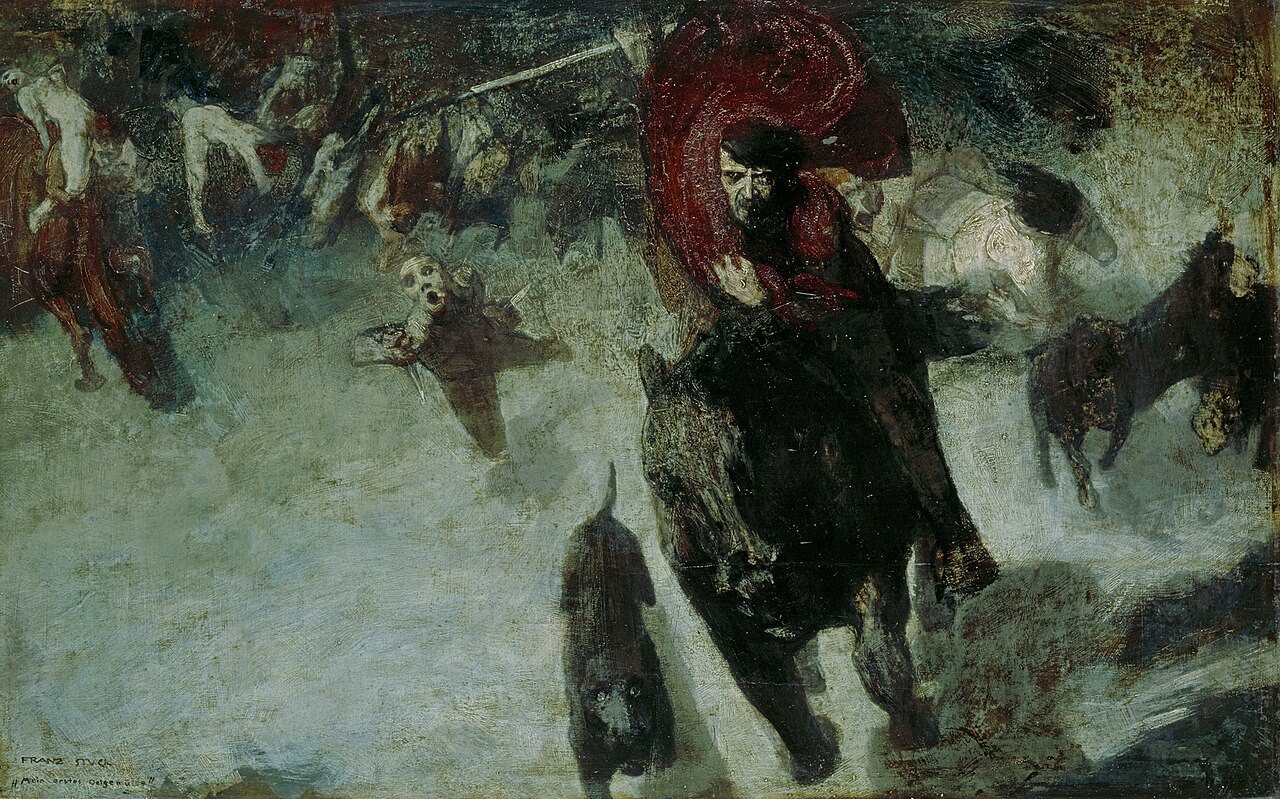
England's first dated sighting is in the Peterborough Chronicle for 1127: huntsmen "black and huge and loathsome" on black horses and black he-goats, their horns heard in the woods from Peterborough to Stamford.
Shropshire has Wild Edric, who rides its hills; Burne printed a sighting from Minsterley in the 1850s, and warned that "it is always dangerous to meet the Wild Hunt. Either death, madness, or blindness may be the consequence." Walter Map, in the twelfth century, told of King Herla, whose riders can never dismount or they crumble to dust, so they can never come home.
Up north the Gabriel Hounds were, as Bowker put it in 1878, "a pack of dogs yelping through the air". Wirt Sikes said of the Welsh hounds of Annwn that the nearer they are, the quieter their cry. Burne noted that flocks of wildfowl and storms of wind were usually given as the explanation, and doubted it.
The Staffordshire moorlands round Butterton and Onecote have a headless horseman. In John Sleigh's history of Leek (1862), a traveller coming home from market, somewhat "market fresh", asks a passing rider for a lift. Away springs the horse, clearing fields, trees, hedges and ditches, and the man is found at his own door, so maimed and bruised that he dies within days.
Sources
- M. C. Balfour, 'Legends of the Cars', Folk-Lore 2 (1891)
- Joseph Jacobs, More English Fairy Tales (1894)
- Charlotte Burne and Georgina Jackson, Shropshire Folk-Lore (1883)
- Elizabeth Mary Wright, Rustic Speech and Folk-Lore (1913)
- William Henderson, Notes on the Folk-Lore of the Northern Counties (1879)
- Wirt Sikes, British Goblins (1880)
- Eliza Gutch and Mabel Peacock, County Folk-Lore V: Lincolnshire (1908)
- Ethel Rudkin, 'The Black Dog', Folklore 49:2 (1938)
- Arthur Evans, 'The Rollright Stones and their Folk-Lore', Folk-Lore 6 (1895)
- Beowulf, text and translation
- Robert Plot, The Natural History of Staffordshire (1686)
- John Sleigh, A History of the Ancient Parish of Leek (1862)
- Robert Hunt, Popular Romances of the West of England (1865)
- The Anglo-Saxon Chronicle (Peterborough, 1127)
- Lincolnshire Folk Tales Project, Nottingham Trent University
- Black Annis, with the 1764 deeds and Heyrick's verse
Photographs are used under the Creative Commons licences linked in each caption; paintings, engravings and woodcuts are in the public domain.